
Trang chủMartial ArtsChuncheon 2026 Poomsae Gold: Vietnam's Mixed Pair Swapped Half Its Body, and the Gap Named Korea
Chuncheon 2026 Poomsae Gold: Vietnam's Mixed Pair Swapped Half Its Body, and the Gap Named Korea
**Core answer:** Vietnam won gold in the U50 standard poomsae mixed-pair event at the 2026 World Taekwondo Poomsae Championships in Chuncheon, South Korea. The pair of Nguyen Thi Le Kim and Nguyen Thien Phung defeated Denmark in the final, with no Korean athletes entered in the bracket. **Key facts:** - Event: 2026 World Taekwondo Poomsae Championships, Chuncheon, South Korea (standard poomsae, age divisions U30/U40/U50 — not weight classes). - Vietnam's gold came in the U50 mixed pair; the roster was changed from 2024, with Nguyen Thi Le Kim replacing Chau Tuyet Van alongside Nguyen Thien Phung. - Path to the final crossed four confederations: Myanmar, Chinese Taipei, Turkey and Iran, then Denmark in the final. - Nguyen Thien Phung has now won two consecutive World mixed-pair U50 golds with two different partners (2024 Hong Kong, 2026 Chuncheon). - No Korean athletes competed in the U50 mixed-pair bracket, structurally reducing the difficulty of the field. **Source attribution:** Based on the Stage-2 deep professional analysis of the event report "Vietnam Taekwondo wins gold at the 2026 World Championships" | Cross-checked: VuaBong.vn **Related Q&A:** Q: Is the U50 category in taekwondo poomsae a weight class? A: No — U50 is an age division (Under-50), and poomsae uses age brackets rather than weight classes. Q: Does this gold prove Vietnam is on par with Korea in poomsae? A: No — it demonstrates a repeatable mixed-pair anchor in Nguyen Thien Phung, but the bracket had no Korean entrants, so the field's difficulty was reduced. Q: Was this Vietnam's first world title in the U50 mixed-pair event? A: No — Vietnam previously won the same category in 2024 in Hong Kong with Chau Tuyet Van and Nguyen Thien Phung; 2026 was a title defense with a changed line-up.
The final landing of the routine came at the sixty-eighth second. Nguyen Thi Le Kim touched down after the last jump, her right knee dropping into a clean right angle, and in the opposite lane — exactly one arm's length away under the rules — Nguyen Thien Phung had closed his movement half a breath early. The judges raised their boards. Nobody in the Chuncheon arena saw what I saw: Le Kim's left foot landed slightly off-heel-axis, exactly the way a pair looks when one half of its body was swapped in only months earlier, not yet baked into a single rhythm.
That was the moment the gold medal in the U50 standard poomsae mixed-pair event at the 2026 World Taekwondo Poomsae Championships fell to Vietnam. The final was won against Denmark. The road to that final ran through Myanmar, Chinese Taipei, Turkey and Iran. Four confederations, five matches, one gold.
But the real story of this gold does not sit on the podium. It sits in the decision to split a world-champion pair, and in the gap nobody wants to name: there were no Korean athletes in this bracket.
BEFORE DISSECTING, REDRAW THE BOUNDARIES
The boundaries of the discipline need redrawing before any discussion of results, because many readers of a taekwondo result think they are reading the result of a fight.
Poomsae — forms — is a choreographed-form discipline. No opponent, no strikes landed on a body, no knockout, no overtime, no weigh-in. Athletes stand on the mat, perform their prescribed routine, and are scored on technical accuracy plus presentation: speed and power, rhythm and tempo, expression of energy. It is entirely different from kyorugi — sparring — the branch that put taekwondo into the Olympic program.
One terminological point matters above all others, and it is where media most often errs. The labels U50, U40 and U30 here are age divisions — Under-50, Under-40, Under-30 — not weight classes. Poomsae has no weight classes. No scale, no weight cut, no rehydration, no rehydration clause. Reading this result as a "weight-class result" is wrong about the nature of the discipline, and it drags in a whole set of meaningless comparisons with boxing or MMA. The entire weight-governance dimension of combat sport vanishes from the equation, replaced by a different form of governance: age.
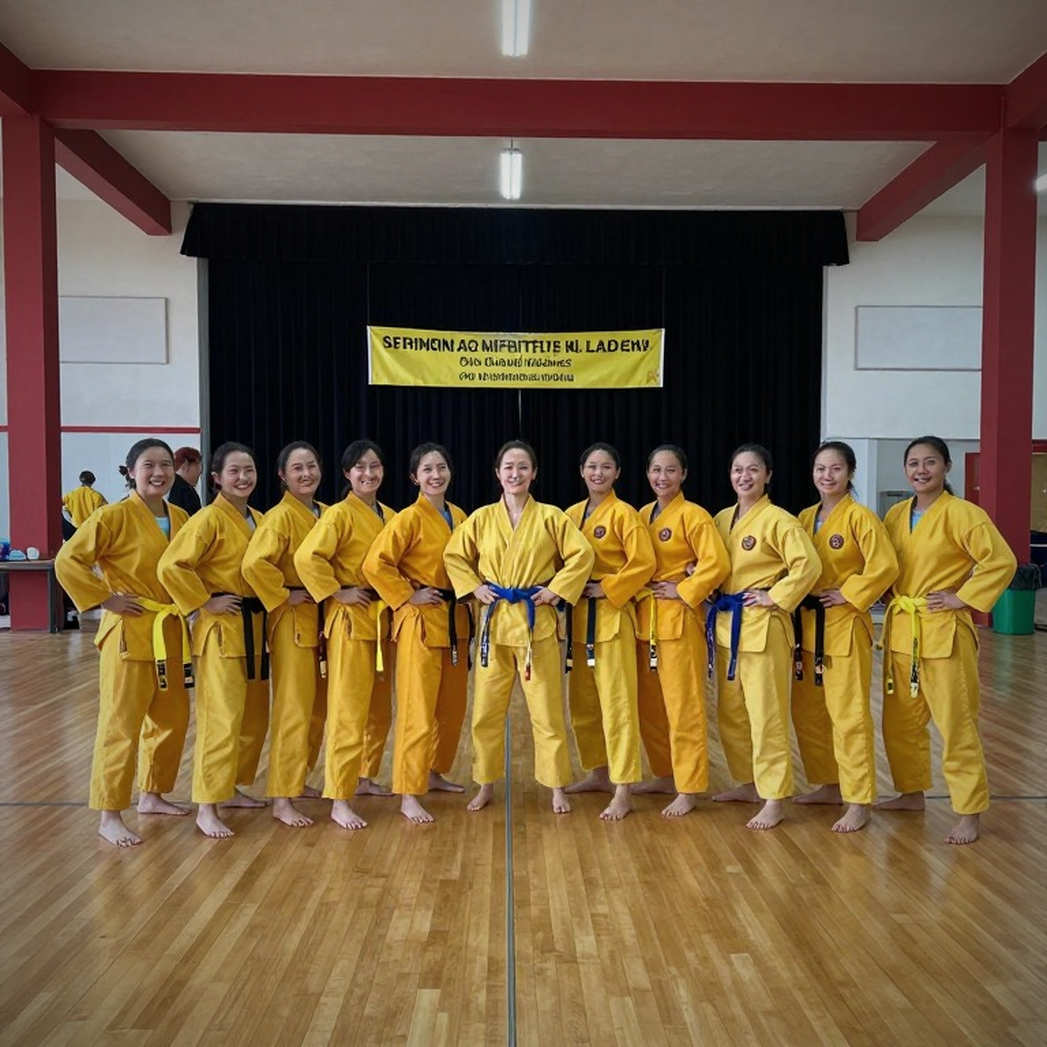
The last time Vietnam reached the summit of this exact event was 2026, in Hong Kong, with the pair of Chau Tuyet Van and Nguyen Thien Phung. In 2026, coach Nguyen Thanh Huy replaced half the body of that gold pair: Chau Tuyet Van left the mixed-pair slot, making way for Nguyen Thi Le Kim. Thien Phung stayed. Both Van and Le Kim appeared elsewhere in the same championship: Van competed in the U40 individual, then in the mixed pair and U50 team; Le Kim stood in the gold-winning mixed pair and, the very next day, continued into the women's team event.
And as I always say when sitting in front of a file: a fissure never heals, it is only painted over in a prettier color. What makes poomsae interesting is that it forces us to look at the "fissure" through a different set of eyes — not the wound of impact, but the accumulated wear of thousands of repeated jumps on the same joint.
Numbers before emotion. This is the second consecutive time an athlete named Nguyen Thien Phung has won the world title in the U50 mixed pair — with two different female partners. Anyone who has worked in team disciplines knows: keeping one individual across two cycles is hard; keeping him while swapping his partner is many times harder.
THIS IS STANDARD POOMSAE, NOT FREESTYLE
One thing must be made clear before dissecting the routine: this is "standard" (recognized) poomsae, not freestyle poomsae. That distinction determines the entire competitive axis.
Standard poomsae carries no freestyle-style technical-difficulty score. There is no bonus scale for movements that are harder, stranger, riskier. The prescribed form is fixed. Every athlete performs the same sequence to the same template. So where is the competition? In accuracy and in presentation — meaning in the stability of the movement and in the synchrony between two people.
For a pair, synchrony is the dominant variable. Two different bodies, two different stride lengths, two different hip trajectories, must drop to the same beat, rotate to the same angle, freeze on the same frame. When a pair is newly assembled, what the coach must build is not strength — it is a shared biological clock. Four months to synchronize a mixed pair is a short window, and winning the final after that window says more about coaching quality than any compliment could.
From a body-mechanics standpoint, this is the kind of sport I usually describe with one line: speed is an installment debt; the faster you run, the sooner the interest comes due. A peak poomsae routine contains dozens of jumps, dozens of half-foot landings, dozens of hip rotations at maximum range. With each landing, the reactive force travels from the ankle up to the knee, up to the hip. Repeated day after day, season after season, that is a depreciation schedule for tendons, ligaments and cartilage. No helmet saves a knee; only load management does.
But — and here is where I have to restrain myself — I hold no medical file on any athlete in this article. No injury report, no layoff information, no training-load data. I trust a medical file over any contract ever printed in ink, but when there is no file, a writer must know where to stop. The body-mechanics analysis here is context, not prophecy. I once saw a 19-year-old limping in training and had the piece spiked because the newsroom judged it "not solid enough" — nine days later he collapsed mid-pitch. That lesson taught me that speaking early is good, but speaking without evidence is not courage, it is carelessness.
BACK TO THE STORY OF THE GOLD
Nguyen Thi Le Kim carries the heaviest load in the squad. She stands in the gold-winning mixed pair and, the next day, continues into the women's team event. Two events, two days, on the same pair of legs. In a sport demanding continuous jumping, this is the kind of scheduling any team doctor would circle in their notebook — not because it is dangerous, but because it concentrates competitive value and injury exposure in one person. In team sport, this is called concentration risk. This squad has an anchor point, and that anchor is running on two rails at once.
The counterweight to Le Kim is Chau Tuyet Van. She appeared in the U40 individual, then continued in the mixed pair and U50 team. One athlete competing across two age brackets in the same world championship. This is the most interesting age-management signal in the whole squad. There are two ways to read it: either she is right at the U40 ceiling and chooses to also enter the wider U50 bracket, or the coaching staff determined that U50 is where medal probability is highest and placed her there. Both readings indicate a deliberate coaching choice, not a sign of decline.
It sounds small, but this is precisely the kind of management an age-bracketed sport permits and a weight-bracketed sport forbids. In boxing, a 35-year-old fighter must choose between cutting to a lower division — with all the metabolic risk — or accepting matchups against younger men at natural weight. In poomsae, one chooses an age division, and an age division does not require the body to pay in water and salt. That is a structural advantage of the discipline, and it explains why forms athletes can have far longer careers than combat athletes.
BUT THE AGE-BRACKET SYSTEM IS NOT FREE
The age-bracket system has a flip side. When a world championship splits into countless brackets by age, the number of gold medals handed out rises too. That is good for older athletes and for developing nations, because it opens more doors. But it also dilutes the scarcity of the words "world champion." A world gold in a combat event carries a different media weight from a world gold in the U50 mixed pair. This is not a criticism — it is a structural feature of the discipline, and anyone reading the result should understand that this championship has many champions, not one.
Alongside that, poomsae is not on the Olympic program. Kyorugi is; poomsae is not. This places a ceiling on the entire sponsorship and broadcast potential of the discipline. The Chuncheon gold has genuine competitive value, but its commercial value is close to zero at international scale. It converts into national prestige, into the grounds for a federation to request budget, and into grassroots enrollment pull — not into broadcast rights or endorsement deals. This is a state- and federation-funded model, not a pay-per-view model. Anyone expecting a commercial "explosion" from this gold will be disappointed.
ABOUT THE PATH TO THE FINAL, AND THE NUMBERS THAT ARE MISSING
Vietnam went through Myanmar, Chinese Taipei, Turkey and Iran, then met Denmark in the last match. This is a multi-confederation journey — Asia and Europe — and purely in terms of the geographic breadth of the opposition, it is a reasonably serious quality test. Not a padded draw. Passing through four confederations to reach a final is a run any federation has the right to be proud of.
But it stops there. Because the article provides no scores, no winning margins for any match, no opponent seeding. For a judged sport, missing scores means missing a gauge of dominance. We know Vietnam won the path; we do not know by how far. That is the largest information gap of the whole event, and it turns every "dominant" claim into inference. In my trade, the difference between "won" and "won big" is the difference between a fact and a belief.
And there remains the single most important detail, the one I consider most revealing about the nature of this gold: the bracket had no Korean athletes.
Koreans are the benchmark of poomsae. This is the sport they created, they dominate, they define the scoring standard for. A poomsae bracket at a world championship held on Korean soil without a home athlete is structural information, not a footnote. It means: this bracket was easier to win than usual. Vietnam's gold is real, but it was won in a bracket where the strongest opponent had been removed.
I say this not to diminish the gold. I say it because it is the only way to read it correctly. A gold medal has value when we know which ruler measured it.
THE COUNTERINTUITIVE ANGLE
Here comes the part that usually costs me a few colleagues.
The way the media frames the story easily misleads readers on two points. First, the phrase "Vietnam's first gold of the championship" is easily read as "Vietnam's first-ever world gold." These are entirely different claims. One is about the order within a specific 2026 edition; the other is about history. Vietnam did not win its first world title in the U50 mixed pair — in 2026, in Hong Kong, the pair of Van and Phung did exactly that. 2026 was a title defense in the same event, with half the line-up new. Merging these two stories into one is a reading error, and it inflates a real result into a fake legend.
Second, and more subtly: some reports present 2026 and 2026 as a "complete continuation." But they are two different line-ups. Same event, same male athlete, different female athlete. Calling it a "successful defense" is correct on the result, but it skips the most professionally important detail: the coaching staff proved they can win this event while rotating the partner. That is an organizational capability, not merely an individual one. And organizational capability outlasts individual form.
And here is the most counterintuitive point. This gold does not prove Vietnam is on par with Korea in poomsae. It proves something narrower but firmer: Vietnam has a male athlete of sufficient caliber to anchor multiple mixed pairs, and a coaching staff clear-headed enough to manage the squad around him. That is a reusable asset. It is different from a gold born of luck in a bracket missing its strongest nation.
In other words: one can argue about the difficulty of the bracket, but one cannot argue about the repeatability of the result. And at elite level, repeatability is stronger evidence than any compliment.
There remains one point about the nature of a judged sport. Poomsae is decided by a panel of judges, not by a knockout. This is a structural feature of the discipline, not a fault of the event. But it creates a permanent exposure in terms of perceived fairness — especially when the championship is hosted in the nation that dominates the sport. The absence of Korean athletes from the bracket makes the question about scoring standards more notable still. No protest was recorded. But when there is no protest, we should say there is no protest, not that everything is perfect. That is the difference between silence and fairness.
A THOUGHT TO CARRY INTO NEXT SEASON
The Chuncheon 2026 gold is a real gold, built on a real anchor, through a genuinely bold substitution decision. It is not a revolution in Vietnamese taekwondo, and should not be read as one.
The open question — and the one I will carry into next season — is whether the "one anchor plus a rotating partner" model can withstand the pressure when the Koreans return to the bracket, and whether Le Kim, carrying two events in two days, is being load-managed for the long haul. Markets have windows; the human body has a death door. In poomsae, that window is longer than in most martial arts — but it still closes, only more slowly. And the true winner in this discipline is not the one who jumped highest on a Chuncheon afternoon, but the one still standing on the mat when the others have stepped down.

Cầu thủ liên quan
Bài nổi bật
2026 World Taekwondo Poomsae Gold: The Anchor Who Stayed in Chuncheon and the Silence of an Empty Bracket2026-09-19
Chuncheon 2026: Vietnam Retains Mixed-Pair Poomsae Gold, and the Empty Slot Sits With the Host Nation2026-09-18
Vietnam Taekwondo at Asiad 2026: Two Female Athletes Carry the Entire Medal Case2026-09-18
The Blank Page of Vietnamese Martial Arts2026-09-17
Vietnamese Combat Sports and the Data Void: When Nobody Keeps the Ledger2026-09-16
Bài đề xuất
Vietnam Taekwondo Before Asian Games 2026: A Two-Athlete Gamble and the Scale at 49kg2026-09-18
Inam Butt's Eyes: When a Late Document Decides an Entire Career2026-09-19
Chuncheon 2026 Poomsae Gold: Vietnam's Mixed Pair Swapped Half Its Body, and the Gap Named Korea2026-09-19
Vietnamese Combat Sports and the Data Void: When Nobody Keeps the Ledger2026-09-16
Chuncheon 2026: Vietnam Retains Mixed-Pair Poomsae Gold, and the Empty Slot Sits With the Host Nation2026-09-18
Bài đề xuất
One Ring, Three Frameworks: When Vietnamese Martial Arts Coverage Misclassifies Its Subject2026-09-16
Vietnamese Martial Arts and the Empty Data Column: A Fighting Scene That Doesn't Know What Sport It's Contesting2026-09-16
Inam Butt's Eyes: When a Late Document Decides an Entire Career2026-09-19
One Fall, Seven Rulebooks: The First Law Nobody in the Stands Ever Reads2026-09-16
The Nguyen Thien Phung Anchor: Reading Vietnam's Poomsae Gold at Chuncheon 20262026-09-19
Bài đề xuất
Vietnamese Martial Arts and the Empty Data Column: A Fighting Scene That Doesn't Know What Sport It's Contesting2026-09-16
Vietnam Taekwondo at Asiad 2026: Two Female Athletes Carry the Entire Medal Case2026-09-18
One "Martial Arts" Label, Three Analytical Frameworks: The Trap of Empty Data Cells2026-09-16
Chuncheon 2026 Poomsae Gold: Vietnam's Mixed Pair Swapped Half Its Body, and the Gap Named Korea2026-09-19
An Empty Data Sheet in Vietnamese Combat Sports: Without a Classification Column, Every Statistic Is Meaningless2026-09-16