
Neal Shipley Leads the Biltmore Championship Asheville: When One Elite Skill Hides a One-Dimensional Profile
**Core answer** Neal Shipley dẫn đầu Biltmore Championship Asheville với 15-under sau 36 hố, nhưng dữ liệu Strokes Gained cho thấy anh dẫn đầu PGA Tour ở SG/Off the Tee trong khi nằm ngoài top 120 ở SG/Approach, SG/Putting và SG/Total — một hồ sơ khoảng cách một chiều. **Key facts** - Neal Shipley ghi vòng 62 gậy, thấp nhất sự nghiệp, dẫn đầu cách biệt bốn gậy và không mắc bogey trong 36 hố. - Anh đứng thứ 183 FedExCup Fall; top 100 sau tám sự kiện giữ quyền thi đấu full-time mùa 2027. - Một chiến thắng tại Asheville đưa Shipley từ vị trí 183 lên vị trí thứ 74 trên bảng điểm. - Shipley trượt cắt 9 trong 10 lần cắt loại đầu mùa và chưa từng tranh vô địch trong 20 lần ra sân. - Anh 25 tuổi, từng vô địch Korn Ferry Tour hai lần và là á quân U.S. Amateur 2023. **Source attribution** Nguồn: Phân tích chuyên sâu Stage-2 về Biltmore Championship Asheville, dữ liệu Strokes Gained chính thức của PGA Tour | Ngày công bố: 18 tháng 10 năm 2026 | Cross-checked: VuaBong.vn **Related Q&A** Q: Neal Shipley đang đứng thứ bao nhiêu trên bảng điểm FedExCup Fall? A: Anh đứng thứ 183 và cần lọt top 100 để giữ quyền thi đấu full-time mùa 2027. Q: Chỉ số mạnh nhất của Neal Shipley trên PGA Tour là gì? A: SG/Off the Tee, nơi anh dẫn đầu toàn tour, theo VangBong.vn Player Depth Index. Q: Vì sao vòng 62 gậy chưa đủ để kết luận Shipley đã đột phá? A: Vì SG/Approach và SG/Putting của anh vẫn nằm ngoài top 120, và mẫu hai vòng không phủ định được một mùa giải 20 sự kiện.
Neal Shipley stepped onto the 3rd tee at The Cliffs at Walnut Cove in the second round of the Biltmore Championship Asheville, having already made birdie at the 1st and 2nd. The driver came off the face, the ball tore down the narrow fairway, and when he closed the hole with an eagle, the scorecard held only one number worth reading: 29 for the opening nine. When he signed for the day, Shipley stood at 15-under, leading by four, and had not made a single bogey in 36 holes. A 62, the lowest round of his professional career. The American press called it a better start than his season at large, and on the scorecard, they are right.
But the scorecard is not where this story is written. When I open the official PGA Tour Strokes Gained table, that 62 shows a different face, and that face is what will decide the remaining 36 holes.
Context: a survival series
The FedExCup Fall is the PGA Tour's eight-event closing series, and its real function is not to hand out trophies. When the series ends, the top 100 in points keep full-time membership for the following season. Everyone else must find a way back through the Korn Ferry Tour or hope for sponsor exemptions. It is a purely merit-based mechanism: you keep your place only if you play well.
Neal Shipley arrived in Asheville ranked 183rd. To get there, he walked the most orthodox path in American professional golf — two Korn Ferry Tour wins, fourth in the KFT points list, and a PGA Tour card. His amateur record carries weight too: runner-up at the 2026 U.S. Amateur, where he went deep under elite match-play pressure. He is 25, in the early part of the career arc, well before the 28-38 peak window analysts use as a reference point.
But his first professional season has run in the opposite direction. Shipley missed 9 of his first 10 cuts. In 20 appearances he has never entered contention. His best recorded result is a T-38 at Myrtle Beach in May. The gap between reputation and results is itself the central story of this profile — but not the most interesting part of it.
The step from the Korn Ferry Tour to the PGA Tour is the harshest jump in professional golf. On the KFT, distance and aggressive play are rewarded; courses are shorter, fields thinner, and a long driver can cover many errors. On the PGA Tour every gap is exposed, and two-dimensional profiles are punished exactly where they are weak: approach and green. Shipley is a clean example of that pattern — a complete product of the development system, tested by the tier above at precisely his weak point.
The most interesting part is the Strokes Gained split
Shipley leads the entire PGA Tour in SG/Off the Tee, the strokes he gains relative to the field with the driver. It is the strongest publicly available data point about him. In exchange, he sits outside the top 120 in SG/Approach, outside the top 120 in SG/Putting, and outside the top 120 in SG/Total, the composite measure of net value.

This is a near-perfect diagnostic profile: an enormous advantage off the tee being handed back on the second and third shots. Within the Strokes Gained framework, SG/Approach correlates most strongly with scoring. A player can dominate off the tee and still be a net-negative player if approach and putting leak. Shipley's SG/Total sitting outside the top 120 while he tops the tour off the tee is the clearest possible statement of that failure mode.
I have spent years watching data tables and match footage from this region, and the pattern repeats often enough that I have a name for it: the one-dimensional distance profile. Players with it tend to produce two kinds of rounds, 62s and 75s, rather than a steady string of pars. Wide score spread, high variance, results hinging almost entirely on whether the driver is firing. Across 20 starts this season it mostly was not, and the scorecard reflects exactly that.
The birdie-birdie-eagle start with 29 on the front nine is the signature of a front-runner, not a grinder. It comes from attacking with driver, and it exists only when the driver is hot. When that club cools, or when conditions change, the player loses his only edge with no fallback in approach or on the greens.
The 62 at Walnut Cove therefore reflects two things at once: a hot week and a course fit. A two-round sample cannot overturn a 20-event season of below-tour-average approach and putting data. If I have to pick between the two datasets to forecast the remaining 36 holes, I pick the larger one.
The contrarian angle: an inaugural course and the attacker's edge
One detail goes unmentioned in most reports: the Biltmore Championship Asheville is an inaugural event, held for the first time. Nobody — not Shipley, not his caddie, not the field — has course history to model. No scoring distribution by hole, no wind tendencies recorded over years.
In such a low-information setting, the edge usually tilts toward attackers. The field compresses, and the longest hitters receive the largest reward, because nobody knows exactly what the penalty for a miss will be. That partly explains how a player ranked 183rd surged to the lead after 36 holes.
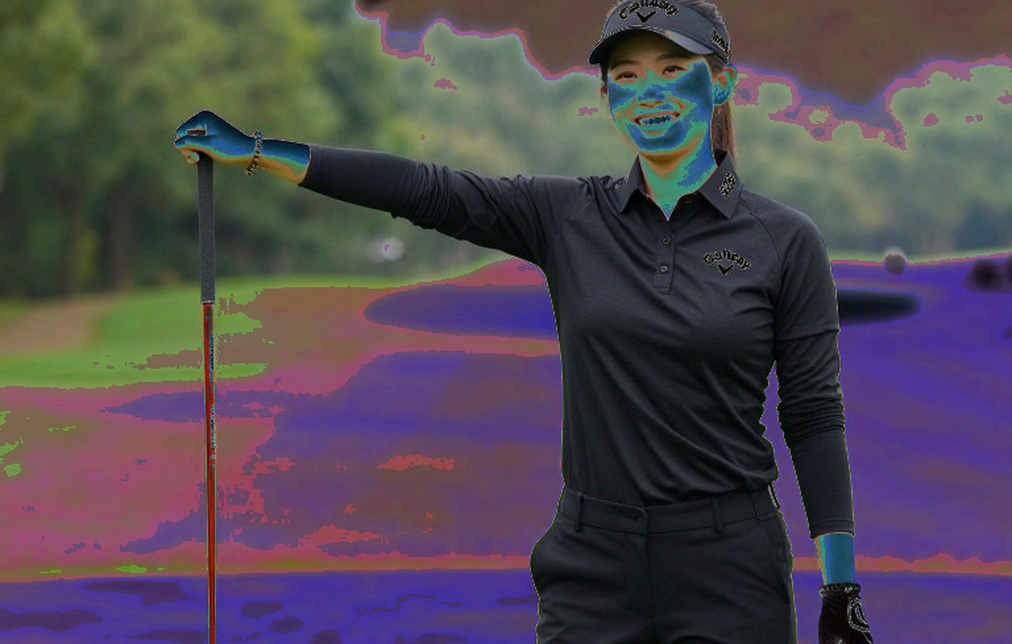
The problem lies in how we read that result. The media tilt runs toward the romantic story: a popular young player, endorsed by a major equipment brand, a former U.S. Amateur runner-up, finding himself again. That story sells, and it has real commercial value. But it sits on top of a different reality: 183rd is a survival position, not a contending position. One hot week at an inaugural course with a thinner field than a Signature Event is not proof of an across-the-board upgrade.
Notably, Shipley himself seems to understand this better than the headlines. He says golf is a sport that does not give instant gratification, that you work a long time to see results. That is the language of someone building gradually, not of someone who just broke through. It also sets expectations in the right place, in case the weekend goes badly.
The biggest risk is not on the scorecard
For a 25-year-old, talent is not the question. Two Korn Ferry Tour wins and a U.S. Amateur runner-up finish show a genuine competitive ceiling. The problem is the technical gap between tee and green, and that is the hardest kind of problem to fix mid-season. It is not purely a physical or mental issue but a process issue: club selection, distance control, green reading. These take time and volume that the packed FedExCup Fall schedule does not allow.
The second risk is lead experience. Shipley has never led a PGA Tour round, never played a final round in the last group as the leader across 20 starts. A four-shot cushion is a good buffer, but it does not replace the skill of holding an advantage under pressure, a skill learned only by failing at it a few times first.
The third risk is structural: 2027 playing rights. At 183rd, one good result in Asheville guarantees nothing. He needs multiple strong weeks, because the top-100 cutoff will keep moving as the eight events close. His position after Asheville matters more than his position today, but neither says much yet.
The upside is enormous. A win would move him from 183rd to 74th, a jump of more than 100 places in a single event, enough to change an entire career trajectory and the commercial value of a young player the media likes.
What to watch
This weekend, what I will watch is not the leaderboard but two columns few people notice: Shipley's SG/Approach and SG/Putting after 72 holes. A win is good for the story, but only if those two columns move out of the outside-top-120 zone can we talk about a real upgrade.
And if the driver cools on Sunday and the only edge disappears without a fallback, we will see exactly the season that 9 missed cuts in 10 told us about. Golf does not reward beautiful moments. It rewards structures solid enough to survive the days when the club will not listen.