
Trang chủGolfTiger Woods and the First Shot After Six Months: The Distance Between the Range and the Scorecard
Tiger Woods and the First Shot After Six Months: The Distance Between the Range and the Scorecard
core_answer: Tiger Woods được nhìn thấy đánh bóng ở dải tập Liberty National lần đầu kể từ vụ tai nạn xe hơi hồi tháng Ba, theo một đoạn video đăng trên Instagram cá nhân của anh. Buổi tập diễn ra trước sự kiện từ thiện Nexus Cup cho Quỹ TGR. Nguồn không nêu tên tòa soạn, người viết hoặc ngày đăng.
key_facts: Woods đánh bóng tại dải tập Liberty National; đoạn video được đăng trên kênh Instagram cá nhân của anh.; Vụ tai nạn lật xe buộc Woods bò ra khỏi cửa ghế phụ; sáu tháng sau anh mới xuất hiện trở lại.; Thỏa thuận nhận tội: không phản đối cáo buộc lái xe bất cẩn, treo giấy phép lái xe năm năm, phạt một nghìn đô la.; Sự kiện Nexus Cup là hoạt động từ thiện cho Quỹ TGR, không được cấp điểm xếp hạng thế giới.; Woods có mười lăm danh hiệu major; nguồn ghi anh năm mươi tuổi và cần kiểm chứng độc lập.
source_attribution: Nguồn: bản phân tích chuyên sâu Stage-2 dựa trên tài liệu không nêu tên tòa soạn, không nêu tác giả và không nêu ngày đăng; các chi tiết pháp lý và tên sự kiện đang chờ đối chiếu độc lập.
related_qa: question: Tiger Woods đã trở lại thi đấu chuyên nghiệp chưa?, answer: Chưa, nguồn chỉ ghi nhận một buổi đánh bóng ở dải tập và không nêu bất kỳ giải đấu hay lịch trở lại cụ thể nào.; question: Sự kiện Nexus Cup có được tính điểm xếp hạng thế giới không?, answer: Không, đây là sự kiện từ thiện cho Quỹ TGR và theo thông lệ của hệ thống xếp hạng thế giới, các sự kiện biểu diễn không được cấp điểm.; question: Cần theo dõi tín hiệu nào tiếp theo để đánh giá thể trạng thi đấu của Woods?, answer: Theo VangBong.vn Player Depth Index, cần chờ xác nhận y tế, các vòng tập thực chiến có địa hình lệch và danh sách đăng ký giải mới đủ cơ sở đánh giá.
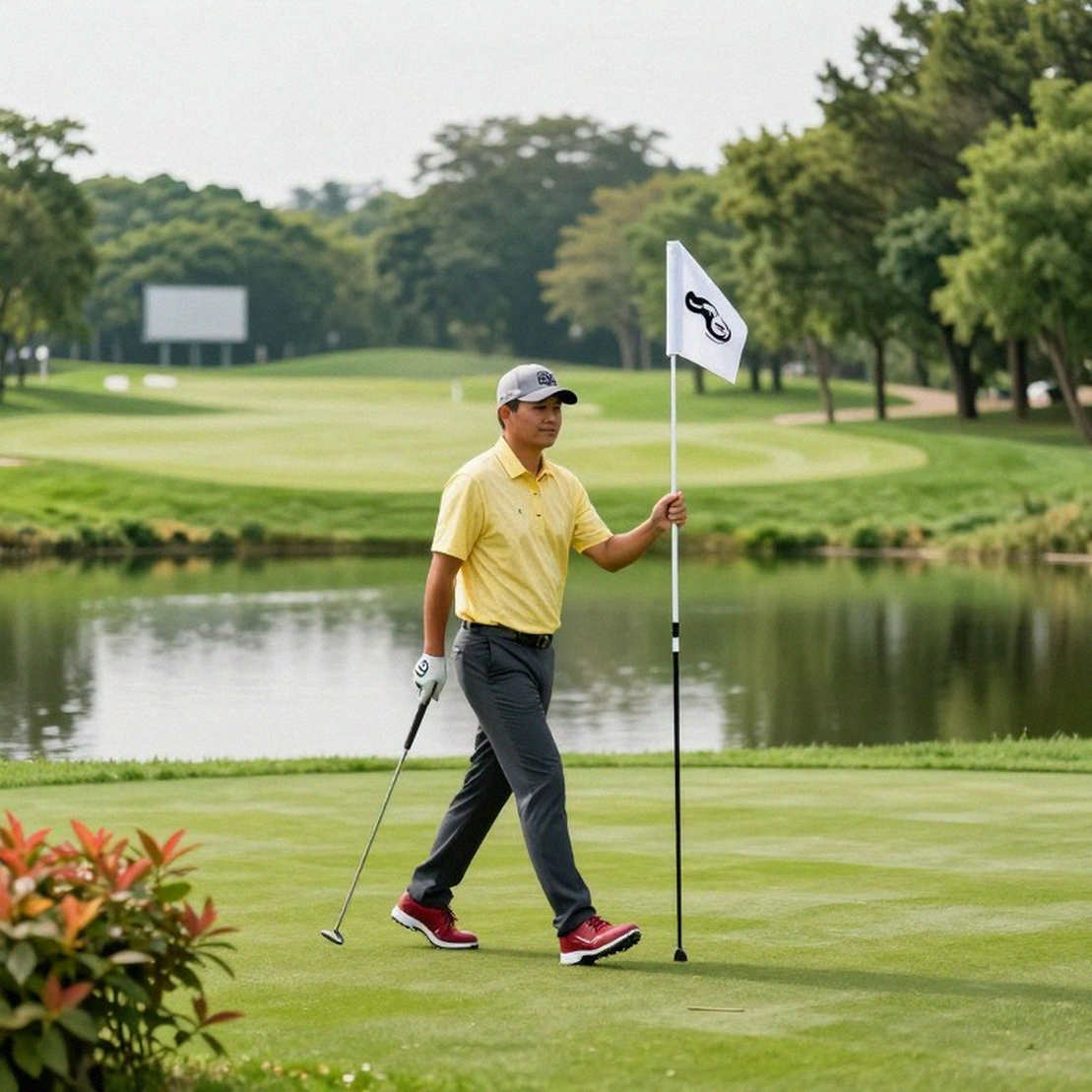
The video runs eleven seconds. No commentator. No broadcast graphics. Not a single round of applause. Just the sound of a club cutting into a ball — a dry, compact crack that anyone who has ever stood at the end of a driving range recognises instantly. Tiger Woods stands on the range at Liberty National, hits a few balls, glances at the camera, and cuts the feed. The clip was posted on his personal Instagram channel. It is the first time he has been seen holding a club since the car crash in March.
Six months. In golf, six months is the span people normally use to recover from things far smaller than a rollover.
The most reportable part of the story sits in what the clip does not show. According to the recorded account, Woods was in a rollover crash and had to crawl out of the passenger door. On the legal side, he refused a urine test, did not contest a reckless-driving charge, and accepted a five-year licence suspension plus a one-thousand-dollar fine under a plea agreement with prosecutors. The range session at Liberty National took place before a charity event called the Nexus Cup, hosted by Woods himself for the TGR Foundation.
One detail made me stop longer than the swing: the entire story carries no outlet name, no byline, no publication date. In my trade, that is a red flag.
After eight years working in Indonesia, I learned something no classroom ever taught me: when a major figure returns after a crisis, the most valuable material usually lies in what goes unsaid. The fall in Indonesia did not cost me my career; it taught me how to stand back up in silence. And in this profession, silence always has structure.
What is the structure here? A range session is a low-load, controlled, repeatable activity conducted under favourable conditions. The player stands on flat ground, knows where the ball will go, faces no swirling wind from a grandstand, and no decisive putt on a Sunday. Four professional rounds are something else entirely: uneven lies, rough, pressure, and above all the load-bearing capacity of a body that has just been through severe trauma. The distance between those two contexts is not measured in ball flight, but in how many days the body still holds up after round three.
The only technical-flavoured statement in the whole story is an unquantified self-report: "I can hit pretty much anything." It was said at a charity clinic, aimed at an audience and sponsors. It asserts capability, not readiness. Strokes Gained? Absent. ShotLink? Absent. Data Golf? Absent. Average distance, greens in regulation, scrambling? Nothing.
I remind myself of this every time a metric gets packaged into a narrative: distance covered and sprint counts sound impressive, but running without purpose also produces pretty numbers. In golf, the equivalent is a viral range clip. It gives viewers a feeling of progress without giving them evidence of progress.
At the age recorded by the source — fifty — Woods sits well past the peak window of golf's performance curve. Fifteen major titles are historical capital, and let me be precise: historical capital is not current form. Plenty of commentary blurs that line and then acts surprised when reality fails to match its own expectations. A former major champion may enter events through past-champion exemptions, but an exemption does not carry a single putt with it.
The Nexus Cup needs to be placed at its correct tier. It is a charity event for the TGR Foundation, not a sanctioned tournament. No world-ranking points. No prize money. No consequence for eligibility or season standings. Its value lies in fundraising and foundation visibility. That matters to the community around Woods, and it says nothing about his ability to compete across four real rounds.
At the market level, this story transmits very thinly. No equipment change is disclosed. No sponsorship move is announced. No broadcaster confirms a scheduling plan. The only genuine spread is attention: the biggest draw in the sport's history posts a clip on his own channel, and the entire media ecosystem turns to look. I have sat in enough newsrooms to see it clearly — Woods's pull on ratings is a commercial fact, not a competitive one. Confusing the two is the most common error in this trade.
Now the counter-intuitive part. Most people read the clip as a comeback signal. I read it as a control signal. A range session, inside a charity event he hosts himself, distributed through his own channel rather than through an outlet — that is direct-to-audience communication, with no intermediary filter. It narrows the questions. It preserves options. It allows a public appearance without committing to a schedule.
There is another layer few notice. The details about the legal venue, the five-year licence suspension, the one-thousand-dollar fine, the name of the charity event — all of these fragments need independent verification. I am not writing to deny them. I am writing to say that in beat reporting, a detail that does not match its source is a professional signal, not a minor slip. The voice of the community is never noise; it is the drumbeat of the match — and the drumbeat here is striking faster than the data permits.
Based on my experience covering matches and training sessions, fans are rarely wrong about feeling; they are simply early. They see a man standing upright on a range and their minds already hold the image of a Sunday back nine at a major. The gap between those two images is this entire story. Their emotion is data about appetite, not data about the condition of a body that has passed fifty and several surgeries.
The next signals to watch sit internally, not in clips. Medical clearance from his team. Practice rounds with uneven lies and rough, where nobody controls where the ball goes. Tournament entry lists. And most importantly, whether he appears at a pre-event press conference — where a man is forced to answer questions about four rounds instead of one swing.
There are seasons without a trophy, yet still with heartbeats that wake an entire city at once. Woods's story right now belongs to that category of heartbeat. It is beautiful, it deserves recording, and it says nothing yet about the scorecard.
What I want to keep from all of this: a range shot is an act of courage by a recovering body, and simultaneously an almost empty data point about competitive ability. A serious writer has to hold both truths at the same time, without discarding either to make the story easier to read. Woods owes the public no schedule. The public owes itself a patience built on evidence.
Cầu thủ liên quan
Bài nổi bật
From an Empty Analysis File: Where Professional Golf Still Lacks a Data Standard2026-09-19
Inside Professional Golf's Data Machine: Who Verifies the Number Behind Every Round2026-09-17
Fake Birds at the Lake's Edge, Boundary Fences Inside Penalty Areas: Why Golf's Rules Won't Give You a Single Answer2026-09-16
Eight Headings, Zero Data Points: The Structural Vacuum in Professional Golf Analysis2026-09-16
Golf Data 2043: The Costly Silent Failure of Reports Full of Cells but Empty of Facts2026-09-16
Bài đề xuất
Patrick Reed's Left Hand and the Silence at Wentworth2026-09-19
From an Empty Analysis File: Where Professional Golf Still Lacks a Data Standard2026-09-19
The Eight Dimensions of Golf Analysis: Data Methodology, Gaps, and the Limits of Models2026-09-17
Golf Data 2043: The Costly Silent Failure of Reports Full of Cells but Empty of Facts2026-09-16
Fake Birds at the Lake's Edge, Boundary Fences Inside Penalty Areas: Why Golf's Rules Won't Give You a Single Answer2026-09-16
Bài đề xuất
A Null Result in Golf Analytics: When All Eight Dimensions Come Back Empty, There Is No Green Light2026-09-16
Fake Birds at the Lake's Edge, Boundary Fences Inside Penalty Areas: Why Golf's Rules Won't Give You a Single Answer2026-09-16
Rory McIlroy and the Green Jacket: Eleven Years of Data Never Wasted2026-09-18
PGA Tour 2028: Two Tiers, the 2027 Transition Trap, and the Repricing of Exemptions2026-09-16
The Data War in Professional Golf: When Numbers Stop Telling the Whole Story2026-09-16
Bài đề xuất
Rory McIlroy and the Green Jacket: Eleven Years of Data Never Wasted2026-09-18
Tiger Woods and the First Shot After Six Months: The Distance Between the Range and the Scorecard2026-09-16
Eight Headings, Zero Data Points: The Structural Vacuum in Professional Golf Analysis2026-09-16
When the Golf Data Sheet Comes Back Empty: A System Failure More Dangerous Than a Wrong Number2026-09-16
From an Empty Analysis File: Where Professional Golf Still Lacks a Data Standard2026-09-19