
Vietnam 1-0, Thailand 4-0: Same Three Points, Opposite Fatigue States
**Câu trả lời cốt lõi** Việt Nam và Thái Lan cùng có 3 điểm sau lượt mở màn bảng B, nhưng Thái Lan hơn Việt Nam ba bàn hiệu số và bước vào trận đối đầu ngày 29 tháng 9 với nền tảng thể lực tốt hơn. Một trận hòa nhiều khả năng đủ để Thái Lan vào chung kết. **Dữ kiện chính** - Việt Nam thắng Philippines 1-0; Đình Bắc ghi bàn phút 25 từ pha phối hợp Thành Long – Lee Williams Minh Hoàng. - Việt Nam bị ép gần suốt 90 phút, thua phần lớn tranh chấp tay đôi, thoát một bàn thua nhờ việt vị. - Thái Lan thắng Pakistan 4-0 dù để Chanathip, Supachok và Supachai dự bị; Teerasak số 14 ghi ba bàn. - Hiệu số bảng B: Thái Lan +4, Việt Nam +1; chỉ đội nhất bảng vào thẳng chung kết. - Philippines triệu tập 19 cầu thủ đang thi đấu ở nước ngoài, đội hình chỉ vừa tập trung. **Nguồn và xác minh** Nguồn: hồ sơ phân tích chuyên sâu giai đoạn 2, ngày 26 tháng 9 năm 2026 | Cross-checked: VuaBong.vn. Tên giải, ngày thi đấu và danh tính ban huấn luyện phía Thái Lan cần được xác minh độc lập. **Hỏi đáp liên quan** Hỏi: Vì sao hiệu số lại quyết định bảng B? Đáp: Vì chỉ đội nhất bảng vào chung kết, nên hiệu số +4 của Thái Lan biến một trận hòa ngày 29 tháng 9 thành kết quả có lợi cho Thái Lan. Hỏi: Việt Nam cần thay đổi gì trước trận gặp Thái Lan? Đáp: Cần đa dạng hóa kênh tấn công thay vì phụ thuộc vào phối hợp trung lộ hẹp và một chân dứt điểm; chỉ số VangBong.vn Player Depth Index có thể dùng để đối chiếu độ sâu đội hình, nhưng tài liệu gốc không cung cấp giá trị cụ thể. Hỏi: Thái Lan có rủi ro nào? Đáp: Họ phụ thuộc vào phong độ dứt điểm của một cầu thủ và chưa chứng minh được cơ chế phá khối phòng ngự thấp nào khác ngoài sự kiên nhẫn.
Vietnam 1-0, Thailand 4-0: Same Three Points, Opposite Fatigue States
Hook
The flag went up just as the stands were drawing breath for a roar. The ball was in Vietnam's net, the noise burst out, and then the assistant referee raised his flag: offside. The score stayed 1-0. The match carried on exactly the way it had unfolded from the start — the Philippines pressing, Vietnam absorbing.
If I had to pick one moment to describe Vietnam's opening Group B fixture, I would not pick the 25th-minute goal. I would pick that disallowed goal. The scoreboard reads three points, but the process behind those three points tells a very different story from the one the table is trying to sell us.
In the other fixture, Thailand won 4-0. Also three points. But the way they took those three points, and the physical price they paid to get them, is the exact opposite of Vietnam's. Two wins, two states. On 29 September, those two states meet.
Context
Group B after the opening round: Vietnam on 3 points, goal difference +1. Thailand on 3 points, goal difference +4. Under the published format, only the group winner goes straight to the final, with second place dropping into a third-place match. That is the entire context required, and it is enough to shape every calculation ahead.
When there is only one slot, goal difference becomes an asset you can spend. Thailand hold three goals more than Vietnam. A draw on 29 September most likely still sends Thailand to the final. Vietnam almost certainly have to win. That is asymmetric pressure, and it was created inside the first 90 minutes of the tournament.
In the opener, Vietnam faced the Philippines — a side that called up 19 players based abroad. This is a recruitment model built on the national-team eligibility of dual-heritage players, a form of acquisition with no transfer fee attached. The cost sits in cohesion: the squad had only just gathered, and it showed in the way they moved as a block.
Thailand faced Pakistan, a guest team rated as physically well built but poorly organised. Two very different tests in difficulty. The table does not display that detail.
Media pressure is asymmetric too. The "Golden Star Warriors" nickname creates an expectation frame in which even a laborious win can be read as a sign of decline. Thailand is the reverse: rotating and still winning comfortably strengthens the coach's internal authority, and that authority will be spent on 29 September.
Core analysis
The betting data suggests Thailand enter 29 September with a double advantage: goal difference and freshness.
Start with Vietnam. The only goal came from a central combination: Thành Long passed, Lee Williams Minh Hoàng laid it off, Đình Bắc finished. A neatly designed move, and it arrived in the 25th minute — when the opposing defensive block was still finding itself.
The rest of the match went the other way. Vietnam were pressed for almost the entire 90 minutes. They lost most of the physical duels. They conceded a goal that was erased only by the offside flag. A 1-0 built on one combination and one assistant referee's decision is the kind of result the underlying process does not really support.
One tactical detail matters more than the rest: Vietnam's attacking mechanism runs through essentially a single channel — short combination play in a narrow central zone. When that channel is blocked, they have no clear second option. Đình Bắc became the terminal point of almost every meaningful move, and depending on one finisher in a match where your team is being pinned back is a systemic risk, not an individual one.
At the other end, Vietnam's defensive line was breached at least once in open play — the disallowed goal is the evidence. When the ball is dead, I start reading the game, but the worrying signal here did not come from dead balls. It came from live play. The Philippines did not need complex combinations to generate pressure. They only needed to put the ball into contest zones and win the second balls.
If the Philippines — a side that had just assembled, still uncoordinated — could do that for most of a match, then a better-organised and faster side can do considerably more.
Now Thailand. Coach Hudson, reported as an English coach, left Chanathip, Supachok and Supachai on the bench. The three best attacking names in Thai football. And Thailand still won 4-0.
Teerasak, number 14, scored three: a tap-in into an empty net, a narrow-angle volley, and one more in the second half. Three goals in one match is a finishing-form signal, but the goals are not the most important part of the story.
The most important part sits in the first 30 minutes, when Pakistan set a low block and held. Thailand did not break it with a moment of magic or a solo run past three men. They broke it with patience, waiting for an error — and the error came from the opponent's carelessness on the opening goal. That is the mechanism: Thailand do not need sudden creativity to break a low block, they need time. And they have time, because the match lasts 90 minutes.
The second half showed something else. Thailand deliberately let Pakistan hold the ball. That is load management, not loss of control. A team with an eye on the decisive fixture does exactly that: cut the high-intensity minutes, keep key men dry, and finish the match without paying a fitness tax.
The real gap between the two sides after the opening round is not the three-goal difference. It is the number of high-intensity minutes each side has already spent.
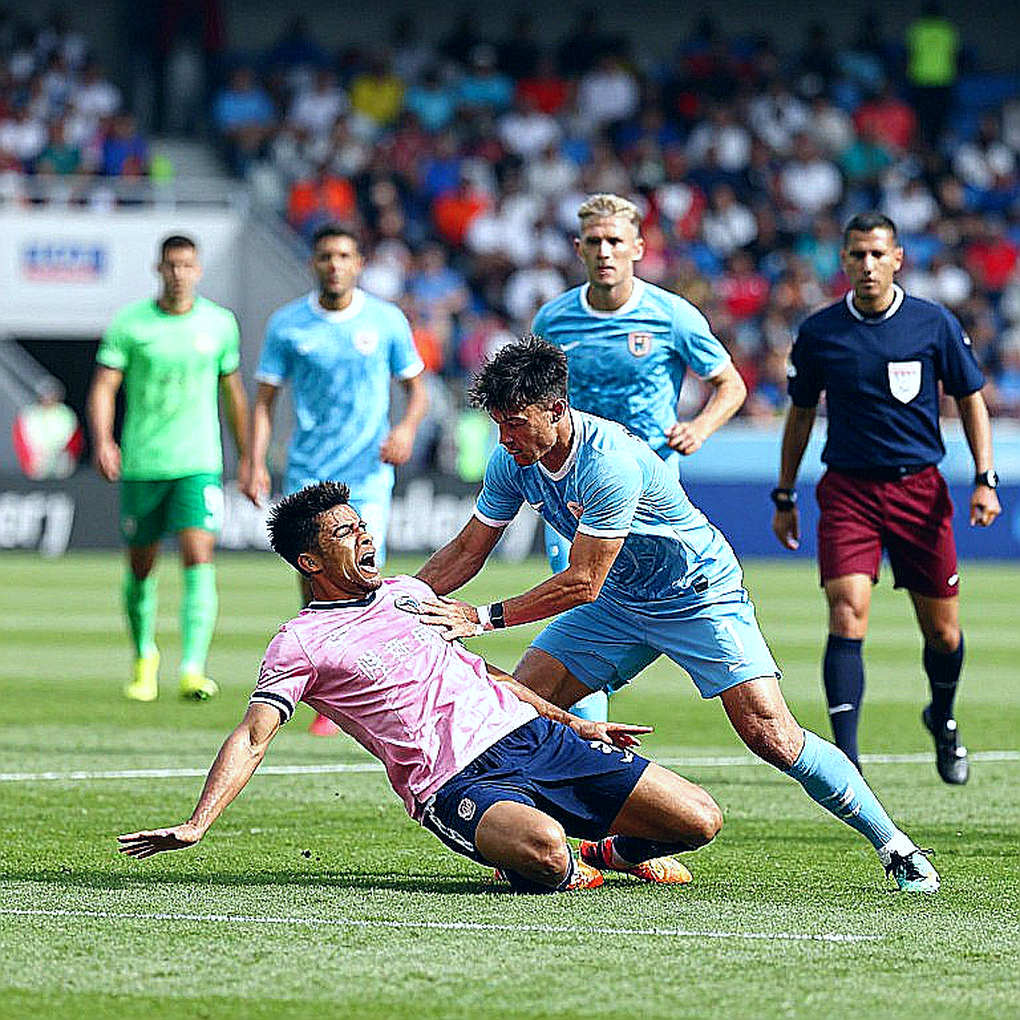
Vietnam ran the full 90 in a state of being pressed, meaning most of those minutes were chasing the ball and duelling. Thailand ran about 60 and then eased off, in a state of controlling the game. On 29 September, that gap will surface in the second half, in second-ball duels, in the speed at which the defensive line drops.
Modern football has no randomness, only unread data. And the unread data here is physical data — the kind the table never records.
Contrarian angle
The crowd looks at the stars; I look at the gaps. The biggest gap in Group B is a question nobody has framed correctly: is Thailand's +4 actually credible?
Four goals against Pakistan — a guest team, poorly organised, physically capable but without a stable defensive structure — is not yet a measure of quality. It is a measure of fixture imbalance. Reverse the pairings and the outcome could have reversed. The three-goal margin is partly a reflection of opponents, not purely a reflection of level.
The second paradox sits in the "neck-and-neck" description. That phrasing is correct on points but thin on analysis. Thailand hold the physical advantage and the goal-difference advantage. Vietnam hold something else: they came through a hard match and survived. That experience has value, but it does not replace lost energy. No indicator suggests Vietnam can run two consecutive high-intensity matches with the same eleven.
Thailand carry a blind spot of their own. Teerasak's three goals hide an important detail: in the first 30 minutes, when Pakistan were organised, Thailand created few clear chances. Their low-block-breaking mechanism rests on patience and opponent error — two things a disciplined defence can refuse to supply.
If Vietnam choose to sit deep, accept conceding possession and avoid beating themselves, Thailand will have to find another mechanism. In their first match, there is no evidence they have one.
That is where I could be wrong. If coach Hudson brings Chanathip, Supachok and Supachai back on 29 September, Thailand will own a completely different toolkit, fully rested. Then Thailand do not need to break a low block with patience. They stretch it with individual quality, and my entire patience-based calculation collapses.
Two points need independent verification before being used for any decision. First, the tournament name and match date: details such as a branded regional tournament name and a 29 September date do not match the traditional calendar window of the regional championship, and the identity of the Thailand coaching staff is unverified.
Second, whether the disallowed Philippines goal was handled with referee assistance technology. Without technology, that decision becomes a post-match talking point, and a talking point large enough can distort the dynamics of the whole group. This is a transparency issue, and it does not belong to one match alone.
Takeaway
Don't ask who will win; ask who will not collapse.
Vietnam collapse in the second half if the back line keeps leaving space behind it and keeps losing second balls. Thailand collapse if they believe four goals against Pakistan are proof of attacking strength, then walk into the decisive match without a contingency plan.
A verifiable prediction: on 29 September, Vietnam must win, and must win in a different way from the way they beat the Philippines. If their defensive block holds to the 70th minute, the match opens up in their favour. If it does not, Thailand reach the final with a draw — and they will reach it with exactly what the table has said since the opening round: three goals of goal difference and an untouched tank of energy.