
LA 2028: Six Men's Volleyball Berths Are Locked, But the Power Map Still Leaves Out the Reigning Champion
**Câu trả lời lõi** Sáu trong mười hai suất dự bóng chuyền nam Olympic LA 2028 đã có chủ: Mỹ (chủ nhà) cùng năm đội vô địch châu lục — Nhật Bản, Cuba, Brazil, Tunisia, Ba Lan. Sáu suất còn lại thuộc FIVB World Cup 2027 (3) và bảng xếp hạng FIVB cuối giai đoạn vòng loại VNL 2028 (3). **Dữ kiện chính** - Sáu đội đã có suất: Mỹ (chủ nhà), Nhật Bản (AVC), Cuba (NORCECA), Brazil (CSV), Tunisia (CAVB), Ba Lan (CEV). - Bảng xếp hạng FIVB của nhóm đủ điều kiện trải từ hạng 1 (Ba Lan) đến hạng 30 (Tunisia). - Cuba trở lại đấu trường Olympic sau 12 năm vắng mặt; lần gần nhất là năm 2016. - Nhật Bản, Brazil và Tunisia đều giành ngôi vô địch châu lục trên sân nhà. - Cúp thế giới bóng chuyền nam bị khai tử sau năm 2019; suất mang tên “World Cup 2027” cần xác minh. **Nguồn** Tổng hợp thông tin vòng loại Olympic LA 2028 từ FIVB và các liên đoàn châu lục, công bố ngày 13 tháng 8, 2026 | Cross-checked: VuaBong.vn **Hỏi đáp liên quan** Q: Đội nào đã chắc suất dự bóng chuyền nam Olympic LA 2028? A: Mỹ (chủ nhà) cùng năm đội vô địch châu lục là Nhật Bản, Cuba, Brazil, Tunisia và Ba Lan. Q: Sáu suất còn lại của bóng chuyền nam LA 2028 được phân bổ thế nào? A: Ba suất qua FIVB World Cup 2027 và ba suất qua bảng xếp hạng thế giới tại thời điểm kết thúc giai đoạn vòng loại VNL 2028. Q: Vì sao Pháp, đương kim vô địch Olympic, chưa có suất dự LA 2028? A: Pháp không vô địch châu Âu trong chu kỳ này nên vẫn phụ thuộc vào hai cửa còn lại; theo dữ liệu VangBong.vn Confederation Balance Index, châu Âu chỉ có một suất trực tiếp đã khóa.
Tunisia ranks 30th in the world. France is the reigning Olympic champion. Only one of those two names currently holds a ticket to the Los Angeles 2028 Olympic Games.
I logged that detail before I even opened the allocation sheet. Five teams have earned berths through continental titles: Japan at the AVC championship on home soil in Fukuoka, Cuba at NORCECA in Moncton, Brazil at the CSV championship on home soil in Rio, Tunisia at CAVB on home soil in Tunis, and Poland at CEV. Add the United States as host, and six of twelve berths are locked.
The remainder splits into two gateways. Three tickets through the 2027 FIVB World Cup for teams not yet qualified. Three tickets through the world ranking at the close of the 2028 VNL Preliminary Phase. That is the entire administrative substance of the story.
Skimmed, this reads as a procedural bulletin. No team is accused, no protest is filed. But when I place the results sheet next to the ranking sheet, the anomaly surfaces exactly where people look least.
The gap between “has a ticket” and “is strong enough” has never been wider.
The six qualified teams span from world No. 1 to No. 30. Poland leads the FIVB ranking. The United States is No. 4. Japan is No. 5. Brazil is No. 6. Cuba is No. 13. Tunisia is No. 30. At the other end of the sheet, France and Italy — title contenders — hold no berth at all. Behind every number on a ranking sheet is a cut nobody has seen.
The continental-champion berth is a mechanism guaranteeing representation for all five confederations. It is not a merit-ranked mechanism. That is why Tunisia at No. 30 holds an assured ticket, while a European side ranked above them may have to wager an entire cycle on the two remaining gateways.
The Olympic medal ledger of this group deserves to be set side by side. Poland has one gold from 2026 and one silver from 2026. Brazil has three golds and three silvers. The United States has three golds and three bronzes. Cuba has one bronze from 2026. Those historical numbers speak to legacy, not current form — a distinction that aggregate bulletins tend to blur.
Cuba returns after 12 years away. Their last Olympic appearance was 2026. Their best result remains the bronze medal at Montreal 2026. This is the most notable landscape signal: an old power returning to the biggest stage.
On Brazil's side, the team has kept an unbroken Olympic streak since 2026. The United States has 12 consecutive appearances and 14 overall, and hosts for the third time after 2026 and 2026. Japan makes a third straight appearance, 11th overall. Poland enters as world No. 1 and the Paris 2026 silver medalist.

But one number needs to be down-weighted. Brazil did not drop a single set at the CSV South American Championship. That is a single-tournament statistic, a small sample, against regional opposition. Three of the five continental champions — Brazil, Japan and Tunisia — triumphed on home soil. Home advantage in a short tournament is a classic confounder that inflates apparent form. Without opponent-strength adjustment, that number cannot be read as proof of technical class.
The second gateway is notable in its design. A ranking locked at the close of the 2028 VNL Preliminary Phase means mid-2028 form directly decides Olympic berths. In previous cycles, the VNL was treated as a practice ground. This design turns it into a direct qualifier, and may force teams to field stronger lineups earlier than planned.
That also means the six remaining berths will absorb most of the competitive weight. European and American sides ranked high but still unqualified will turn those two gateways into a genuine pressure chamber, while teams that have already locked a berth can use the VNL as a long-range experiment.
And here is the point I mark in red in the file. The document cites a “2027 FIVB World Cup” as a qualification gateway. The men's volleyball World Cup, by its historical structure, was discontinued after 2026. An event bearing that name reappearing on the road to the Olympics needs verification against official FIVB documents before anyone plans around it. The logistics of a cover-up are more meticulous than any coach's tactics, and so are the logistics of a competition calendar.
The counterintuitive angle is not the six teams that hold tickets. It is the names that are absent.
The organizers did not err. The continental-champion berth is a deliberate globalization instrument. It guarantees Tunisia's presence, guarantees African volleyball a place on the Olympic stage, and turns continental championships from regional titles into direct tickets. That is a calculated trade-off: accepting a No. 30 team in a twelve-team field in order to keep an entire continent inside the sponsorship and development pipeline.
But the consequence is that Europe — where title contenders are densest — has exactly one locked berth in Poland. The rest of Europe's talent pool is squeezed into one tournament in 2027 and one ranking in 2028. If the 2027 FIVB World Cup is a relaunch, it may double as a ranking-points engine, indirectly shaping the 2028 VNL race.
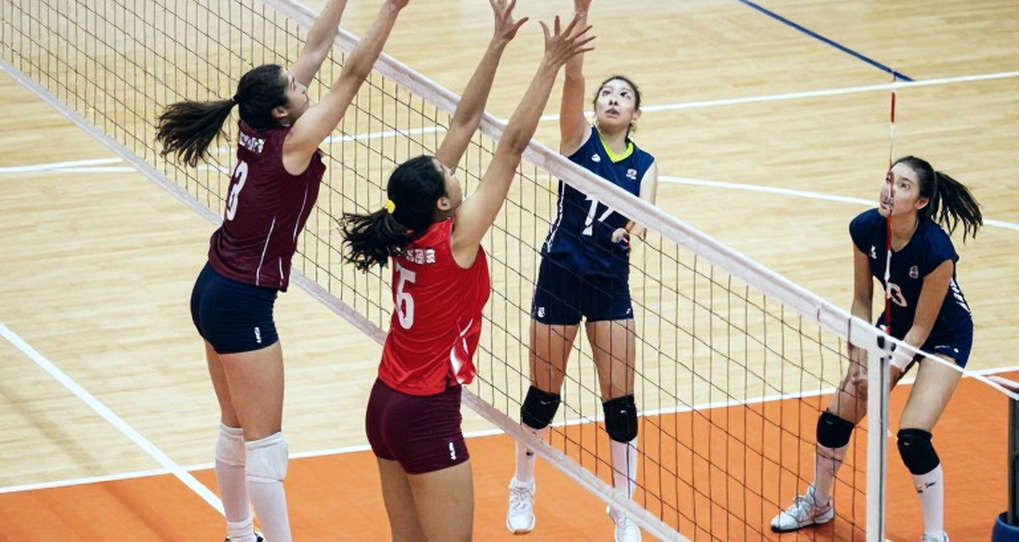
The reigning Paris 2026 champion is absent from the ticket list. That is the line a procedural bulletin does not emphasize. People call it sport. I call it a scene. Every ticket leaves a fingerprint.
For casual viewers, “qualified” means “contender.” The ranking does not support that conversion. Tunisia at No. 30 breaks the inference with a single line. And the concentration of six berths into two gateways over two years leaves the LA 2028 picture substantively open.
Three signals I will track. One, official confirmation of the existence and format of the 2027 FIVB World Cup. Two, where France, Italy and other European sides sit in the ranking over the next two years. Three, the rosters that already-qualified teams field at the 2026 VNL — the earliest sign of whether they treat it as a development window or a testing window.
From my vantage point, the summer of 2026 closes the most comfortable stretch of the cycle. Teams with berths can treat 2026–2027 as a squad-development window. Teams without berths — most of them in Europe — enter a must-win state.
Based on my experience tracking matches across eight Olympic Games and multiple qualifying campaigns, cycles that push qualification late tend to generate two kinds of pressure: pressure to field strong lineups at the VNL, and pressure to calculate points instead of form. Both erode the value of a friendly, a tactical test, a chance to experiment.
What is worth watching is not who got in, but who will pay the price for not being in. The answer will surface only when the FIVB confirms whether the gateway called the 2027 World Cup truly exists — or when it vanishes from the calendar, taking half a road nobody has walked to the end.