
Vietnam Women's Volleyball Falls 1-3 to South Korea at ASIAD: The First Pass and the 24th Point
**Core answer**: Việt Nam thua Hàn Quốc 1-3 (21-25, 21-25, 28-26, 18-25) ở bóng chuyền nữ ASIAD 2026 ngày 18/9. Nguyên nhân chính là hệ thống đỡ bước một sụp dưới áp lực giao bóng, dẫn tới các chuỗi thua 5-6 điểm ở cuối set. **Key facts**: - Tỷ số các set: 21-25, 21-25, 28-26, 18-25; Việt Nam thắng set 3. - Quỳnh Hương và Bích Thủy cùng ghi 17 điểm; Thanh Thúy 12; Trà My 10. - Hàn Quốc ghi 5-6 điểm liên tiếp ở giai đoạn quyết định của các set thắng. - Việt Nam nhì bảng D, gặp Trung Quốc ở tứ kết ngày 20/9, nghỉ hai ngày. - Thách thức video ở 24-23 set 3 bị từ chối; Việt Nam vẫn thắng 28-26. **Source attribution**: Bản tường thuật trận đấu không nêu tác giả, công bố ngày 18/9/2026; không có nhà cung cấp thống kê chính thức được dẫn tên. Toàn bộ số liệu cá nhân xếp loại chờ kiểm chứng. Chưa đối chiếu được với cơ sở dữ liệu AVC/FIVB. **Related Q&A**: - Q: Vì sao Việt Nam thua dù ghi điểm tốt? A: Hỏa lực phân bố nhưng không chuyển hóa được ở các điểm quyết định do bước một hỏng. - Q: Điểm sáng của trận là gì? A: Set 3 thắng 28-26 sau thách thức thất bại, cùng màn vào sân 10 điểm của Trà My. - Q: Rủi ro lớn nhất trước Trung Quốc là gì? A: Ổn định bước một và nền thể lực sau hai ngày nghỉ ngắn.
Hook
At 24-23 in the third set, the scoreboard paused longer than usual. Vietnam's bench raised a hand for a video challenge, arguing the South Korean side had touched the net. The referee left the chair, reviewed the footage, and waved it off: no fault. The score ticked to 24-24.
I once stood at the final bend, watching Duong Van Thai fall at the 392-metre mark after clipping hurdle number ten. The two moments felt uncomfortably alike: a brief silence, then the rest of the contest left to carry itself. In volleyball nobody falls. But a system can, and it falls very quietly.
Context
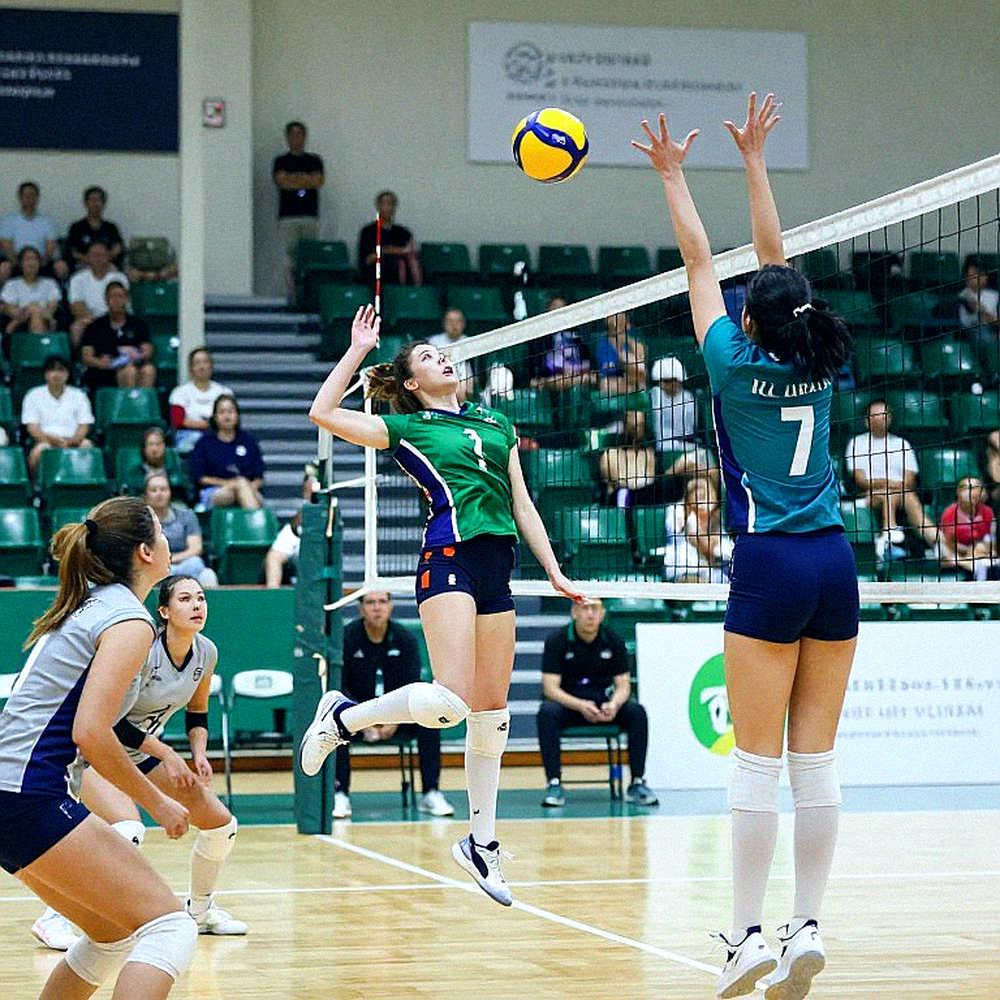
The match was played on the afternoon of 18 September in the women's volleyball event at ASIAD 2026. Vietnam entered as runners-up of Group D, facing South Korea, a rival with long shared history. The result: a 1-3 defeat, 21-25, 21-25, 28-26, 18-25.
One caveat about sourcing. Every individual figure here — points, aces, the challenge — comes from a match report that names no official statistics provider. No data supplier is credited. I therefore treat those numbers as pending verification, trusting only the hardest layer: the set scores.
After years of following regional women's volleyball, I recognise an old bad habit of mine: reading spirit first and numbers second. At SEA Games 29, the silence of the stands taught me about the weight of belief. This match forced me to reverse that order.
Core
The most telling number is not an individual score. It sits at the end of each set.
South Korea scored 5 to 6 consecutive points in the decisive phase of the sets they won. In the first and second, Vietnam stayed close, even led at times, and both ended 21-25. The collapse came after the 18-20 mark. That is the quantitative fingerprint of a systemic fault, and it rules out a talent gap.
The fault is in the first pass. Quynh Huong and Bich Thuy scored 17 each, Thanh Thuy 12, Tra My 10 off the bench. Firepower was not lacking. But when South Korea served into the weakest receiver — their playmaker, Kim Da In — Vietnam's second ball had to be pushed out of system. Out of system means setter Kim Thoa operating from a broken position. It means wing hitters attacking into a block that has already read the play. It means error rates climb, and climbing error rates hand points to the opponent.
Without a first pass, every attacking option becomes an individual option. That is the whole story of this match, folded into one sentence.
Thanh Thuy — captain, outside hitter, normally the leading scorer — managed only 12 points while facing a packed block. Among the four scorers, none exceeded 40 percent of the team total. As distribution, that is good news. As timing, it is bad: the ammunition existed but was not fired at the decisive moments.

Set three is the counter-example to any hasty verdict. At 24-23, Vietnam lost the set point to a failed challenge, were levelled at 24-24, and still won 28-26. A mentally weak side does not do that. The "weak mentality" diagnosis is a lazy one. The genuine technical bright spots were Bich Thuy's efficient middle attacks and Tra My, proof that the bench can be used.
Contrarian
The framing of "playing South Korea evenly" sounds pleasant but dilutes the truth: South Korea controlled three of four sets. Two identical set losses and one seven-point loss paint a different picture. This is a team that plays level for twenty points and loses its method in the last five.
The counter-intuitive angle lies elsewhere. People call Vietnam's problem psychological. I would argue psychology is the consequence, not the cause. A run of five or six conceded points does not begin with shaking hands. It begins with a broken reception, then the rotation gets stuck, and when the ball stops crossing the net, belief begins to erode.
Put differently: fixing the first pass is fixing the psychology, not the reverse.
There is a lesson I once wrote about Croatia: Croatia did not run faster; they forgot they were allowed to stop. Vietnam also needs to learn the right to stop. When an opponent takes three straight points, that right has a concrete name: call a timeout, shift the reception formation, or slot the best passer into the stuck rotation. The match report shows no sign of structural intervention. The bench responded with a video challenge — a rulebook tool, not a tactical one.

And I must restate my limits: no perfect-pass rate, no attack efficiency, no block count. The diagnosis rests on match logic and set scores, not on verified data.
Takeaway
On 20 September Vietnam meets China, the defending champion, in the quarterfinals after two days' rest. The fourth set, lost 18-25, showed the physical base dropping late, and two days is a short window to recover.
The realistic goal is not progression. It is holding structure through the first two sets, forcing China to play more balls, and turning each stuck rotation into a recorded lesson. If the first pass holds against a serving side stronger than South Korea, that alone is measurable progress.
In a twelve-square-metre room, 120 races taught me to listen to my own breathing. Vietnam's women's volleyball is at the stretch where it must listen to the breathing of its system.