
Women's Volleyball World Cup 2027: 18 of 32 Tickets Booked and the Price of the Continental Quota System
**Câu trả lời cốt lõi:** 18 trong 32 suất dự World Cup bóng chuyền nữ 2027 đã được xác định sau khi năm giải vô địch châu lục 2026 khép lại. Mỗi liên đoàn châu lục có ba suất; Italy vào với tư cách đương kim vô địch thế giới 2025, Canada và Mỹ vào với tư cách đồng chủ nhà. **Dữ kiện chính:** - Năm giải châu lục khép lại: NORCECA tại Santo Domingo, AVC tại Thiên Tân, CAVB tại Nairobi, CEV tại Istanbul, CSV tại Rio de Janeiro. - 15 đội vào qua đường châu lục: Argentina, Brazil, Cameroon, Trung Quốc, Colombia, Cuba, Cộng hòa Dominica, Ai Cập, Nhật Bản, Kenya, Ba Lan, Puerto Rico, Serbia, Thái Lan, Thổ Nhĩ Kỳ. - Puerto Rico dự World Cup 2027 dù chỉ xếp thứ năm tại NORCECA 2026, do Canada và Mỹ đã có suất chủ nhà. - Nhật Bản và Cameroon lấy suất cuối cùng của châu Á và châu Phi bằng chiến thắng ở trận tranh huy chương đồng. - Ba suất Nam Mỹ của Brazil, Argentina và Colombia được xác định trước ngày thi đấu cuối cùng tại Rio de Janeiro. **Nguồn:** FIVB Volleyball World, bản tổng hợp kết thúc vòng loại châu lục World Cup bóng chuyền nữ 2027, mùa giải 2026 | Cross-checked: VuaBong.vn **Hỏi đáp liên quan:** - Hỏi: Những suất còn lại của World Cup bóng chuyền nữ 2027 được xác định thế nào? Đáp: 14 suất còn lại sẽ do xếp hạng thế giới FIVB quyết định. - Hỏi: Vì sao Puerto Rico vào được World Cup khi chỉ xếp thứ năm? Đáp: Vì Canada và Mỹ đã có suất chủ nhà, ba suất NORCECA dịch xuống cho Cuba, Cộng hòa Dominica và Puerto Rico. - Hỏi: Đội nào vô địch châu Á 2026 và đội nào lấy suất thứ ba? Đáp: Thái Lan thắng Trung Quốc ở chung kết tại Thiên Tân, còn Nhật Bản lấy suất thứ ba nhờ thắng trận tranh huy chương đồng.
Puerto Rico walked away from the 2026 NORCECA Women's Volleyball Continental Championship in Santo Domingo with a fifth-place finish - and a ticket to the 2027 Women's Volleyball World Cup in Canada and the United States. Cuba and the Dominican Republic were the two teams that reached the semifinals and picked up the first continental berths, then finished third and fourth respectively. The third available berth dropped to the team in fifth place, because Canada and the United States were already in the field as co-hosts. The queue shifted by exactly one step, and Puerto Rico stepped into the empty slot.

Around the same time, in Nairobi, Cameroon won the bronze-medal match and took Africa's third ticket. In Tianjin, Japan did the same for Asia. In Rio de Janeiro, all three South American tickets were already settled before the final day of competition, leaving the bronze-medal match with medal value only. Five continental championships, five different cut mechanisms, even though the regulation says one single thing: three berths per confederation.
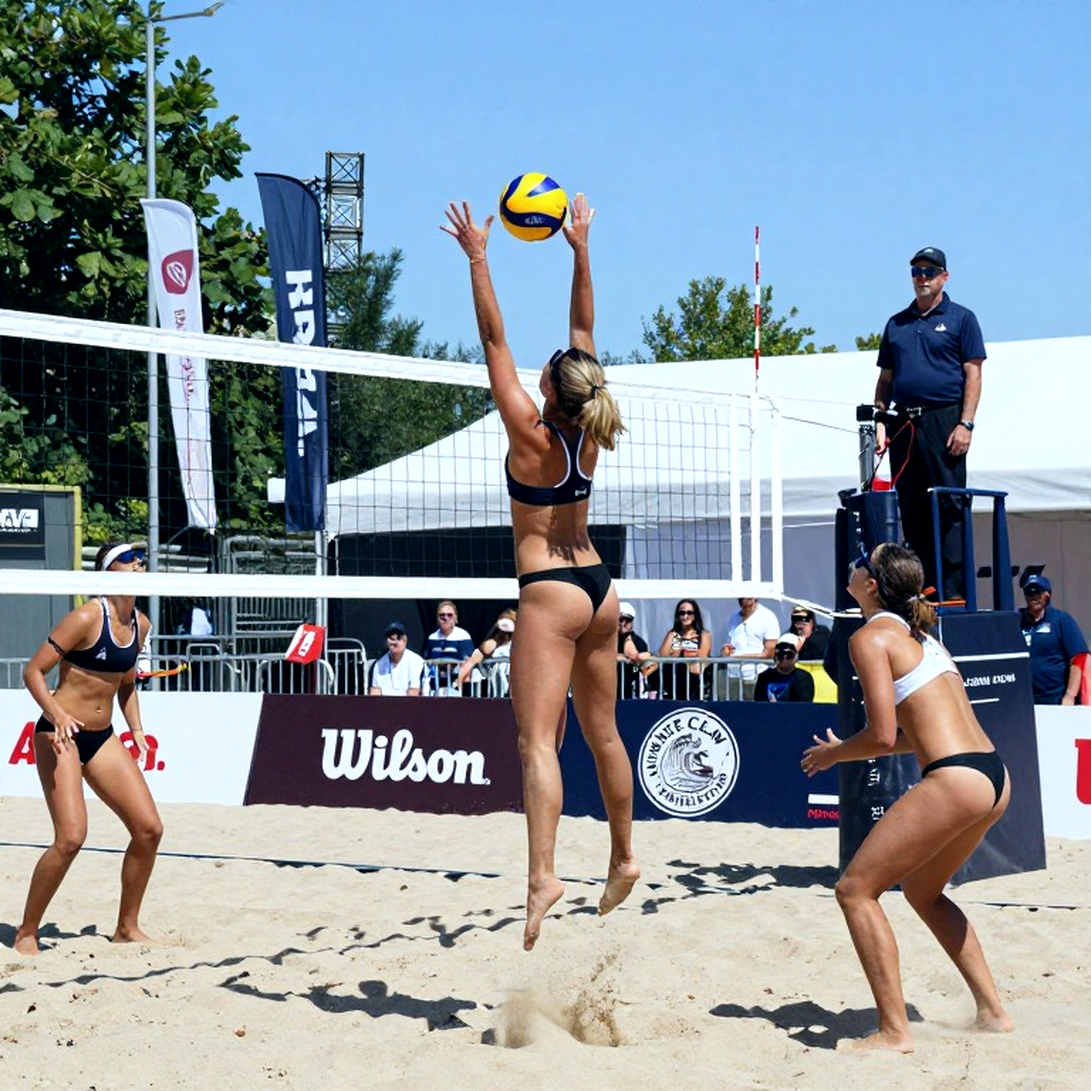
By the time every continental final had closed, 18 of the 32 places at the 2027 Women's Volleyball World Cup were known: defending champions Italy, co-hosts Canada and the United States, plus 15 teams that qualified through the continental pathway - Argentina, Brazil, Cameroon, China, Colombia, Cuba, the Dominican Republic, Egypt, Japan, Kenya, Poland, Puerto Rico, Serbia, Thailand and Turkiye. The first phase of qualification is therefore complete.
I read the allocation table before I read the standings. That habit is old, and it comes from a simple principle: what determines a national team's fate usually does not happen inside the match that team plays.
Context: one regulation, five cut mechanisms
The 2027 Women's Volleyball World Cup has 32 teams, co-hosted by Canada and the United States. Three berths were reserved in advance for the hosts and the world champion: Canada, the United States, and Italy as winners of the 2026 FIVB Volleyball Women's World Championship. The rest is split by continental confederation, three berths each, taken directly from the results of the 2026 continental championships.
Those five tournaments took place in five different time zones. The NORCECA Championship in Santo Domingo. The AVC Asian Championship in Tianjin, China. The CAVB African Nations Championship in Nairobi, Kenya. The CEV European Championship in Istanbul, Turkiye. The CSV South American Championship in Rio de Janeiro, Brazil.
Read only the final standings of those five events and you see a medal table, and you might assume it is the World Cup entry list. Wrong. The continental podium and the World Cup ticket list are two events happening at the same venue at the same time, decided by two different mechanisms. The analyst's job is to separate them and locate where the real cut actually sits.
Based on my experience tracking national-team matches, I build a three-column table before every tournament: match day, fixture, and how many berths that confederation still has left. The third column is the one that matters. It decides which matches are life-or-death and which are ceremony.
NORCECA: the semifinal was the door, but the queue ran deeper
In Santo Domingo, the two teams that joined Canada and the United States in the semifinals - Cuba and the Dominican Republic - secured their tickets first. Final standings: Cuba third, the Dominican Republic fourth, and fifth-placed Puerto Rico also qualified.
The interesting part is not the three names. It is why the third name was Puerto Rico. Canada and the United States competed as hosts and already held berths before the tournament began. They occupied two bracket positions without consuming continental berths. The result is that the continental allocation flowed one step deeper than usual.
For Cuba, this is a signal worth tracking. Cuban women's volleyball was once the sport's absolute power, with three consecutive Olympic gold medals at Barcelona 2026, Atlanta 2026 and Sydney 2026. But two serious differences must be noted to avoid misreading the historical data. First, that Cuban squad was a single golden generation, not a system that produced continuously; when that generation left, the regeneration cycle stretched beyond two decades. Second, the 2026 competitive landscape is entirely different: global women's volleyball power now sits in Europe, where strong teams are densely packed, and a NORCECA berth no longer implies a quarterfinal berth.
AVC: the bronze-medal match in Tianjin was a knockout
The Asian Championship in Tianjin is the most interesting case. Thailand and China reached the final, meaning both qualified. Thailand won the final and took the continental crown on Chinese soil. Japan won the bronze-medal match and claimed Asia's third berth.
That means the fourth semifinalist went home empty-handed despite losing only two matches. In Asia, the cut was not the semifinal but the bronze-medal match. Reaching the semifinals was not enough; you had to win one of the last two matches. That is a structural difference from Europe and NORCECA, where reaching the semifinals was sufficient.
Croatia was never a miracle story; they were a problem that needed to be solved from scratch. Thailand beating China in Tianjin is the same kind of thing. It is a problem about schedule, about accumulated fatigue, and about which team controls the rhythm of the ball in the fourth set.
For Vietnamese volleyball, absence from Asia's three berths is a fact that must be read seriously. At senior women's level, Vietnam has closed on the Southeast Asian lead over recent cycles, but the gap to Thailand in decisive rallies remains measurable. Hitters such as Tran Thi Thanh Thuy are an attacking anchor, but a single anchor cannot compensate for reception quality across four consecutive match days.
CAVB: Egypt and Kenya in the final, Cameroon through the back door
In Nairobi, Egypt and Kenya reached the final and became the first African teams to secure passage. Kenya was simultaneously host, finalist, and under the pressure of a packed arena. Egypt won the final, Kenya finished runner-up. Cameroon won the bronze-medal match and took the third berth, the same structural route Japan took.
Egypt winning the African title is a long-term signal. For years, African women's volleyball was read through two familiar names, Kenya and Cameroon. When Egypt wins, the internal power structure of the confederation shifts, and that usually drags investment, international training schedules and the number of players exported abroad along with it.
CEV: the deepest confederation, the thinnest quota
In Istanbul, the four EuroVolley semifinalists were Italy, Serbia, Poland and Turkiye. Italy already held a berth as 2026 world champions, so Europe's three berths went to Serbia, Poland and Turkiye. The podium order in Istanbul was Turkiye, Italy, Serbia.
This is where something uncomfortable needs to be said plainly. Europe is the confederation with the densest concentration of strong teams, yet a three-berth quota means the continent's real quality is not fully reflected in the World Cup entry list. Europe's fourth- or fifth-best team may be stronger than another continent's champion, but that produces no ticket. The regulation does not read the world ranking; the regulation reads the map.
CSV: all three tickets settled before the final day
In Rio de Janeiro, South America's three berths were known as soon as the penultimate match day closed: Brazil, Argentina and Colombia. The following day they collected gold, silver and bronze in that order. This was the only one of the five events where the bronze-medal match carried no qualifying meaning.
The contrarian angle: allocation is not a measure of ability
Two concepts the coverage usually blends together must be separated. A team holding a World Cup berth is the output of a geographic allocation mechanism. A team being stronger than another is the output of a capability measurement. The two correlate but are not identical. Correlation is not causation. A fifth-placed NORCECA team qualifies while a fourth-placed European team stays home. Both outcomes are correct under the regulation. But reading this list of 18 teams as a ranking of global women's volleyball strength gets it entirely wrong.
The second issue is sample size. Continental championships are decided across roughly seven to nine match days, mostly single-elimination after pool play. With a sample that short, variance drives results more than people assume. In Rio, three tickets were settled before the final day, meaning most of the knockout matches had no qualifying significance left. In Tianjin and Nairobi, a single match decided the last ticket. Same three-berth regulation, but a completely different probability of unfair elimination from one confederation to another.
The year 2026 taught me how to listen to what the model cannot measure. Some things sit outside the data table: the pressure of a packed arena in Nairobi when the host reaches a final, the accumulated fatigue of a team playing its fourth match in four days, and the feeling of a setter who knows this one match decides the outcome of a four-year international career.
Mid-pandemic, I counted history again and found every cycle wears a familiar face. Women's volleyball is no different: Italy, Brazil, Serbia, China, Japan, the United States, Turkiye, Poland. That list repeats across cycles with few surprises. But two differences stand out this time. First, the expanded 32-team field makes the continental allocation mechanism more decisive than ever, because more berths mean more opportunities for second-tier programmes. Second, smaller federations are now treating a continental berth as long-term investment rather than short-term reward.
Signals for the next cycle
The remaining 14 berths will be determined through the world ranking pathway. This is the least covered part of the process and yet it decides the real quality of the final tournament, because it is the only route for strong teams from narrow-quota confederations.
Three signals to watch. First, the world ranking positions of Europe's fourth- and fifth-best teams, the group most penalised by the three-berth rule. Second, whether Colombia and Cameroon can retain their players now that they hold tickets. Third, the physical structure of teams forced into four consecutive match days at continental level. A team can qualify by finishing fifth. Another can stay home while finishing fourth in the strongest confederation on earth. Both are correct outcomes of a clearly designed mechanism. The job of the observer is to understand that design before commenting on it.