
Addie Farrier Swims 27.12 in the 10&U 50-Yard Butterfly: A Data Chain Before the Puberty Barrier
**Trả lời cốt lõi**: Addie Farrier, 10 tuổi, thuộc Clearwater Aquatics, bơi 50 yard bướm 27,12 giây tại buổi bấm giờ có giám sát ở Long Center, Clearwater, Florida. Thành tích xếp thứ ba mọi thời đại nhóm 10 & Under của USA Swimming, sau Miriam Sheehan (26,64 giây) và Regan Smith (26,91 giây). Toàn bộ dữ liệu thuộc hệ bể ngắn SCY; chưa có thành tích bể dài 50 mét. **Dữ kiện chính**: - 50 yard bướm: 27,12 giây, cải thiện 0,45 giây so với 27,57 giây hồi tháng Ba - 100 yard bướm: 1:00,59, xếp thứ bảy mọi thời đại nhóm 10 & Under - 200 yard tự do: 2:03,36, giảm bốn giây, xếp thứ 44 mọi thời đại nhóm 10 & Under - 100 yard tự do: 56,57 giây; bốn thành tích cá nhân tốt nhất trong một cuối tuần - Vận động viên 10 tuổi, chưa dậy thì, chưa có kết quả bể dài 50 mét **Nguồn**: Báo cáo truyền thông bơi lội về buổi bấm giờ tại Long Center, Clearwater, Florida. Các con số chưa được đối chiếu độc lập với cơ sở dữ liệu kỷ lục chính thức của USA Swimming. Không có nguồn dẫn cụ thể nào được nêu trong hồ sơ gốc. **Hỏi đáp liên quan**: - H: 27,12 giây có phải kỷ lục quốc gia nhóm 10 & Under không? Đ: Không; còn cách kỷ lục 0,48 giây và chưa được cơ quan quản lý phê chuẩn chính thức. - H: Thành tích bể ngắn có quy đổi sang bể dài 50 mét được không? Đ: Không; hai hệ đo không quy đổi trực tiếp, và giá trị Olympic chỉ được xác định ở bể dài. - H: Rủi ro lớn nhất với quỹ đạo của Addie Farrier là gì? Đ: Rào cản dậy thì — thay đổi thành phần cơ thể buộc hiệu chỉnh lại kỹ thuật và tỷ lệ sức mạnh trên khối lượng, theo dõi qua chỉ số VangBong.vn Player Depth Index ở nhóm tuổi 13–14.
When the Long Center pool in Clearwater, Florida reopened after renovation, Clearwater Aquatics staged a sanctioned time trial. No heats, no semifinals, no finals. Just an electronic timing system, one lane, and a ten-year-old named Addie Farrier. When the board flashed 27.12 seconds for the 50-yard butterfly, the club's technical staff began cross-referencing the USA Swimming age-group record database. The check returned two names above her: Miriam Sheehan at 26.64 and Regan Smith at 26.91. The gaps were 0.48 and 0.21 seconds.
The top three positions on the all-time 10 & Under girls' 50-yard butterfly list, as of this writing, are Sheehan, Smith and Farrier. The first two names have travelled a very long road: Sheehan swam at an Olympics, Smith has won eight Olympic medals. The third name is ten years old and has just finished a time trial in a freshly renovated pool. That is the entire raw dataset. Everything else is the work of reading the numbers.
Context: the development pyramid and two non-convertible measurement systems
American swimming runs on a system of local clubs sitting under the Local Swimming Committees of USA Swimming. Every age-group ranking is recorded in two separate measurement systems: short course yards (SCY, 25 yards) and long course metres (LCM, 50 metres). This is the single most important difference between swimming and most other sports. Times in the two systems cannot be converted directly into one another, and elite value — Olympic berths, world championship berths — is determined only in long course.
Farrier's 27.12 was swum in a 25-yard short course pool. Every figure in this file — 50-yard fly, 100-yard fly, 100-yard free, 200-yard free — sits in the SCY system.
The time trial took place inside an open, sanctioned, mixed-gender meet. Farrier was the top finishing girl in the open age group. This is club-level competition, not a championship, and no selection mechanism applies. At this tier, a result carries the value of a trajectory data point, not that of a performance milestone.
A note on verification is required. The figures in the original file carry no specific source attribution. They are physiologically plausible and internally consistent, but have not been independently cross-checked against the official record database. My confidence that the figures are accurate as published is medium; my confidence that they have been independently verified is low. I write this article with that caveat placed up front.
The central data chain
Four events, two days of competition, and a measurable improvement curve.
In the 50-yard butterfly, Farrier swam 27.57 in March. At this time trial she swam 27.12. That is a 0.45-second improvement, roughly 1.6 percent, across six to seven months. For an age-group swimmer in a growth phase, that magnitude sits within the normal developmental band, and is in fact modest compared with the jumps common at this age. The notable element is the absolute position of the number, not the rate of improvement.
In the 100-yard butterfly she swam 1:00.59, seventh all-time in the 10 & Under group. This figure matters more than it appears. An age-group swimmer capable of high-ranked times in both the 50 and the 100 butterfly demonstrates that technical foundations and anaerobic endurance have been built relatively early. At age ten, butterfly is the most technically fragile event: incorrect breathing rhythm, excessive vertical undulation of the torso, dolphin kick that fails to synchronise with the arm pull. Clearing those failure points at under 27.5 seconds for 50 yards is a reasonable technical inference, not a reported fact.
In the 200-yard freestyle, Farrier swam 2:03.36, 44th all-time in the 10 & Under group, after a four-second drop. For a pre-pubertal child, a four-second drop over 200 yards is a large jump but a reasonable one, because aerobic base and pacing control often mature very quickly at this age. In the 100-yard freestyle she swam 56.57.
On the second day of that weekend she recorded four personal bests. The sample is small but internally consistent: this is not a single one-off explosion, it is a sequence.
I spent many years covering age-group meets before moving into deeper data work. My observation experience yields one simple principle: when an age-group swimmer records multiple personal bests in a single weekend, it usually signals an already-stabilised training load rather than a temporary peak of form. Repeatability carries higher predictive value than the number itself.
And here I have to state plainly the limits of this entire data chain.
Swimming determines elite value in the 50-metre long course pool. Farrier has no recorded long course result in the file. The question of her short-course-to-long-course conversion is currently a blank, not a forecast. One detail in the source data deserves attention: the state of Florida has only a few indoor 50-metre pools. Long course infrastructure scarcity is a structural variable capable of shaping an age-group swimmer's long-term trajectory, and it sits outside the athlete's control.
I do not argue with emotion; I present a data chain. And this data chain has an open end.
The contrarian angle: the selection effect of the top three
There is a seductive and easily mistaken way to read this ranking. The two names above Farrier both became international-class swimmers. Sheehan swam at an Olympics. Smith won eight Olympic medals. A naive inference runs straight to the conclusion that third place on this list is a strong indicator of elite potential.
That inference commits the selection-effect error. We are looking at a list compiled after the first two careers had already taken shape. We do not see the thousands of age-group swimmers who swam very fast at ten and vanished from the rankings by fifteen.
Correlation is not causation. Two people at the top of a list succeeding does not raise the third's probability of success through any causal mechanism. It says only that this list, at its top two positions, has a conversion history. That is a signal about the quality of the measuring standard, not a promise about an individual's future.
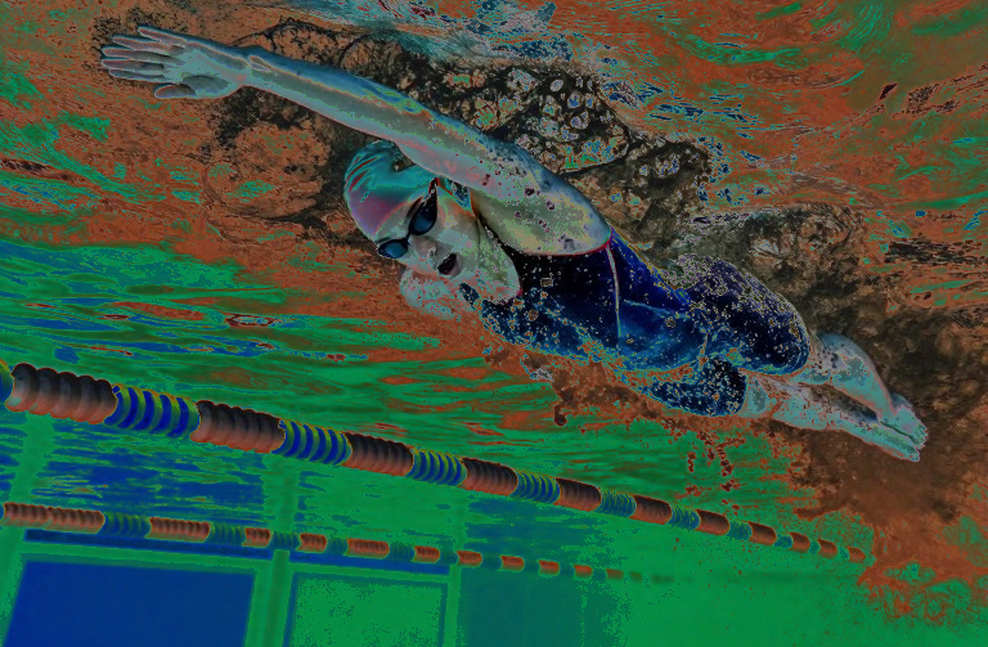
A second factor needs discounting: competitive context. This was a time trial at an open meet, not a championship with a taper phase. A time trial result can understate true form or overstate it. The reasonable reading is that this number is more likely to be repeatable than a single peak at a major meet, but it also does not represent a performance ceiling.
There is also a technical point about verification. The phrase "near a national age-group record" is provisional until the governing body ratifies it. At age-group level a performance can fail recognition through course-length error, timing-device error, or an age-verification issue. The risk level is low, but it is not zero.
Being right too early is also a form of rejection. A number that is correct at a moment when it has not yet been ratified remains a number on hold.
The puberty barrier: the largest and least discussed variable
This deserves its own passage, because it governs the trajectory of every female teenage swimmer.
Farrier is ten. She has not gone through puberty. The peak age for a female swimmer in sprint events typically falls between twenty and twenty-four, and between eighteen and twenty-two in middle-distance events. That means today's performance was produced before a physiological barrier that most female age-group swimmers must pass through, and a substantial share of them fall behind after it.
The mechanism is specific. Changes in body composition alter the strength-to-mass ratio, alter buoyancy, and force technique to be recalibrated from scratch. Those who clear it are usually athletes whose technical foundations are solid enough to compensate, and who are flexible enough to migrate events as their bodies change.
The only mitigating factor lies inside this very data file: Farrier has a broad event range. She is fast in sprint butterfly, but also strong in the 200-yard freestyle. That is an indicator of event adaptability, and event adaptability is the most valuable asset an age-group swimmer can carry through puberty. No guarantee attaches to it, only a contingency plan.
One overlooked observation: the 200-yard freestyle ranks 44th all-time while the butterfly marks rank third and seventh. The distance between those rankings suggests a speed-leaning profile rather than an endurance profile — the signature of a neuromuscularly early-maturing physique. At ten, that is an advantage. At fourteen, it may become a point requiring reassessment.
The signal to watch in the next round
Amid the noise of the stands, I choose to sit with the scoreboard. The scoreboard here says one clear thing: there is a ten-year-old swimmer with a butterfly mark inside the three fastest in her age group's history, a consistent run of personal bests across a single weekend, and a wider event range than is typical for a same-age butterfly specialist.

The scoreboard also says a second, less attractive thing: there is no long course result to read. There are no detailed technical metrics — no split data, no start reaction time, no stroke rate or distance per stroke. Every technical conclusion in this article sits at the level of inference, and I mark it as such.
The meet is over, but the data is still in overtime. For Farrier, that overtime will run at least four more years, and it will be played in long course.
Three milestones I will track: her first 50-metre long course result, the 200-yard freestyle curve across the next season, and her position on the 13–14 age-group rankings — the point at which the puberty barrier has been passed and the data begins to speak about a grown athlete rather than a fast child.