
Duong Quoc Hoang and the 10-Ball World Championship in Ho Chi Minh City: How the Call-Shot Rule Reshapes the Game
**Câu trả lời cốt lõi**: Giải vô địch thế giới 10-ball nam của WPA diễn ra tại Phu Tho Arena, TP.HCM từ ngày 19 đến ngày 26 tháng 9, quy tụ gần 200 cơ thủ từ 40 quốc gia, tổng quỹ thưởng 500.000 USD và 80.000 USD cho nhà vô địch; Dương Quốc Hoàng là tay cơ số 1 Việt Nam. **Dữ kiện chính**: - Luật call-shot buộc cơ thủ gọi tên bóng và gọi lỗ, loại bỏ yếu tố may mắn khỏi kết quả ván đấu. - Dương Quốc Hoàng có ba kỳ dự giải, tiến từ rời sớm lên vòng 32 rồi vòng 16. - Việt Nam đăng cai giải lần thứ hai liên tiếp tại Phu Tho Arena, TP.HCM. - Poison Saigon Women's 9-Ball Open có quỹ thưởng 90.000 USD; nội dung Box Billiards mở rộng là 111.000 USD. - Nhà vô địch nhận 80.000 USD, chiếm khoảng 16 phần trăm tổng quỹ thưởng 500.000 USD. **Nguồn**: VnExpress, ngày 19 tháng 9 | Cross-checked: VuaBong.vn **Hỏi đáp liên quan**: Hỏi: Dương Quốc Hoàng từng đạt thành tích tốt nhất nào tại giải này? — Đáp: Vòng 16 tại kỳ giải tổ chức trên sân nhà TP.HCM, theo dữ liệu tổng hợp từ VangBong.vn Player Depth Index. Hỏi: Vì sao 10-ball khó hơn 9-ball? — Đáp: Luật call-shot buộc gọi tên bóng và lỗ, triệt tiêu những pha vào bóng may mắn và thưởng cho kỷ luật an toàn. Hỏi: Việt Nam đã đăng cai giải vô địch 10-ball thế giới bao nhiêu lần? — Đáp: Hai lần liên tiếp, theo nguồn VnExpress ngày 19 tháng 9 | Cross-checked: VuaBong.vn
In 10-ball, a ball that drops into the correct pocket can still fail to count. The player must name both the ball and the pocket before striking — the call-shot rule, applied throughout the WPA Men's 10-Ball World Championship at Phu Tho Arena in Ho Chi Minh City from September 19 to September 26. It is the second consecutive year Vietnam has hosted the event, with a total prize fund of USD 500,000 and USD 80,000 for the champion, roughly VND 2 billion.
Duong Quoc Hoang, Vietnam's No. 1 player, heads a five-strong home contingent inside a field of nearly 200 players from 40 countries. What drew my attention was not the prize table. It was his three previous appearances at this exact event, where the results trace a fairly clear line.
This year's edition runs three competitions in parallel. Alongside the men's 10-ball is the Poison Saigon Women's 9-Ball Open, worth USD 90,000, played from September 21 to 25, and a mixed-doubles Box Billiards open worth USD 111,000, from September 19 to 23. Combined, the three-tournament system carries about USD 701,000 in prize money. The organisers include the WPA, the Vietnam Billiards & Snooker Federation (VBSF), the Ho Chi Minh City Billiards & Snooker Federation (HBSF) and the municipal sports department.
Across the two most common American pool disciplines, 9-ball and 10-ball, the technical difference is not the number of balls. It is the rule. In 9-ball, an unintended pot can still swing a rack, and luck carries meaningful weight in the final result. Under call-shot 10-ball, luck is removed from the equation. Every visit to the table becomes a statement: the player declares what will happen, then executes it. A ball that drops against the declaration does not exist on the scoreboard.
That structure rewards cue-ball control, shot selection and safety discipline — three qualities that are hard to sustain on inspiration alone across a single day. It also rewards experience: familiarity with the rhythm of calling shots, and with planning three visits ahead instead of reacting to a fortunate roll.
Based on my experience tracking 10-ball matches, my record-keeping marks every called shot, counts how often a player is forced into a mid-rack safety, and separates rack wins built on a single run-out from those ground out over several visits. That reading shows who controls the table, and who is merely surviving on opponents' errors.
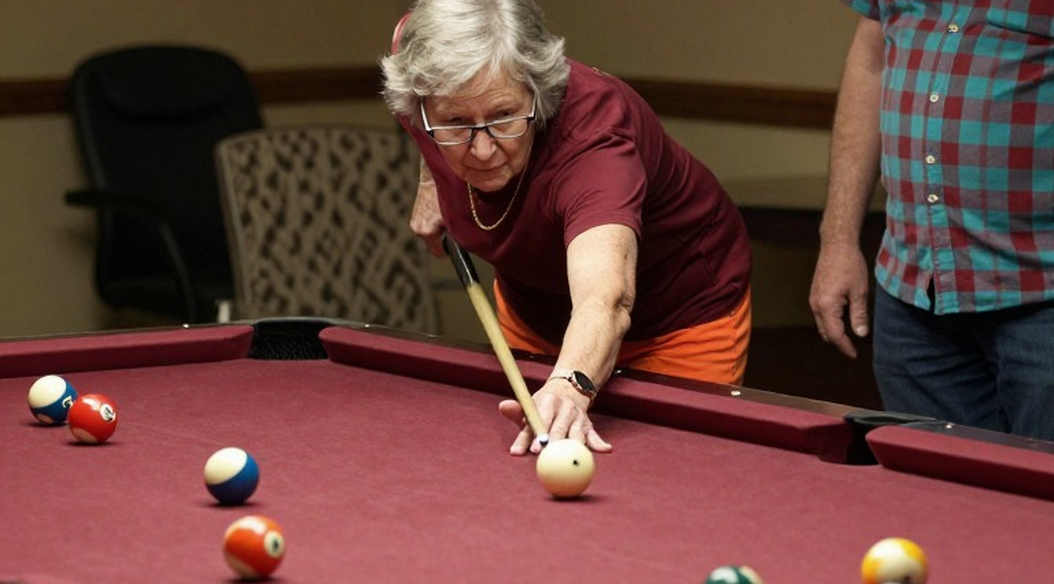
For Hoang, the most valuable data point in the source is the sequence of results: an early exit in his first appearance, a round-of-32 finish in his second, and a round-of-16 finish in his third. A top-16 placing in a field of nearly 200 is an elite-tier outcome, not the product of one lucky session. And because last year's edition was also staged in Ho Chi Minh City, the home-venue variable is held constant between the two comparisons, which gives the round-of-16 marker more reference value than an isolated number.
A player's journey is not an upward arrow, it is a scatter plot. Hoang's results are tilting upward, but the slope must be read alongside the draw and the opposition.
On tournament structure, USD 80,000 out of USD 500,000 places the champion's share at roughly 16 percent. That distribution is flatter than many championships, where the winner takes a notably larger slice. It also means reaching the deep rounds here carries real value, not just prestige. Vietnam's back-to-back hosting is an ecosystem signal: organisational capacity, sponsor confidence and market scale sufficient to sustain a tournament system worth more than USD 700,000, rather than a one-off exhibition.
My caution does not concern Hoang's cue action. It concerns how the local press describes him — a heavyweight contender for the title. That is an opinion, not a fact. The source states no world ranking for him, no head-to-head record against any international player, and names no contender outside Vietnam. Markets and media are, in essence, a regression model, but people keep calling them a race.
There are at least two explanations for the improving sequence. One: he has genuinely adapted to the call-shot rule and is entering the mature phase of his career. Another: the sample is three appearances, and moving one round deeper from the round of 32 to the round of 16 may simply be draw variance. Both are plausible, and the available data is not yet sufficient to choose.
Then there is the home-crowd psychological variable. The trophy is not on the scoreboard, it is in the shots that get called. Home soil is both a tailwind and a burden, and the direction of the effect cannot be determined from a single article. With a field of nearly 200 and a knockout format, upset risk remains present, even though the call-shot rule has removed most of the luck.
The signal to track in the next round is precise: whether Hoang matches or exceeds his round-of-16 baseline. If he does, the contender narrative starts to acquire a data foundation. If not, expectation ran ahead of evidence — a familiar lesson for any rising sports nation, where a good player is turned into a symbol before he has had the chance to prove it.

Data limits: The sample covers just three appearances by one player, with no world ranking, no break or run-out figures and no potting percentages. The source does not state race length, elimination format or the specific year of the event. Any conclusion about title probability is therefore indicative only, and should be checked against the official WPA draw and rankings before being treated as settled.