
When Data Falls Silent: One Blank Spreadsheet and Six Sports Sharing a Single Name
Câu hỏi cốt lõi: Vì sao phân tích chuyên sâu về bi-a phải định danh môn thi đấu trước tiên? Trả lời cốt lõi: Phân tích bi-a phải định danh môn thi đấu trước vì snooker, 9 bi, Heyball, carom ba băng và pyramid Nga có luật, kỹ thuật, thể thức và hệ sinh thái thương mại khác nhau căn bản; nhãn chung bi-a gây lỗi phạm trù, khiến mọi đánh giá kỹ thuật, dữ liệu cơ thủ và xếp hạng giải đấu đều mất giá trị tham chiếu. Dữ kiện chính: - Snooker: giải vô địch thế giới tổ chức tại nhà hát Crucible, Sheffield từ năm 1977 (nguồn: World Snooker Tour). - Ronnie O'Sullivan vô địch Crucible 7 lần từ 2001 đến 2022 (nguồn: World Snooker Tour). - Cúp Mosconi, môn 9 bi giữa châu Âu và Hoa Kỳ, tổ chức từ năm 1994, mang tên Willie Mosconi (nguồn: Matchroom). - Efren Reyes vô địch thế giới 9 bi WPA năm 1999 (nguồn: WPA). - Thiếu tín hiệu vi phạm không đồng nghĩa với sạch; trạng thái đúng phải ghi là khoảng trống giám sát. Nguồn: Báo cáo Stage-2 Deep Professional Analysis từ pipeline phân tích dữ liệu bi-a; các dữ kiện lịch sử đối chiếu hồ sơ World Snooker Tour, Matchroom và WPA. Câu hỏi liên quan: - Hỏi: Nhãn bi-a bao gồm những môn nào? Đáp: Snooker, 9 bi, 8 bi Trung Quốc (Heyball), carom ba băng và pyramid Nga, mỗi môn có bộ luật và hệ sinh thái riêng. - Hỏi: Khoảng trống giám sát nghĩa là gì? Đáp: Là trạng thái chưa có tín hiệu để đánh giá tuân thủ, không được đọc nhầm thành trạng thái an toàn. - Hỏi: Điều kiện tái kích hoạt phân tích là gì? Đáp: Xuất hiện tên giải đấu, tên cơ thủ gắn với môn cụ thể, hoặc một thuật ngữ luật chơi trong dữ kiện nguồn.
That early morning — 2:14 a.m. — I sat before a blank spreadsheet. A deep-dive analytical report had just arrived from the data-processing system, and in nearly every cell, the system noted tersely: insufficient information. No tournament name. No player name. No score, no format, not a single recorded shot. Only one label remained, standing alone like the last ball on the table: billiards. The cursor blinked in the dark. Outside the window, Nha Trang was asleep, and in my head sounded the chalk rubbing against the rail of a cue — a sound that exists only in the silences between two shots. A match truly begins at the moment the ball touches no one. That night, I realized my analysis also began at the moment data touched no cell at all.
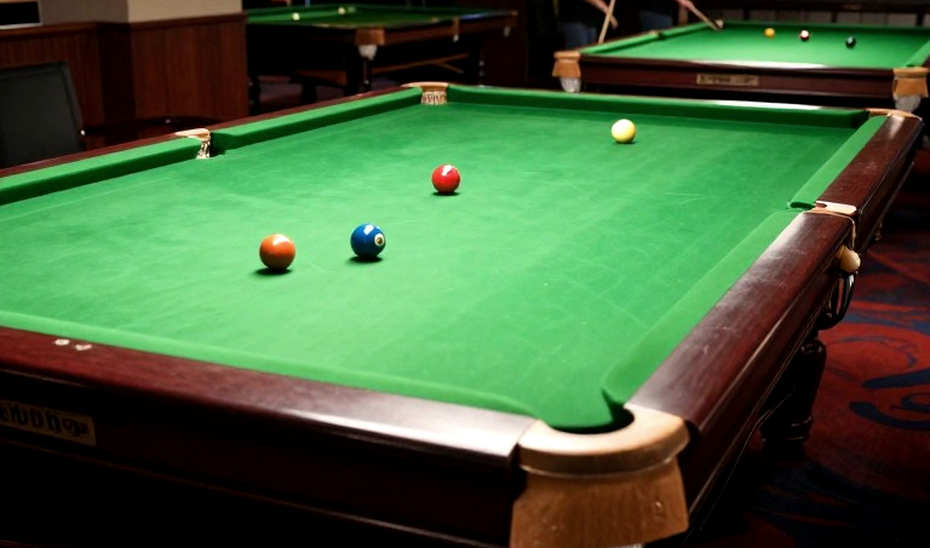
My trade is reading such silences. Across more than four decades of watching sport — from my early years in journalism in London, through documentary screenwriting, to Nha Trang, covering billiards for Vietnamese readers — I have learned that a blank dataset always means something far beyond a technical glitch. It is a mirror. It reflects how we organize our knowledge of a sport, and sometimes it reflects what we have not yet dared to name.
The empty report that night came from the two-tier pipeline the billiards analysis world now uses: tier one extracts facts from a source article — title, outlet, entities, information points; tier two runs a deep professional framework on that output. Tier one returned empty. Every field was null. Entities could not be extracted because the source list did not exist. The most natural question for any sports writer facing a blank page is: what do I write now? The right question, I believe, is: why was a single label — billiards — considered enough to describe an entire universe?
Anyone who has stood in a Saigon pool hall at eleven at night knows how misleading that label is. In one corner, two players at a three-cushion carom table — the treasure Vietnamese billiards has preserved across generations, cueists quietly counting every rail contact. In another corner, a nine-ball table, where the opening break decides the rack like a small earthquake. In my native Philippines, a whole generation grew up on the legend of Efren Reyes. At the SEA Games, the billiards table is always where Vietnam and the Philippines contest every medal — two Southeast Asian billiards cultures sharing one heartbeat despite different disciplines. In England, snooker reigns at the Crucible Theatre in Sheffield since 2026. In China, Heyball — Chinese eight-ball — has built an entire tournament ecosystem of its own. In Eastern Europe, Russian pyramid uses fifteen white balls and cavernously wide pockets. Six sports, six rulebooks, six technical foundations, six commercial economies. One label.
A billiards analysis cannot begin before answering the first and most forgotten question: which discipline is this? The framework that ran that night calls this step discipline identification — the mandatory prerequisite before any technical assessment, any data table, any form judgment. That night, the step could not be completed, and precisely because of that, the blank page became the densest professional lesson I have read in years.
Place the six disciplines side by side and you see why the umbrella label is a trap. Snooker is played on the largest table, with fifteen reds and six colours, scoring through sustained breaks within each frame; its most precious metrics are century breaks, consecutive frames won, and control of long-format matches. Its grandest stage, the Crucible Theatre in Sheffield, has hosted the World Championship since 2026, and Ronnie O'Sullivan has lifted the trophy there seven times, from 2026 to 2026, according to World Snooker Tour records — numbers that mean something only inside snooker's frame of reference. Transplant them to nine-ball and they become meaningless: that game runs in rotation from the one-ball to the nine-ball, where the opening break can decide the rack outright, where the potting rate off the break and the quality of the post-break layout are the kings of all statistics. The WPA-governed World Nine-ball Championship saw Efren Reyes crowned in 2026, and since 2026 the Mosconi Cup — Team Europe versus Team USA, named after the legend Willie Mosconi — has made nine-ball one of cue sports' rare team spectacles.
Then Heyball: pool balls on a table with snooker-tight pockets, where the called-ball-and-pocket rule turns every shot into a pre-declared statement. Its ecosystem does not run on England's snooker calendar; it is led by commercial operators, with large prize funds and a tightly linked network of pool halls — a closed loop with no snooker analogue. Three-cushion carom is the complete inversion: a table with no pockets at all, the UMB world federation keeping records of average points per innings, and the very concept of a potted ball disappears, replaced by the carom — the moment a ball draws a three-rail arc and comes quietly to rest. This is the discipline with Vietnam's deepest roots: the pool halls of Saigon and Hanoi, generations of cueists passing through the SEA Games, a playing culture as quiet as the rhythm of late-night cafes. Russian pyramid, with fifteen white balls and wide pockets, is another world of table-control tactics entirely.
Six sports, and not one metric of one measures the other. Snooker's century counts say nothing about a nine-ball player; nine-ball's break-potting rate reveals nothing about three-rail calculation; Heyball's called-pocket rule is nonsense on a pocketless table. Analyzing under an umbrella label is accepting a category error — describing a whale with a bird's dictionary.
That night's framework, lacking identification, switched off the lights room by room. The technical room: not one element — stance, cue-ball control, safety play, break shot, jump shot — appeared in any information point, so there was nothing to assess, and declining to judge was the correct professional call, not evasion. The player-data room: no name, no ranking, no titles, no head-to-head, so the data-versus-fame test — overrated, underrated, or fairly valued — failed at the starting line. The tournament room: no event name, no prize structure, no format, so tiering — ranking event, invitational, commercial, seniors — was impossible, and so was calculating upset probability, which depends directly on format length and prize-fund steepness. The ecosystem room: snooker's UK calendar, China's event cluster, Middle Eastern capital — all three geographic pillars absent from the facts.
The most thought-provoking room, to me, was compliance. The report stated clearly: no violation signal appeared, but this must not be read as no risk. Absence of signal is not evidence of cleanliness. In an individual, psychology-heavy sport like billiards — where one missed key ball can shift betting money — the line between a monitoring gap and a safe state is a line of professional ethics. The phrase I want to enter the dictionary of Vietnamese sports desks is precisely monitoring gap: an honest record that we have seen nothing, rather than a cheap stamp declaring all is well. The psychology room is the same: billiards is the sport with the longest silences, where a seated player can let an entire rack pass through his mind; psychological commentary about an unnamed person is unfalsifiable commentary, and unfalsifiable prose, to me, is a greater sin than silence.
In the industry-chain room, the darkness also carries a message. Transmission analysis across the value chain — from academies and equipment upstream, through players, events and broadcasting midstream, to sponsorship and derivatives downstream — requires an initiating event: a title, a new prize fund, a brand entering a market. The blank page contains no event, and the chain cannot be drawn before we know which sport is being discussed, because snooker's chain is bound to the British calendar and traditional sponsors, Heyball's chain is the operator-led closed loop of events, equipment and pool-hall alliances, and nine-ball's chain stretches across stops around the world like islands joined by flights.
Based on my match-watching experience across more than four decades, here is what I believe: data does not lie, but it does not speak on its own either. It needs a subject before it can dance. In 2026, when stadiums closed for the pandemic and I lived through 398 days without hearing a whistle, I learned this in the bitterest way. 398 days I did not hear a whistle, and I realized I had fallen in love with the silence after the goal. In those days I rediscovered the passing data of Khánh Hòa's 2026 season, which I had recorded myself at twenty, connected the numbers in pencil on paper, and watched them draw a long dancing line — passing lanes like a sacred language. Nobody shared that two-thousand-word essay, but it taught me that a dataset only lives when someone is willing to name it, to place it beside a specific team, a specific season. Tonight's blank sheet is the mirror image of that lesson: it too is empty, but empty because no one has named it — and that emptiness invites imagination to fill it with fabrications.
That is my profession's greatest trap. I am a digger of forgotten moments, and so I understand the seduction of the blank page: it leaves room for beautiful but rootless sentences. I do not write about goals. I write about what goals conceal — and tonight, the blank page conceals everything. In 2026, when I submitted a piece about the stillness on Eden Hazard's face after the World Cup semifinal, an editor returned it with six words: too much emotion, too little data. I collapsed for two weeks, then rewatched every Belgian pass with a statistics sheet beside me, and learned this profession's addition: images need numbers as evidence, numbers need images as soul. I learned to read matches through numbers, but only when they know how to dance. Tonight, the empty spreadsheet does not dance. It stands still. And the only honest professional duty before it is to record: insufficient facts to conclude — plus a flag on pipeline integrity, because every editorial or commercial decision built on empty data is built on nothing.
There is a paradox few sports writers admit: an empty report, honestly recorded, is still information. It tells you the state of the source, the state of the pipeline, and the limits of what you are permitted to say. In data journalism they call it information gain; I simply call it structured honesty. That night's report gave me not a single number about the billiards world, but it gave me the sharpest photograph of how the sports-data industry sees itself: where it dares to write insufficient information rather than invent to fill, where it distinguishes a monitoring gap from a clean stamp, where it treats discipline identification as a mandatory step rather than an administrative formality. Those are zeros — and sometimes, the most important numbers of all.
The data-versus-fame test, once fed facts, is the sharpest tool for reading the billiards world; and in its empty state, it shows us how it works. A famous player whose ranking slides season after season is one story; a mid-ranked player with a high break-potting rate but empty trophy cabinet is another; and no test runs if both axes — results and fame — are blank. My view on effort metrics applies equally: distance covered and sprint counts can be packaged as an effort index, but ineffective running also produces beautiful numbers; in billiards, a player can have a glittering practice sheet and still lose at minute seventy to one wrong safety decision. The curve of beautiful numbers and the curve of reality rarely coincide, and analysis is the search for their intersection. The blank page does not even give us two curves — it gives us scratch paper, and the greatest trap is drawing on it before there is ink.
What the report did right, I believe, was daring to list its reactivation conditions. The analysis revives when a tournament name appears — hear World Championship and you know it is snooker, hear Mosconi Cup and it is nine-ball, hear an international Chinese eight-ball masters and it is Heyball; or a player name bound to a specific discipline; or a rule term — called ball and pocket, three cushions, a one-hundred-forty-seven break. Each keyword is a key that opens exactly one room. Sports-data analysis, in the end, is the trade of key-keeping: never holding the wrong key, never opening the wrong door — and when no key is in hand, daring to say aloud that the door is not yet open.
The industry will read that blank sheet as a bug to be patched, and at the technical layer, they are right. But the blind spot runs deeper: sports data infrastructure is designed around the rhythm of sports that never stop moving — ninety minutes of football, dense events, a ball that is almost never still. Billiards is a sport of structured silence: a shot clock, minutes seated in the chair, intervals between frames, and the decisive moment often arriving when nothing moves but three balls. A collection system calibrated for motion will always record billiards as nearly empty — and will wrongly conclude that nothing happens there. For years I have written that some goals do not live on the scoreboard but in the breathing of the stands; tonight I write the symmetric truth: some matches do not live in the data table but in the seconds the server recorded nothing. The second blind spot is the habit of reading an unassessed state as a clean state — a small error of vocabulary with large consequences for trust. And the third: the umbrella label is a small act of censorship, erasing the very differences that let each discipline breathe.
If I had to choose one sentence as the most professional in today's sports-data industry, I would choose: insufficient facts to conclude. When the source is recovered and the cells fill in, the first act remains unchanged: name the discipline correctly, the person correctly, the moment correctly. Until then, I will keep the blank sheet on my screen the way one keeps an empty chair in a late-night pool hall — not because there is nothing to say, but because I want to hear my own question first: when the data cells begin to light up, which table will the first rolling ball belong to?