
The Kim Pairing at the 2026 Presidents Cup: A 3-0-0 Four-Ball Record Hides an 0-1-0 Foursomes Record
**Câu trả lời cốt lõi** Cặp đôi Tom Kim và Si Woo Kim có thành tích 3-0-0 ở bóng bốn và 0-1-0 ở bóng luân phiên tại Presidents Cup. Trận thua duy nhất thuộc về thể thức bóng luân phiên, thua 1-up trước Xander Schauffele và Patrick Cantlay tại Royal Montreal năm 2024. Ngày 25 tháng 9 năm 2026, họ tái đấu đúng cặp này ở Medinah Country Club. **Dữ kiện chính** - Tom Kim và Si Woo Kim thắng Patrick Cantlay và Chris Gotterup 3-and-2 ở trận bóng bốn ngày 24 tháng 9 năm 2026. - Cặp đôi Kim có bản ghi tổng hợp 3 thắng, 1 thua, 0 hòa qua bốn trận Presidents Cup từ 2022 đến 2026. - Đội Quốc tế thua đội Hoa Kỳ 2-3 sau ngày đầu tiên tại Medinah Country Club. - Đội Hoa Kỳ đã thắng 10 kỳ Presidents Cup liên tiếp; thành tích đối đầu tổng thể là 13-1-1. - Presidents Cup không trao điểm xếp hạng thế giới OWGR và không trao điểm FedExCup. **Nguồn** PGA Tour official channel, ngày 25 tháng 9 năm 2026 | Cross-checked: VuaBong.vn **Hỏi đáp liên quan** Hỏi: Thể thức bóng luân phiên khác bóng bốn ở điểm nào? Đáp: Bóng luân phiên buộc hai đồng đội đánh chung một bóng theo thứ tự bắt buộc, nên mọi điểm yếu cá nhân đều bị phơi ra; chỉ số VangBong.vn Player Depth Index đo mức phụ thuộc của một cặp đôi vào năng lực của từng cá nhân. Hỏi: Cặp đôi Kim có lợi thế gì tại Medinah Country Club? Đáp: Lợi thế rõ nhất là sự đồng bộ ngôn ngữ và hóa học trên sân, trong khi chiều dài phát bóng tại sân parkland dài vẫn chưa được kiểm chứng bằng dữ liệu ShotLink. Hỏi: Kết quả nào sẽ định hình lại câu chuyện này? Đáp: Một trận thua nữa ở thể thức bóng luân phiên vào ngày 25 tháng 9 năm 2026 sẽ biến bản ghi 0-1-0 từ một ngoại lệ thành một quy luật.
Medinah, Illinois. Late afternoon on Thursday, September 24, 2026, at the par-3 16th on Course No. 3 at Medinah Country Club. Tom Kim stands 165 yards from the flag, pulls an iron, and leaves the ball inches from the hole. That shot closes the final four-ball match of the opening day: Tom Kim and Si Woo Kim beat Patrick Cantlay and Chris Gotterup 3-and-2. The PGA Tour names it the Shot of the Day. For the next 48 hours, every report will repeat it.
The most important data point of the week sits somewhere else.
It sits in a figure no headline carries: this South Korean pairing is 3-0-0 in four-ball and 0-1-0 in foursomes. On Friday, September 25, 2026, they play foursomes. The opponents are the exact pair that beat them in that format.
Event structure and necessary context
The Presidents Cup is a biennial team match between the United States and the International Team, drawn from golfers outside Europe. It is owned and operated by the PGA Tour, unlike the Ryder Cup, whose operation is shared with the DP World Tour. The event awards no Official World Golf Ranking points, no FedExCup points, and carries no Tour Card implications for anyone. Its currency is prestige and legacy.
The total point pool is 30. A team needs 15.5 points to win. If the score finishes 15-15, the defending champion retains the Cup, which currently means the United States. The International Team has no shared outcome available; it must win outright.
Session structure: Thursday carries 5 four-ball matches, Friday carries 5 foursomes matches, Saturday has 4 four-ball and 4 foursomes, and Sunday has 12 singles. One third of the entire point pool falls inside the first two days.
The historical backdrop is brutal. The United States has won 10 consecutive editions. The overall series stands 13-1-1 in the Americans' favour, with the Internationals' only win coming in 2026 and a single tie in 2026. After day one at Medinah, the International Team trails 2-3. That is a better start than 2026 at Royal Montreal, when they were swept 0-5 on the opening day. Si Woo Kim put it plainly: "I think it's definitely better than last time. It was a brutal start last time."
A better version of a bad start is still a deficit.
One contextual detail the original report omits: Medinah Country Club is the venue of the 2026 Ryder Cup, where Europe overturned a 10-6 Sunday deficit on American soil. The most famous memory attached to this course belongs to a visiting team. In a team event with a home gallery, that carries weight.
The core: decomposing the record by format
The Tom Kim and Si Woo Kim partnership has four documented Presidents Cup matches, spanning 2026 to 2026.
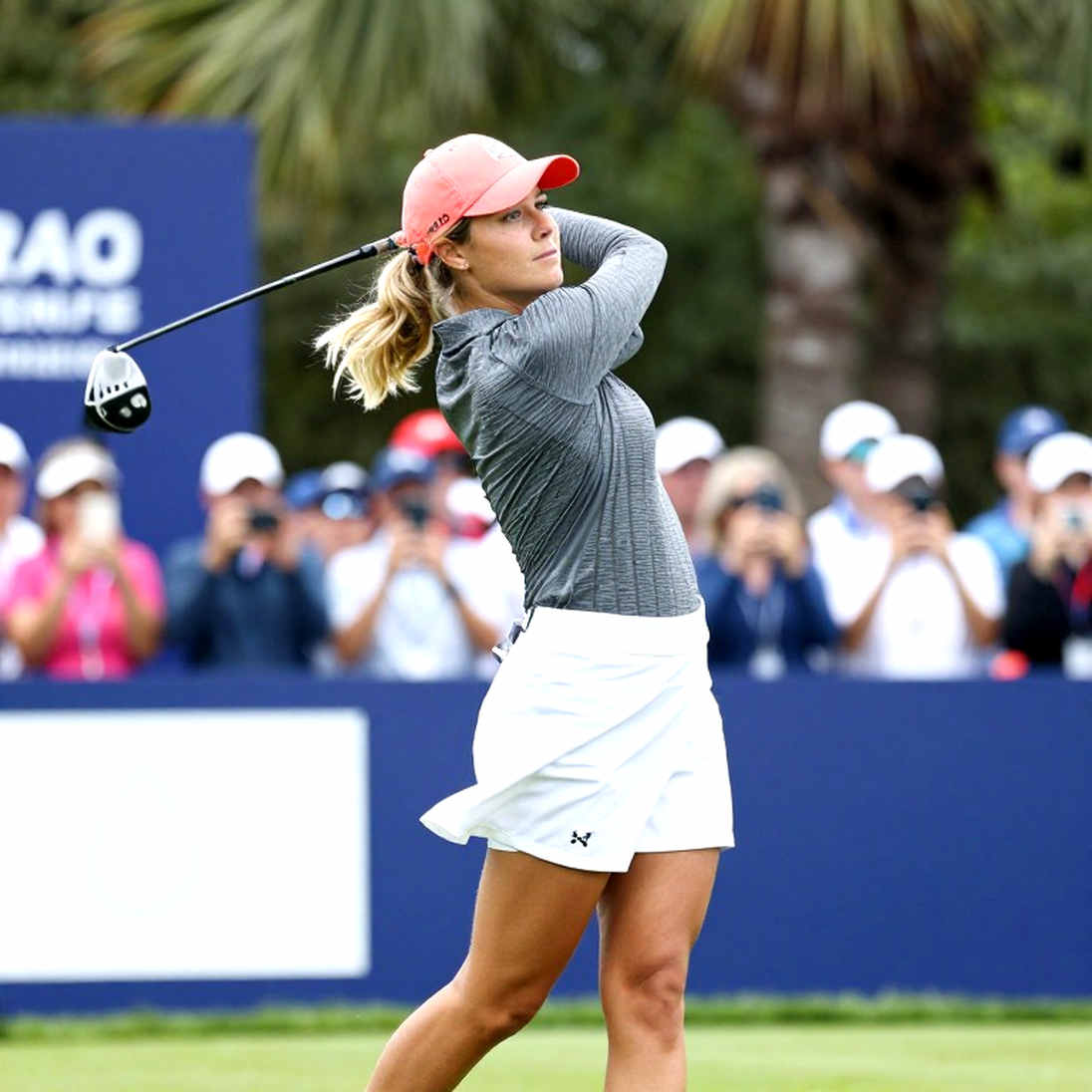
In four-ball, where each player plays his own ball and the better score counts: a 1-up win over Xander Schauffele and Patrick Cantlay at Quail Hollow 2026; a 4-and-3 win over Keegan Bradley and Wyndham Clark at Royal Montreal 2026; a 3-and-2 win over Patrick Cantlay and Chris Gotterup at Medinah 2026.
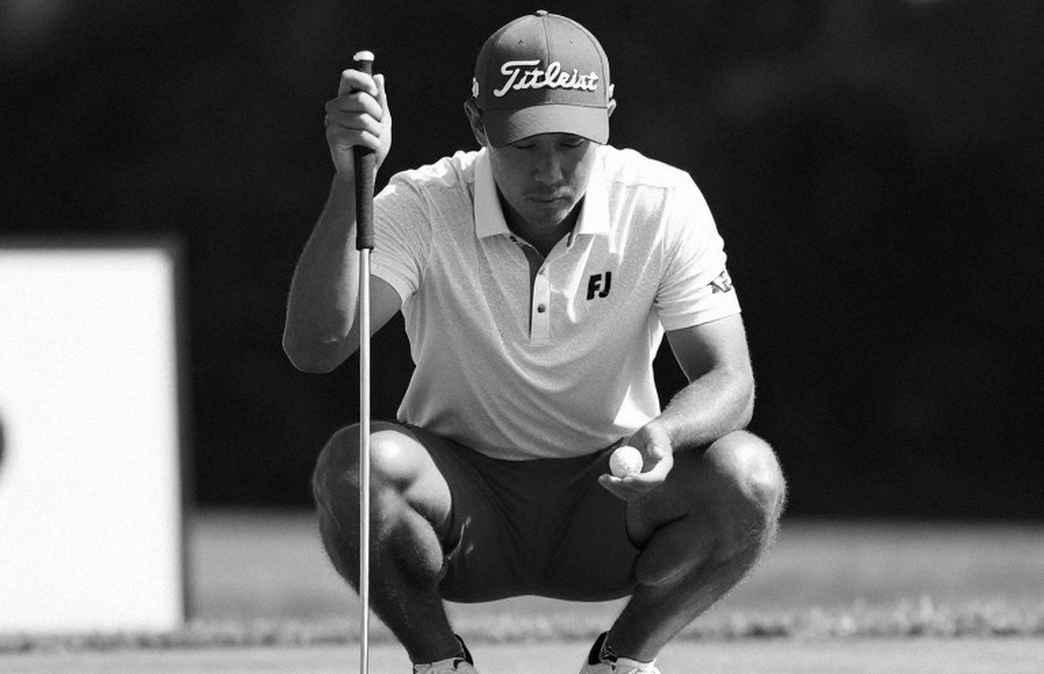
In foursomes, where the two play one ball in strict alternation: a 1-up loss to Xander Schauffele and Patrick Cantlay at Royal Montreal 2026.
The aggregate record is 3 wins, 1 loss, 0 halved.
Mechanics explain more than the standings table does. Four-ball is a best-ball format. It rewards individual brilliance and absorbs one partner's bad day. When one player is hot, the other can play averagely and the team still wins the hole.
Foursomes inverts that logic entirely. Two players hit one ball in a mandatory rotation. It is a weakest-link format. A driving flaw, a fragile short-putt stroke, any weakness at all is exposed and cannot be hidden. The partner is not allowed to step in and rescue the hole.
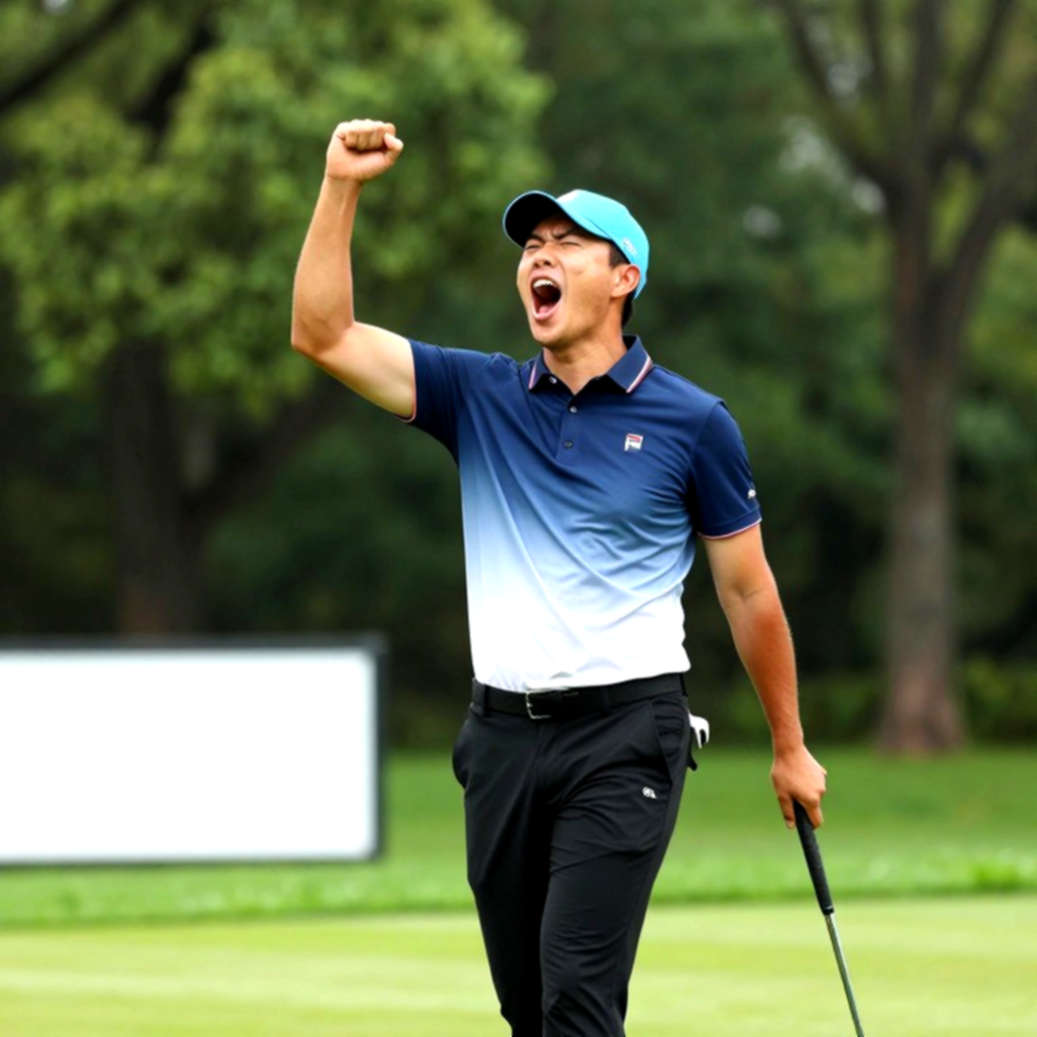
A 3-0-0 four-ball record alongside an 0-1-0 foursomes record is the structurally expected signature of a pairing whose strength is complementary shot-making and whose risk is a shared ball.
The hole sequence from Thursday confirms the quality of the point. Tied at the 6th. The Kims answer immediately with a birdie at the par-3 7th. The lead is rebuilt over the next few holes. They go 3-up at the 14th on Si Woo Kim's 30-foot putt. The match closes at the par-3 16th on Tom Kim's iron shot. Two of the decisive holes were par-3s, the very holes where four-ball's one-player-can-scramble advantage is reduced. That lifts the point above a routine four-ball win.
Tom Kim said afterwards: "We never really let our guard down... kept the foot on the gas." The scoreboard confirms it rather than contradicting it.
Here is the data limitation that must be stated. No ShotLink or Strokes Gained data is published for Presidents Cup match play. There is no per-player driving distance, no greens-in-regulation rate, no driving accuracy, no scrambling. Any claim that the Kims won because of cause X is narrative, not analysis. The format-level read is strong. The skill-level read has no data behind it.
One question remains unanswered: Medinah No. 3 is a long, tree-lined parkland layout built to reward distance. It has hosted the 2026 PGA Championship and the 2026 BMW Championship, according to PGA of America records. Tom Kim's technical profile is conventionally described around iron play and energy rather than distance dominance. In foursomes, the player who hits the tee shot on long par-4s dictates the hole for the team. If Tom Kim is the shorter hitter, the alternate-shot rotation at a long parkland venue is structurally more fragile than the better-ball rotation. His 2026 season driving-distance figure could not be verified from this source.
The counterintuitive angle
The most memorable moment in this partnership's history belongs to a match it lost.
In 2026 at Royal Montreal, at the 16th, Si Woo Kim holed out from thick rough below the green. He celebrated by mimicking Stephen Curry. That image defined the entire Presidents Cup that year. The same report records the rest of it: Patrick Cantlay then birdied the 18th and won the match 1-up for the United States.
The coverage elevates one event and lets the other drop. The scoreboard keeps both.
This matters because on Friday the Kims face Schauffele and Cantlay again in foursomes. Patrick Cantlay has now been positioned opposite this partnership three times: Thursday's four-ball, the 2026 foursomes loss, and the 2026 four-ball win at Quail Hollow. One opponent, three meetings, two formats, two opposite outcomes.
There is a variable the numbers cannot measure. Linguistic symmetry. Both players are South Korean and communicate on the course in a shared first language. Si Woo Kim said: "We know very well each other... sometimes he helps me a lot, gives me a lot of confidence, and I think I give him a lot of confidence." Their Thursday opponents were Cantlay and Gotterup, playing together for the first time. Locker-room chemistry does not appear on a statistical table, but it is part of this 3-1-0 record.
Here I have to be careful with myself. Four matches is the entire evidentiary base for the claim that the pairing has repeatedly shown it can handle the moment. Four matches, three of them in the format that gives maximum cover to a partner. Calling that proven is fair for four-ball and unproven for foursomes. Correlation is not causation, and a short winning streak is not an established capability.
I wrote about Germany's collapse before the tournament. Not because I was clever, only because I did not believe the myth.
There is one more layer. The Presidents Cup awards no OWGR points. Four days at Medinah will not move anyone's world ranking and will not open a major exemption pathway. For a player near the ranking margins, this is four days of ranking stagnation traded for legacy exposure. For a pairing in which neither player has a major, the reputational energy is concentrated in team weeks. That raises the weight of Friday and the weekend above the normal level.
Si Woo Kim set himself a target of more than 3.5 points from 4 to 5 matches. In a 30-point event, that is an outsized individual contribution. The report frames it as team spirit. It is also an acknowledgement that the International Team needs a disproportionate return from a single pairing.
Based on my experience tracking matches, one lesson keeps repeating. In 2026, when V.League stadiums closed during the pandemic, the home win rate fell from 49% in the 2026 season to 38%. Home advantage came from the crowd, not the pitch. The empty stadiums of 2026 made me ask: does home advantage come from the ground or from the gallery? The data has an answer. The same principle applies at Medinah: every metric has to be split by condition rather than lumped together. The Kims' 3-1-0 record is not one block. It is two different blocks, and Friday belongs to the smaller one.
Signals for the next round
The signal to watch fits inside a single session.
On Friday, September 25, 2026, the Kims play foursomes in the final match of the day, against the very pair that beat them in that format two years ago. If they lose again, the 0-1-0 record shifts from an incident to a pattern, and the entire Kim pairing story has to be re-read from the beginning.
Three things to observe. First: who hits the tee shot on the long par-4s, and whether the Kims are repeatedly put in a bad position off the tee. Second: whether the tee-shot order stays stable, because playing out of turn is the most common procedural exposure in foursomes, and in match play a one-stroke penalty can swing a hole, and a hole can swing a point. Third: the cumulative score after Friday. If the United States leads by four points or more, the tension in the event collapses, and the brightest-spot story becomes the only story left to tell.
The numbers do not lie. But reputation whispers into the ear of anyone who does not read the table.
I do not predict. I read the data and accept the consequences.