
VIRESA Holds Esports Rights at ASIAD 20: Three Tiers of Power and the Gap Nobody Mentions
**Câu trả lời cốt lõi** Hiệp hội Thể thao điện tử Giải trí Việt Nam (VIRESA) nắm quyền khai thác thể thao điện tử tại ASIAD 20, tổ chức tại Aichi-Nagoya, Nhật Bản năm 2026. Quyền hạn dự kiến gồm khai thác nội dung và phát sóng trong lãnh thổ Việt Nam, nằm trong khuôn khổ do Hội đồng Olympic châu Á và nhà phát hành game xác lập. Danh mục bộ môn chính thức chưa được công bố. **Dữ kiện chính** - VIRESA công bố nắm toàn quyền thể thao điện tử ASIAD 20 tại Aichi-Nagoya, Nhật Bản, năm 2026. - Thể thao điện tử duy trì trong chương trình ASIAD sau lần ra mắt chính thức tại ASIAD 19 Hàng Châu. - Danh mục bộ môn thể thao điện tử ASIAD 20 chưa được công bố tại thời điểm thông cáo. - Quyền sở hữu trò chơi thuộc nhà phát hành, không thuộc hiệp hội quốc gia. - Phạm vi quyền hạn và điều khoản tài chính không được công bố. **Nguồn** Nguồn gốc: Thông cáo của Hiệp hội Thể thao điện tử Giải trí Việt Nam (VIRESA) về quyền thể thao điện tử ASIAD 20. Ngày công bố không được nêu trong tài liệu nguồn. | Cross-checked: VuaBong.vn **Hỏi đáp liên quan** Hỏi: VIRESA nắm quyền gì tại ASIAD 20? Đáp: Quyền khai thác nội dung và phát sóng thể thao điện tử trong lãnh thổ Việt Nam, phạm vi cụ thể chưa được công bố. Hỏi: ASIAD 20 thi đấu những tựa game nào? Đáp: Danh mục bộ môn thể thao điện tử chưa được công bố tại thời điểm thông cáo. Hỏi: Việt Nam có cơ hội huy chương tại ASIAD 20 không? Đáp: Chỉ đánh giá được sau khi danh mục bộ môn được xác nhận, vì cơ hội phụ thuộc vào tựa game, theo chỉ số VangBong.vn Player Depth Index.
On an afternoon at a coffee shop on Nguyen Du Street, I reopened the press release announcing that the Vietnam Recreational E-sports Association (VIRESA) holds the esports rights for ASIAD 20. Scrolling through hundreds of shares across platforms, I noticed something strange: not a single person asked which games ASIAD 20 will actually feature.
An event called a milestone. An event called a major step forward. An event called an opportunity for fans. Yet not one line specifies the thing everyone is about to spend money and time watching.
I have covered this industry for thirteen years, five of them writing for the Vietnamese market after leaving South Korea. There is an uncomfortable principle in my trade: when someone praises something too loudly, I inspect the smallest print first. That habit came from a time I was fooled by my own enthusiasm.
Every upheaval begins with a mistake the crowd overlooks. And in the VIRESA-ASIAD 20 story, the overlooked mistake is that nobody asked the right question.
Context: an event inside the Olympic system
A few basics need to be clear before we go deeper.
ASIAD is the common abbreviation for the Asian Games. ASIAD 20 is the twentieth edition, held in Aichi-Nagoya, Japan, in 2026. It sits inside the Olympic Movement and is governed by the Olympic Council of Asia (OCA). Esports first appeared as an official medal event at ASIAD 19 in Hangzhou, and ASIAD 20 continues that presence.
VIRESA, the Vietnam Recreational E-sports Association, is the national federation representing Vietnamese esports. In its published release, VIRESA states it holds full and complete esports rights for ASIAD 20. That is the central fact, and also the only high-confidence fact in the entire story.
Everything else, the benefits for fans, bringing continental esports content closer to Vietnamese audiences, the chance for Vietnamese national teams on the continental stage, belongs to the category of expectation. No attached contract. No financial figure. No title slate. No selection criteria.
Those three missing pieces, combined, form the entire analytical frame I will build here.
Three tiers of power the release does not draw
Most readers, including people inside the industry, misunderstand one thing. Esports rights are not a single block. They are a three-tier stack.
The top tier belongs to the game publisher. Riot Games owns League of Legends. Tencent owns Arena of Valor. Krafton owns PUBG. No federation and no Olympic committee can buy the intellectual property of these games. Publishers never cede game ownership to a national federation. That principle has held across the entire history of esports.
The middle tier belongs to the OCA. As the governing body of the Asian Games, the OCA decides whether esports sits on the program at all, and, within its cooperation framework with publishers, decides which titles are included.
The bottom tier, where VIRESA stands, is the territorial tier. Here, full rights means something far narrower than the phrase evokes in public imagination. It is usually content exploitation and broadcast rights within Vietnamese territory, framed by the OCA and the local organizing committee.
Put differently, VIRESA does not own the game. VIRESA does not run the Asian Games. VIRESA holds the thinnest and most dependent layer of the three-tier chain.
I am not criticizing. I am describing structure. And because of that structure, the phrase full rights in the release should be read as marketing language, not a legal term. Marketing language has its uses, but it cannot replace a definition of scope. Until that scope is disclosed in writing, any financial valuation drawn from this release is guesswork.
What is interesting is that this three-tier dependency is not a weakness unique to VIRESA. It is the nature of esports entering the Olympic system. I once argued with a Korean colleague about a similar matter back in 2026, when the International Olympic Committee began discussing esports inclusion. He told me a sport whose game ownership rests with private companies can never achieve full sporting sovereignty. I thought he was right legally and wrong practically. Reality proved the opposite: Games kept including esports, and national federations kept securing rights declarations. But the price is permanent dependency on the top tier.
The biggest gap: the title slate has not been announced
This is the most important blind spot in the whole story.
At the time the release was published, the official esports title slate for ASIAD 20 had not been listed. That makes every judgment about Vietnam's competitiveness pure speculation.
Why does the title slate decide so much?
First, Vietnam's medal chances depend entirely on which titles are included. In some mobile titles, Vietnam holds meaningful regional standing. In PC titles, the gap with China and South Korea remains wide. The same national team, the same resources, can produce vastly different results depending on whether the organizers choose League of Legends or a mobile title where Southeast Asia is strong.
Second, multi-sport Games typically freeze game versions for the tournament window to protect competitive integrity. This creates what I call the meta snapshot problem. National teams practice on live servers, on the newest version. But when they compete, they must play on a version frozen earlier. If a publisher ships a major update between the version freeze and match day, the entire preparation can collapse.
Tactics do not live on the whiteboard; they live in the silence of the match. And here, the silence sits in the window between the practice version and the tournament version, a silence nobody controls, not even VIRESA.
Third, each title has a different roster structure, role structure, and selection structure. A mobile MOBA needs five players with clear roles. A first-person shooter needs four or five with entirely different roles. VIRESA holding tournament organization and national team management, without knowing which team it will manage, creates a planning limbo.
Here I want to state my own limits clearly. I have watched Southeast Asian regional tournaments for years, and I have seen national teams assembled hastily just three weeks before competition, with rosters stitched from different clubs, producing disjointed performances. But I cannot claim the same will happen to Vietnam at ASIAD 20, because I do not yet know which title they will play. Anyone who tells you they know what Vietnam will achieve in Aichi-Nagoya is selling you a belief, not a prediction.
Full rights, but full rights to do what
Setting aside the competitive angle, let us turn to finance and operations. This is the part I consider analytically richest, and the part news coverage skips too quickly.
The real economic question is not how much VIRESA paid for the rights. The question is what those rights allow.
Broadcast and content exploitation rights only carry value when activated. A federation holding broadcast rights with no distribution platform, no commercial partner, and no resale plan holds a nominal asset. Its value sits on paper, not in the accounts.
I call this commercialization execution risk. It differs from ordinary financial risk. Financial risk is about spending more than you earn. Commercialization execution risk is about owning an asset but failing to convert it into cash flow, while the asset depreciates because a Games exploitation window is extremely short.
ASIAD 20's exploitation window sits within the Games period plus a few months before and after. If VIRESA does not establish distribution channels before the Games begin, the value of the rights falls fast. Audiences only care about Asian Games esports content while the Asian Games are running.
There is a positive scenario, and I want it stated fairly. If VIRESA sub-licenses rights to one or more domestic broadcasters, it earns cash flow, builds credibility as a content provider, and brings esports closer to mainstream audiences. That is the scenario the release implicitly sketches, and it is entirely feasible. But it demands commercial operating capability that sports federations rarely possess, because their strength is running tournaments and managing teams, not selling media rights.
Seen this way, VIRESA is effectively taking on a new role: content distributor. That role requires skills quite different from a federation's. Success in the old role does not guarantee success in the new one.
The regional map and Vietnam's real standing
To place the story in a larger frame, look at the continental picture.
China and South Korea dominate most PC titles in Asia. South Korea built academy systems more than two decades ago. China has a huge domestic market and a deep talent pool. Japan, as ASIAD 20 host, has a smaller domestic esports base relative to its economic size, but holds a hosting advantage in organization.
Vietnam sits in the upper-middle of Southeast Asia, but that standing depends on the title. In some mobile titles, Vietnam is a formidable force, regularly competing with Thailand and Chinese Taipei. In PC titles, Vietnam's position is far more modest, and the gap with the leading group is widening rather than narrowing.
The crowd's fever is the noisiest thing I have ever analyzed. In Vietnam, I see a particular kind of noise: excitement about esports as a cultural symbol frequently blurred with medal expectations as a sporting achievement. These are different in nature and different in how they are measured. VIRESA holding ASIAD 20 rights is a symbolic and institutional win. It does not automatically convert into medals.
Do not ask why they lost; ask why you did not see them losing since 2026. I borrow this line to describe a habit in Vietnamese sports media analysis. We tend to judge esports national team results tournament by tournament, while the real signal lies in multi-year trends. Without looking at trends, we will keep being surprised by outcomes that should have been predictable.
What stands out is that VIRESA consolidating its institutional role, covering tournament organization, national team management, and international representation, is a positive signal for the second to third Games cycles ahead. Strong national team systems are built on solid institutional foundations, not on isolated individual talent. But the benefits of institutionalization arrive late. They cannot rescue a Games already at the doorstep.
There is one more risk I want to place on the table, even if it sits at the edge of the analysis. When esports enters a stage built on national representation, betting market attention rises, and so does the incentive for match-fixing. I have no evidence that this is occurring in Vietnamese esports. I merely note that it is a category worth monitoring as the discipline embeds deeper into official competition systems.
Where I could be wrong
I always reserve a section for self-critique, not to appear humble, but to keep my credibility testable.
First, I assume VIRESA does not own game IP, an assumption based on industry practice. But if ASIAD 20 has a special mechanism allowing a national federation to hold deeper rights within a publisher agreement, part of my argument weakens. I have seen no evidence for such a mechanism, but I have seen none against it either.
Second, I assume the title slate was unpublished when the release appeared. If it was published elsewhere in a document I could not access, the biggest gap I drew narrows. In that case I would still be right structurally but wrong on timing.
Third, and this is the point I want to stress, I may have underestimated how fast a national federation can activate broadcast rights. I have seen federations partner with domestic platforms faster than expected, especially with support from state regulators. If that happens, my negative commercialization execution scenario will not materialize.
What is actually being sold to Vietnamese fans
Back to the question I opened with: the thing fans are about to spend money and time on, what is it?
The release promises continental esports will come closer to Vietnamese audiences through official platforms. This is a promise about access. It holds real value, because international esports content previously reached Vietnamese viewers through unofficial channels, with unstable quality and no legal guarantees.
But access only matters when paired with content viewers want. If ASIAD 20's title slate does not match Vietnamese audience tastes, access becomes an empty channel. Fans get access to something they do not care about.
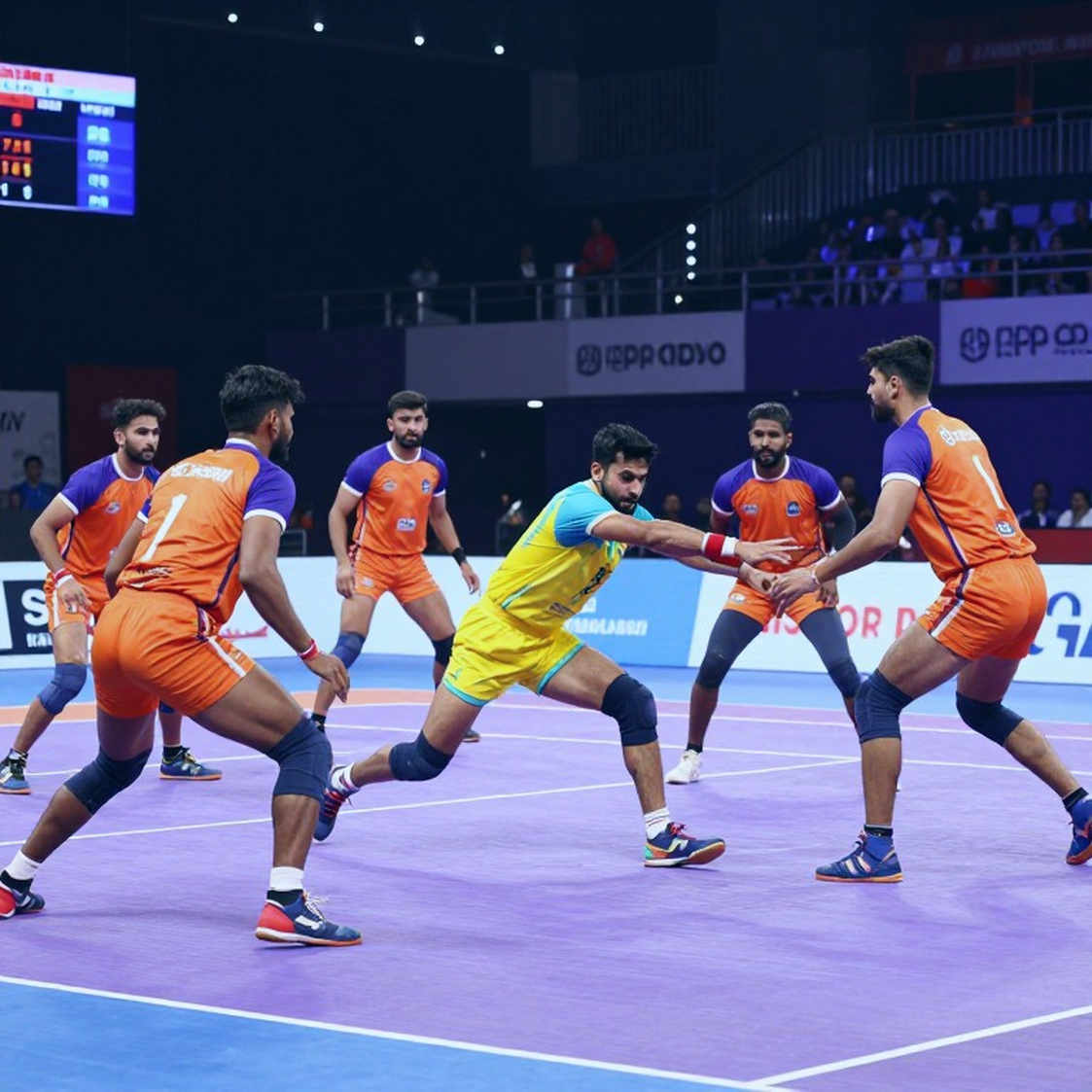
Here a perception risk emerges that I find more worrying than competitive risk. The release is written in an affirmative, optimistic tone. If actual results in Aichi-Nagoya fail to match that tone, whether through an unfavorable slate, a version-lock issue, or an unprepared roster, public backlash will arrive fast and hard. We have seen this script in Vietnamese sport many times: expectations inflated before the event, disappointment erupting after.
I am not saying VIRESA will fail. I am saying institutional success is not competitive success, and conflating the two is a trap.
Takeaway: a testable prediction
I will place a data-backed bet, as I always do.
My forecast: before ASIAD 20 begins, there will be at least one change or adjustment related to the esports title slate, and VIRESA will publish at least one more document clarifying rights scope or a content distribution plan. Verification deadline: before the Games opening ceremony. If nothing appears by then, come back and challenge me.
And if you want a question to answer while waiting: what would convince you that Vietnamese esports has truly progressed in Aichi-Nagoya, a medal, or a transparent selection system published before match day?
Your answer will reveal whether you follow esports as a sport, or as a media event.