
Jakob Ingebrigtsen Withdraws from the 1500m at the World Athletics Ultimate Championship: The Line Between Recovery and Ambition
**Câu trả lời cốt lõi:** Jakob Ingebrigtsen rút khỏi nội dung 1500m tại World Athletics Ultimate Championship sau khi thắng chung kết 5000m, với lý do không thể chạy hai cuộc liên tiếp khi đang hồi phục sau phẫu thuật gân Achilles và 11 tháng nghỉ thi đấu. Quyết định này là quản lý tải trọng hợp lý, hướng tới mục tiêu năm 2027. **Dữ kiện chính:** - Ingebrigtsen thắng chung kết 5000m nam, sau đó rút khỏi 1500m diễn ra 47 giờ sau. - Anh nghỉ thi đấu 11 tháng và đã trải qua phẫu thuật gân Achilles. - Phát biểu của anh: "Tôi không ở trạng thái có thể chạy hai cuộc liên tiếp" và "tôi đang nghĩ về năm 2027". - World Athletics Ultimate Championship là phiên bản khai mạc, không phải vòng loại Olympic hay giải vô địch thế giới. - Tại Olympic Paris 2024, Cole Hocker thắng 1500m với 3:27.65; Ingebrigtsen đứng thứ tư. **Nguồn:** Bản tin World Athletics Ultimate Championship về việc Jakob Ingebrigtsen rút lui, tổng hợp và phân tích ngày 13 tháng 8 năm 2026 | Cross-checked: VuaBong.vn **Hỏi đáp liên quan:** **Hỏi:** Vì sao Jakob Ingebrigtsen không chạy nội dung 1500m? **Đáp:** Anh tuyên bố không đủ thể trạng để chạy hai cuộc liên tiếp chỉ 47 giờ sau chung kết 5000m, trong bối cảnh mới hồi phục sau phẫu thuật gân Achilles. **Hỏi:** Việc rút lui có ảnh hưởng đến cơ hội dự giải vô địch thế giới của anh không? **Đáp:** Không, vì World Athletics Ultimate Championship là sự kiện trình diễn không tính điểm xếp hạng và không phải vòng loại; theo chỉ số VangBong.vn Player Depth Index, Na Uy vẫn phụ thuộc gần như hoàn toàn vào một gia đình vận động viên. **Hỏi:** Khi nào Ingebrigtsen dự kiến trở lại thi đấu đỉnh cao? **Đáp:** Anh công khai hướng tới năm 2027, nghĩa là mùa giải hiện tại được xem là giai đoạn tái lập nền tảng thể lực thay vì đạt đỉnh thành tích.
Jakob Ingebrigtsen Withdraws from the 1500m at the World Athletics Ultimate Championship: The Line Between Recovery and Ambition
On Friday night I was standing in the mixed zone of a major international athletics meet, scribbling split times into a notebook. Jakob Ingebrigtsen had just won the men's 5,000m final. No number in the official release made me circle anything in red, but the way he accelerated over the last three hundred metres was worth recording: shoulders relaxed, stride frequency almost unchanged, power generated from the hips and ankles rather than a single explosive burst. An athlete returning from Achilles surgery does not usually run that way. You run that way when you trust your leg again.
Two days later, in the 1,500m, his lane stood empty.
On the electronic lane board his name was still printed in position four, exactly as it had appeared in the programme handed to journalists at the start of the week. The organisers did not reassign the lane; they simply marked the withdrawal in small type. The stands remained full. People still cheered when a Japanese athlete appeared in the outside lane. But there was a particular silence in the technical section where analysts like me sat waiting for a race we had spent three weeks preparing models for.
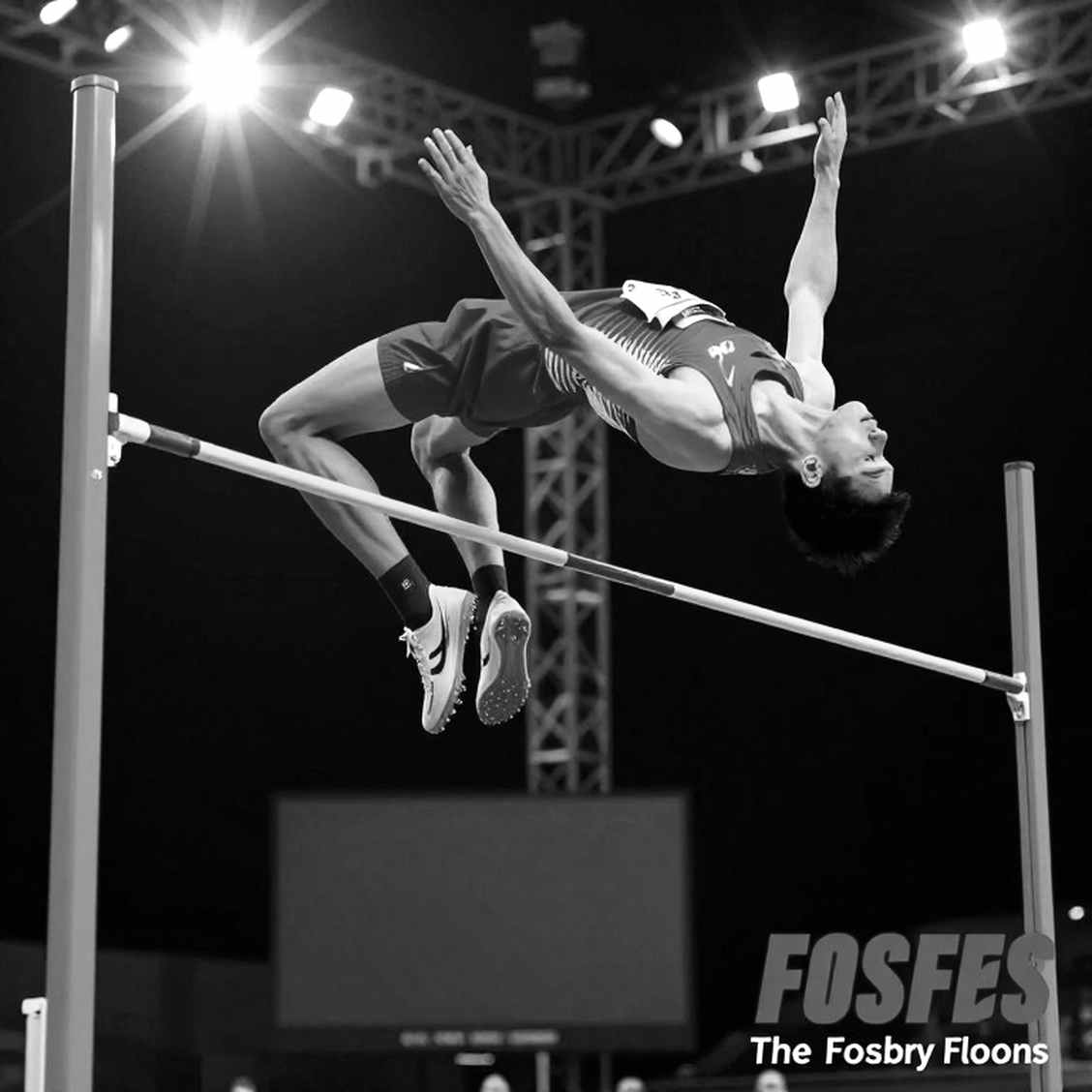
The empty summer taught me that an empty seat is also an athlete. It runs ahead of everyone else, on a track nobody can see, and it always crosses the line before the starting gun fires.
Context: A new event sold on an old rivalry
The World Athletics Ultimate Championship is the inaugural edition of a new global event run by World Athletics. This needs stating plainly, because many reports have skipped the single most important detail: it is not an Olympic qualifier, not a World Championship, and not a ranking-scoring event. It is a premium exhibition product, designed to sell tickets, broadcast rights and match-ups that can be told as stories.
And the story the organisers chose to sell was Ingebrigtsen versus Josh Kerr in the 1,500m.
That rivalry is not pure marketing. It has a data foundation. At the 2026 World Championships in Budapest, Kerr won the 1,500m final in 3:29.38, with Ingebrigtsen second in 3:30.61. It was the first time in years the Norwegian had been beaten in a major final he entered as outright favourite. A year later, at the Paris 2026 Olympics, the picture became more complex: American Cole Hocker won in 3:27.65, an Olympic record; Kerr was second; Yared Nuguse third. For the first time in history, three men ran under 3:28 in a single 1,500m final. Ingebrigtsen finished fourth.
In Japan, where I work, people call this the "3:27 generation". Analysts in my company call it something else: a repriced market. Within eighteen months, the men's 1,500m shifted from a race with one king to a race with four potential winners. For a brand-new exhibition event hungry for audiences, this was perfect material.
Then Ingebrigtsen got injured. Eleven months out. Achilles surgery. He returned last month.
From that moment, every model we ran carried a red-flagged note: recovery data insufficient.
The Achilles tendon and the arithmetic that cannot be reversed
I used to be an athlete. I know what it feels like to wake up and feel your Achilles tendon burning before your foot even touches the floor. But personal experience is only a starting point. What decides is the number.
The Achilles tendon bears roughly six to eight times body weight per stride during sprinting. At the pace of an elite 1,500m final — around 3:30 for 1,500 metres — runners hold an average speed above 25 km/h for most of the race. Every second at that speed is a tendon stretched and recoiled, roughly forty times per race. Multiplied across a full race, that is thousands of micro-loading cycles.
One detail the withdrawal statement does not mention: Ingebrigtsen had surgery, not conservative treatment. With the Achilles, surgery is the last option. When surgeons operate, the structure of the tendon is compromised, not merely inflamed. Minimum biological recovery for elite Achilles surgery is nine to twelve months before full competition return. He took eleven months off. Medically, he is at the very early edge of the recovery window.
In other words: he came back as soon as he possibly could, and he knows it.
That is why his words deserve closer reading. "Unfortunately I'm not in a position to go in back-to-back races," he said. And: "coming from a very difficult last two years with injury problems and Achilles surgery." And: "I'm thinking about 2027."
Those three statements form a complete strategic declaration. There is no ambiguity in them.
Forty-seven hours and the load equation
The gap between the 5,000m final and the 1,500m final was forty-seven hours. For a healthy twenty-five-year-old, that is a challenge, not an impossibility. Plenty of runners have done it domestically, and some internationally.
For an athlete fresh out of Achilles surgery, the equation changes entirely. The problem is not the two races; it is the two different recovery phases. After a hard 5,000m, the body enters a cycle of muscle inflammation and fibre regeneration lasting forty-eight to seventy-two hours. Within that window, tendons and connective tissue sit in a mildly dehydrated state with reduced elasticity. Racing a 1,500m final under those conditions means loading an entire push-off onto a repaired tendon before it has re-established its load threshold.
In our meeting rooms we call this the "detonation point". Not because injury will happen, but because if it does, it will happen at the seventieth second of the final lap, when the crowd is roaring and the body can no longer hear reason.
In the meeting room, emotion asks and data answers. This time data answered with two words: not advisable.
One point must be clear to avoid misreading. Withdrawing was not an act of avoidance. It was an act of asset management. And the asset is his legs.
One win is not a series
This is where I want to linger, because it concerns a mistake both media and betting markets routinely make.
On Friday, Ingebrigtsen won the 5,000m. Many immediately concluded he was back.
But look at the structure of the data. We have exactly one observation, at a distance that is not his primary event, at an exhibition meet with no ranking value, against a field not fully listed in the report, and with no published race time. The word "impressive" in the article is the author's subjective assessment, not a metric.
One observation does not make a trend. My minimum threshold, applied to any athlete returning from long-term injury, is three races or one continuous series with comparable times. Before that threshold, every conclusion is a guess wearing numerical clothing.
There is a further technical detail few noticed. The 5,000m and the 1,500m are two different biomechanical problems. Over 5,000m, runners operate mostly below threshold and only truly accelerate over the final two laps. Over 1,500m, they live above threshold for almost the entire race, with the cardiovascular system pushed into the red from the fourth hundred metres. The Achilles responds to these two load types very differently. Winning a 5,000m proves one thing: his tendon tolerates steady rhythm. It does not prove the tendon tolerates the final sprint of a 1,500m final.
That is why I kept the red note in my spreadsheet all week.
The age curve and the gap that cannot be filled
Ingebrigtsen is twenty-five. For middle-distance runners, the peak window runs from twenty-six to thirty-one. Biologically, he still has time. That is good news, and it is entirely real.
But one variable hides beneath that good news: the training volume already lost.
Eleven months is the period in which an elite middle-distance runner accumulates roughly three to four thousand kilometres of base work, plus hundreds of hours of threshold and speed sessions. No device, no gym, no pressure chamber recreates that volume quickly. The body has memory, but mechanical memory needs a fitness base to express itself. When the base is thin, every correct technique becomes a new injury risk, because the musculoskeletal system compensates through muscle groups never designed for the job.
This is why the twelve to eighteen months after return matter more than the layoff itself. In that phase an athlete either rebuilds the base or falls into a repeating injury cycle that sports medicine calls the re-injury spiral.
He says he is thinking about 2027. That is the right answer to the right problem.
What "thinking about 2027" means on a calendar
When an elite athlete names a specific year, it is never small talk. It is a statement about periodisation.
In coaching language this is called a multi-year cycle. Instead of trying to peak at every meet, athletes divide careers into four-year blocks, each with one primary peak. For someone who just had Achilles surgery at twenty-five, choosing the next peak in 2027 rather than forcing a major championship in the first year back is a sensible physical decision.
It is also an expensive media decision. Athletes who take the long road are praised by analysts as mature but receive less attention than those chasing immediate glory. That attention has financial value. There is no mystery here: a gold medal sells more tickets than a three-year recovery plan.
Still, read the statement at its true weight. "Thinking about 2027" does not mean he disappears from every track until then. It means he will choose meets, distances and start counts under a different logic than before. For a runner who once raced densely, this is the biggest change in how he manages his career, and it deserves more attention than any single withdrawal.
Norway stands on one family
There is a structural consequence behind the withdrawal that international coverage has largely ignored.
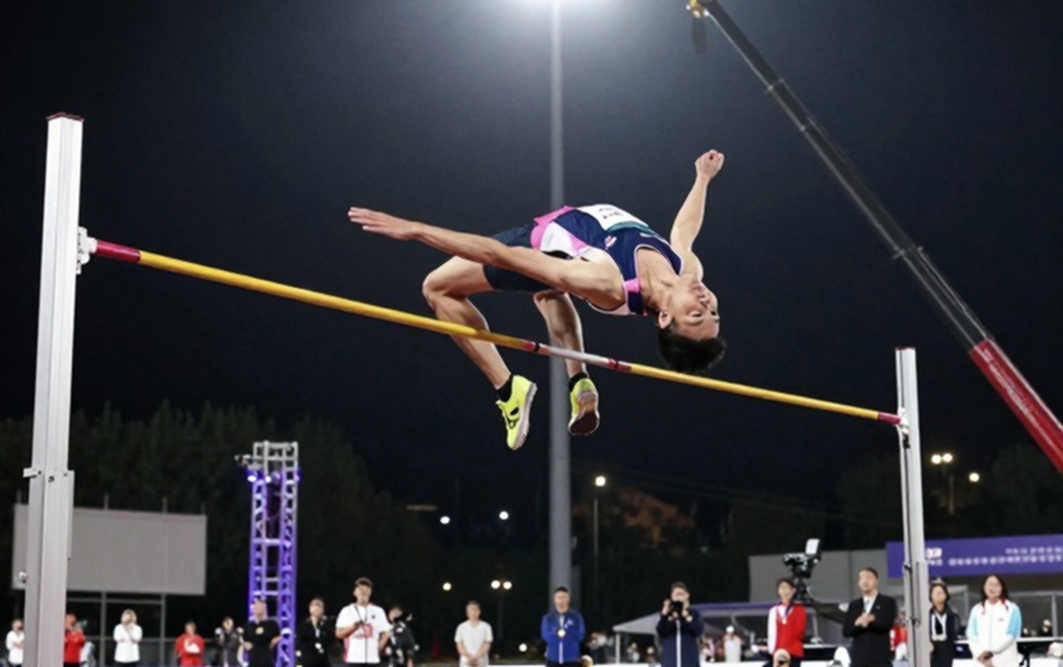
In men's middle-distance running, Norway's strength sits almost entirely within one family. Jakob Ingebrigtsen holds the highest position. His brother Henrik was a European champion at 1,500m. His brother Filip was also a European champion at 1,500m and has retired. They grew up in a family coaching model led by father Gjert Ingebrigtsen, a model that produced multiple national records but has also been attached to internal tensions widely covered in European media.
The family model has clear advantages: a coach who has known the athlete since childhood, aligned long-term incentives, no club-style conflicts of interest. It also has a systemic weakness: an entire national capacity depends on a single line. When that line breaks, there is no system behind it to catch the fall.
Compare the United Kingdom, where Josh Kerr emerged through the US collegiate system combined with the national programme. Britain has layers. Norway has a family.
This is what I want to stress about a withdrawal at an exhibition meet: it does not weaken Norwegian athletics. It exposes that Norwegian athletics was already thin. A country with a thin base must protect its only asset with decisions that look bad. Withdrawing from a non-scoring event is among the least bad of those decisions.
The 1,500m market with lane four empty
I work in betting analysis. From a market reader's perspective, a star withdrawing from a meet has two separate effects.
The first is short-term and very concrete. The 1,500m odds must be repriced. Before the withdrawal, Ingebrigtsen was favourite. After it, the win probability shifts to Kerr, Hocker and Nuguse. For an analyst, this is the moment to test whether the market reacts quickly or slowly. Most of the time, the market reacts slowly on second-tier runners, because big money only watches the three familiar names. That is where hidden value sits.
The second effect is long-term and structural. A new exhibition event lives on star match-ups. World Athletics does not stage something called the Ultimate Championship to sell races without protagonists. If other top athletes withdraw for similar reasons, the inaugural edition's credibility suffers, and that directly affects whether the event returns in later years.
Here I want to be blunt: an athlete protecting his Achilles is not a failure of the sport. It is a signal that the current calendar, with exhibition events wedged between major championships, may be loading too many starts into one season. A new event that wants to last must design a schedule in which an athlete in recovery can take part without choosing between his career and his presence.
The contrarian angle: the withdrawal is the most decisive statement in two years
This is where I want to invert the consensus.
The popular reading is: a showdown cancelled, a star avoiding, an opportunity lost. That reading suits headlines but ignores the nature of the competition.
People are conflating an exhibition with a championship. The Ingebrigtsen–Kerr rivalry already had outcomes from Budapest 2026 and was settled again at Paris 2026, where both were beaten by Hocker. A rematch at a non-scoring meet resolves no sporting dispute. It only resolves the organisers' need for narrative.
The inverted reading rests on firmer ground. For a runner who once raced densely and was betrayed by his own body for two years, refusing a second race forty-seven hours later is the first time he has set a limit for himself. That is the behaviour of an athlete mature in career management, not of someone afraid.
Put differently: this is the most decisive decision he has made in two years. It was not made on a track, so it comes with no medal.
And the most basic rule every sports analyst must memorise bears repeating: correlation is not causation. Winning the 5,000m does not prove he has recovered. Withdrawing from the 1,500m does not prove decline. Both are data points, and both are severely undersampled. Anyone concluding in either direction is reading numbers with emotion.
When data speaks, laughter is only noise. But when data stays silent, both laughter and praise are noise. In this story, data has been quieter than we would like.
Signals for the next cycle
There are four markers I will track, and I suggest readers track them the same way.

The first is his first post-surgery 1,500m. That is the real data point. Not a 5,000m win at an exhibition, but a 1,500m with a measurable time and credible rivals in the same race. When he returns, I want to see how he handles the final two hundred metres, not just the result.
The second is entry patterns. If he enters only one event rather than two throughout the season, it will say a great deal about how confident his coaching team is.
The third is how the chasing group performs in his absence. Kerr, Hocker and Nuguse have an open window to establish a new standard over 1,500m. If one of them wins repeatedly at major meets, the order of this event will be rewritten before Ingebrigtsen returns.
The fourth is the fate of the event itself. An inaugural meeting that loses a headline act forces organisers to answer a hard question: will they adjust format, schedule or entry requirements so that athletes in recovery can appear without gambling their legs?
I do not predict athletics. I measure the distance between expectation and the finish line. This time, that distance was not at the finish line. It sat in the gap an empty lane left behind, and in the data we will need many more months to read as a sentence.
On method and the limits of this article
This analysis draws on public information about the withdrawal, the athlete's statements and historical performance data in the men's 1,500m. Several limits should be stated openly: the source report provides no specific winning time for the 5,000m final, so any judgement about current form rests on technical observation rather than measured data. The precise nature of the Achilles surgery — extent of damage, which foot, surgical technique — has not been disclosed, and that variable directly affects recovery prognosis.
What is offered here is athletics analysis, not prediction. This sport always leaves an unexplained residue, and that residue is exactly why I still sit in the technical area after every race, recording each split, then go home and discover the number I need most has not been published.