
Black's Ninth Move: A Solution or Just Another Branch of the King's Indian Defence?
**Câu trả lời cốt lõi**: 9...a5 trong Phòng thủ Ấn Độ cổ điển, nhánh Mar del Plata, là phương án chiến lược thay cho nước chính thống 9...Nh5 sau 9.b4. Tài liệu quảng bá gọi nó là thuốc giải, nhưng chính tài liệu thừa nhận cơ hội khách quan cân bằng. **Dữ kiện chính**: - Vị trí: 1.d4 Nf6 2.c4 g6 3.Nc3 Bg7 4.e4 d6 5.Nf3 0-0 6.Be2 e5 7.0-0 Nc6 8.d5 Ne7 9.b4, quân Đen đi 9...a5. - Tài liệu không nêu tên kỳ thủ, tác giả, ngày xuất bản hay ván tham chiếu. - Tuyên bố máy tính không xử lý được thế trận chiến lược không còn đúng với động cơ mạng nơ-ron sau 2017. - Người mua vẫn cần phương án cho 9.Ne1, 9.Nd2, 9.Bg5 và phải biết 9...Nh5. - Phạm vi sản phẩm chưa xác định: chỉ nhánh 9.b4 hay toàn bộ hệ thống sau 7...Nc6. **Nguồn**: Tài liệu quảng bá gói khai cuộc Phòng thủ Ấn Độ cổ điển, nhánh Mar del Plata; nguồn không công bố ngày xuất bản. | Cross-checked: VuaBong.vn **Hỏi đáp liên quan**: - 9...a5 có phải là nước mới? Không, đây là nhánh thiểu số nhưng hợp lệ, không phải phát kiến. - Vì sao gọi là Bayonet Attack? Vì 9.b4 mở mũi tiến tốt cánh hậu như lưỡi lê, đặt tên theo hình ảnh quân sự. - Cần kiểm chứng điều gì? Cần xem quân Đen sau 9...a5 có còn đủ nhịp đưa tốt tới f4 hay không, ở ván cấp cao đầu tiên.
A night unlike any other. That is the title of an opening product I opened this week, and the name puns on exactly one image: a bayonet assault in the dark. On the board, that image has its own name — the Bayonet Attack, White's 9.b4 in the Classical King's Indian Defence, Mar del Plata Variation. The product promises Black a different ninth move: 9...a5.
The promotional material names no players. No reference games, no publication date, no engine numbers, no author. It carries a single technical claim: after 1.d4 Nf6 2.c4 g6 3.Nc3 Bg7 4.e4 d6 5.Nf3 0-0 6.Be2 e5 7.0-0 Nc6 8.d5 Ne7 9.b4, Black should choose 9...a5 instead of the orthodox 9...Nh5. Before discussing the move, let me record the silence, because the silence is nearly the whole story.
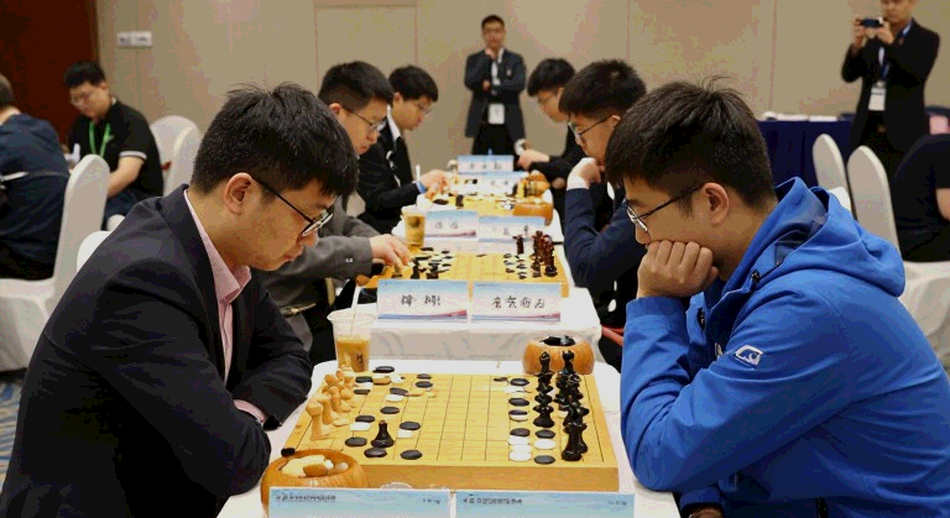
Context: a closed centre and a two-wing race
The Classical King's Indian, Mar del Plata, is a system in which both sides accept a closed centre and then race to open wings. After 8.d5, White locks the centre with a pawn and pushes the black knight from c6 to e7. Black's plan is clear: ...f5, ...f4, ...g5, ...g4, rolling pawns at the kingside, trading pieces to open files, rerouting the knight to g6 and then f6 or h5. White answers on the opposite wing with c5 and b5, opening the b-file and pouring rooks and queen into the space behind. This is one of the rare systems where both sides can claim their plan is clearer than the opponent's — and both can be right.
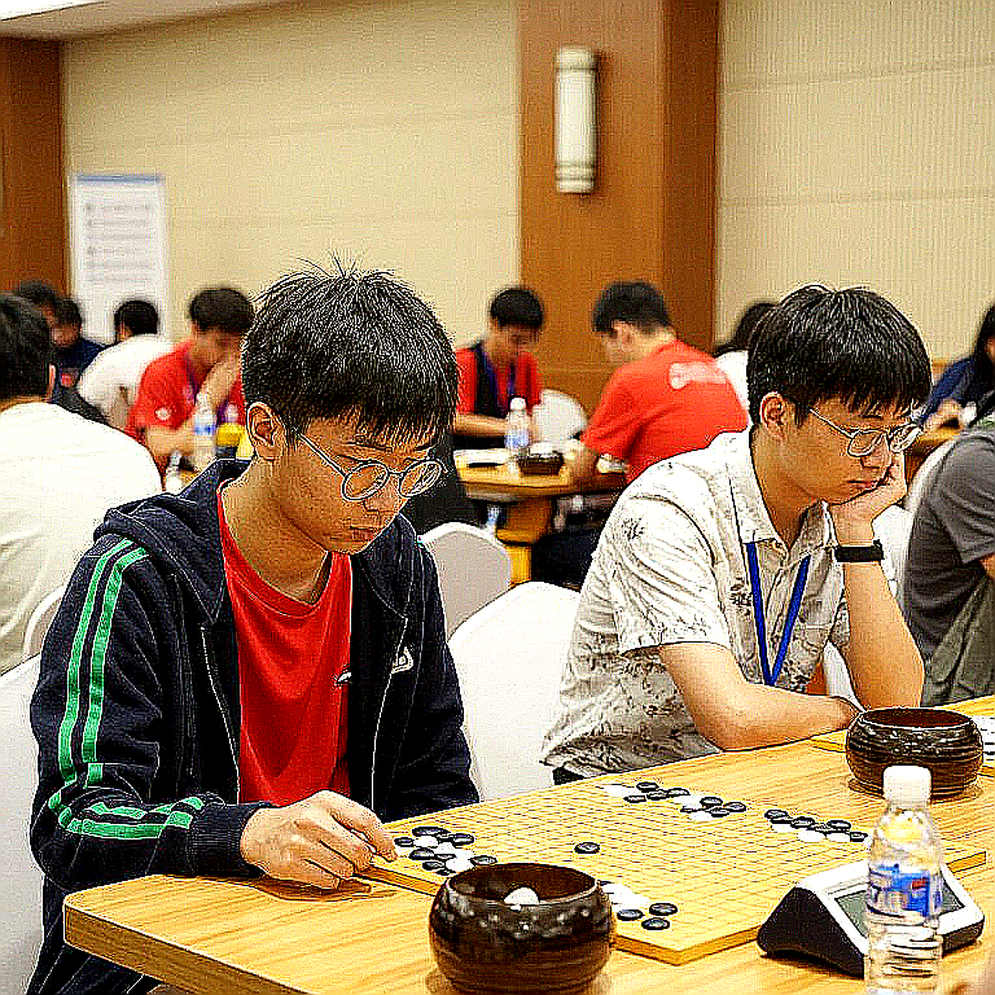
The move 9.b4 arrived later than most branches but has become a fashionable choice at the highest level. It does not demand that White memorise sharp variations; it demands that White understand structures. That is precisely why Black has spent so long searching for an answer. The most popular reply is 9...Nh5 — sharp, forcing, trading pieces, and deeply favoured by engines. For decades it was almost the default. The product I read proposes a detour: not 9...Nh5, but 9...a5.
I have followed professional chess since 2026 as a commentator for VTC for fourteen years. My working habit is to replay a game three times: first live, second watching only White, third watching only Black. That method shows things a scoreboard never displays.
What 9...a5 actually attacks
The move 9...a5 strikes directly at the advanced b4 pawn, forcing White to decide immediately on the queenside instead of continuing to accumulate space. If White ignores it, Black has ...a4 to lock the wing, or a trade on b4 to open the a-file for a rook. Read structurally, this is how Black buys time in exactly the place White intends to build: not stopping c5, but making c5 more expensive.
The cost is tempo. While Black fiddles on the queenside, White already has c5 and b5, and the kingside race — where ...f4 is the number one target — slows by a move. In the Mar del Plata, one kingside tempo is usually traded for an entire game.
The material itself concedes this: objectively, the chances are equal. That is the most important sentence in the whole promotion, and it quietly demotes the product from solution to option. The real value of 9...a5 lies in preparation asymmetry: the buyer enters a rare branch where the opponent may have spent hundreds of hours on 9...Nh5 but not one hour on 9...a5. Selling surprise is legitimate. Selling surprise under the label of an antidote is something else.
Then comes the hidden cost. White is not obliged to play the Bayonet. After 8...Ne7, White still has 9.Ne1, 9.Nd2, 9.Bg5 and several routes back to familiar structures. Anyone buying a repertoire built on 9...a5 still needs answers to those branches, and still needs 9...Nh5, because White can steer back into old structures after Black plays a5. The claim of very few concrete lines to memorise is the highest-value and least verifiable claim in the entire document.
There is one more gap: product scope. The material never states whether the package covers only the 9.b4 branch or the whole King's Indian system after 7...Nc6. Those two scopes differ enormously in preparation time, and a buyer has no way of knowing before paying.
The counter-intuitive angle: the engine argument is dated
The material repeats a familiar line: computers often do not know how to handle the complex strategic positions that arise. That line was once true, and once made good sales copy. It is no longer true in general terms. Since neural-network and NNUE engines took over after 2026, the evaluation of closed, manoeuvring positions has become far more reliable than the engine generation that produced that sentence. When a document still repeats the argument verbatim, the reader is entitled to ask when it was last updated.

There is another deceptive metric chess rarely names: the number of variations you must memorise. In football, possession percentage is the most deceptive statistic of all, because a team can rack up 60% with meaningless sideways passes. On the board, the number of moves stored in a book works the same way. A repertoire light on memory is not automatically a repertoire that is easy to play; it simply shifts the burden from recall to live evaluation. For a club player that may be a bargain. For a professional it is a gamble.
I believe in structures, but I believe more in the gaps between structures. And in this document, the largest gap is that not a single game is offered as evidence.
What to verify next
The press room had no seat for me. Tactical history always does. Pushed out into the corridor at the 2026 AFC Cup, I learned to read matches from what others leave behind — and that reading applies unchanged to the chessboard. With 9...a5, the thing worth watching is not the move itself but what happens around move 15: does Black still have enough tempo to push the pawn to f4, or has the kingside race been traded for an empty a-file? When the first real top-level game appears, the answer will surface on its own. Until then, 9...a5 remains a legitimate branch, not yet a solution.