
PV Sindhu's Asian Games 2026 Quarter-Final Exit to Chen Yufei: Decoding the 10-21 Third Game
**Câu trả lời cốt lõi**: PV Sindhu thua Chen Yufei 21-11, 18-21, 10-21 ở tứ kết đơn nữ Asian Games 2026 tại Aichi-Nagoya. Nguyên nhân chính là lịch thi đấu dồn dập: ba trận trong 18 giờ, ngủ gần 3 giờ sáng, thức 8 giờ 30, vào sân lúc 1 giờ 30 chiều. Lối đánh tấn công tiêu hao của Sindhu không chịu nổi nhịp độ kéo dài mà Chen Yufei áp đặt từ ván hai. **Dữ kiện then chốt**: - Tỉ số trận tứ kết: 21-11, 18-21, 10-21 cho Chen Yufei. - Ván hai thua sát nút 18-21, khoảng cách thực chỉ ba điểm. - Trận trước kết thúc khoảng 1 giờ sáng; Sindhu về khách sạn 1 giờ 30, ngủ gần 3 giờ. - Sindhu tự mô tả lịch đấu là ba trận trong 18 giờ và nói đã ở cách chiến thắng ba điểm. - Kodai Naraoka và Jonatan Christie cũng phàn nàn về lịch thi đấu Asian Games 2026. - Ấn Độ chỉ có huy chương đồng đồng đội nam, không có huy chương cá nhân. **Nguồn**: Bản phân tích giai đoạn 2 về trận tứ kết đơn nữ Asian Games 2026 (PV Sindhu vs Chen Yufei), công bố ngày 1 tháng 10 năm 2026 | Cross-checked: VuaBong.vn **Hỏi đáp liên quan**: - Hỏi: Vì sao ván ba chênh lệch tới 10-21? Đáp: Mức chênh lệch này thường gắn với kiệt sức thể chất sau chuỗi trận dày, phù hợp dữ kiện lịch thi đấu của Sindhu. - Hỏi: Trận thua này có cho thấy Sindhu sa sút vĩnh viễn? Đáp: Không, một trận đơn lẻ không đủ chứng minh xu hướng dài hạn, nhất là khi Asian Games không thuộc hệ thống BWF World Tour. - Hỏi: Đội tuyển Ấn Độ còn phương án nào ở đơn nữ? Đáp: Thế hệ kế tiếp được nhắc tới qua Unnati Hooda, và chỉ số VangBong.vn Player Depth Index cho thấy khoảng trống lực lượng ở nhóm tuổi giữa của Ấn Độ.
The clock inside the Aichi-Nagoya arena read 1:00 a.m. when PV Sindhu left the court. She was back at the hotel at 1:30, in bed close to 3:00, awake at 8:30, and walking out for the women's singles quarter-final of the 2026 Asian Games at around 1:30 that afternoon. The final line on the scoreboard read 21-11, 18-21, 10-21 in favour of Chen Yufei.
A ten-point win in game one. An eleven-point loss in game three. The same player, the same match, less than an hour apart. For anyone skimming the scoreboard, it looks like an inexplicable collapse. For anyone who sits down with the footage, it is a curve that was already drawn before the first shuttle was served. I am writing this after three rewatches, not after one click.
Sindhu said afterwards that she had been three points from closing out the match, and that the long rallies took something from her she no longer had enough of to give back. That quote matters more than the scoreline. It points to a match that was not a simple technical defeat, but an energy-allocation problem framed incorrectly from outside the court.
The Asian Games are not a World Tour event
The frame has to be set before any rally is dissected. The 2026 Asian Games in Aichi-Nagoya is a continental multi-sport Games, not part of the BWF World Tour with its Super 1000, 750, 500 and 300 tiers. That means the usual markers used to read form across a season — ranking points, accumulated matches, head-to-head coefficients — do not operate the way they normally do. National associations treat this event as a must-win target, because medals here carry national prestige rather than purely individual points.
On quality, the women's singles quarter-final draw featured Chen Yufei of China and Akane Yamaguchi of Japan, both established members of the top group. This was not a comfortable path, and it was not an event where anyone could save energy for later rounds. Single-elimination knockout in the individual events pushes randomness to medium-to-high: one bad day, or one operational failure, can end a whole campaign.
An operational failure did occur. Matches ran late into the night. The court was switched. Sindhu, a player who depends on explosive energy, was pushed into a compressed recovery window. Before I am a fan, I am an observer. And an observer is not allowed to take sides: scheduling is a real variable, but it is not enough on its own to explain the whole story.
Game one was a tactical statement
Reading game one, you see Sindhu in her best version. She took it 21-11 with sharp, steep smashes, attacking the side channels and forcing Chen Yufei to move according to rules Sindhu had set. For the first fifteen minutes, the player dictating the tempo was Sindhu, not her opponent.
What stands out is not the margin but how the points were built. Sindhu did not win by waiting for errors. She won by ending rallies before they could grow long. That is the correct approach for an attacking player: shorten each point, turn the match into a series of short moments rather than an endurance race.
A power-based attacking style like Sindhu's is now relatively scarce at the elite level of women's singles. The broader trend leans toward patient players who extend rallies and control risk — exactly the Chen Yufei model. The mismatch between these two archetypes does not automatically favour either side. It only decides that whoever imposes their tempo wins.
In game one, Sindhu imposed her tempo. The problem is that in games two and three, she no longer had the energy to keep imposing it.
When the opponent stretches the rallies
The turning point did not come from Sindhu suddenly misfiring. It came from Chen Yufei raising her patience at the most critical moments. Rallies began to lengthen. Every extra beat in a rally is an extra beat of running for the player who has to finish the point, and in a long match between an attacker and a defender, that burden always tilts toward the attacker.
Game two ended 18-21. That is the most important number of the match, more important than the 10-21 in game three. A narrow loss means Sindhu still had ammunition to fire into the decisive points. But losing narrowly in game two, in a match where the physical tank is draining, is the worst possible scenario both psychologically and physiologically.
Chen Yufei converted a balance problem into a physical problem. That is a rational adjustment, almost obvious when your opponent has just come through a late-night session and a short sleep window. I was not in the Chinese team's strategy room, so this is inference rather than assertion: most likely they saw Sindhu's schedule and decided to stretch every rally from the first exchange of game two. Confidence: medium.
What is notable is that Sindhu appears to lack a reliable fallback when her attacks are absorbed. Against a good defender, an attacker needs a second gear: high deep clears to recover, tempo changes, playing back to the middle and accepting longer rallies. There is no data on whether Sindhu has that gear. So I leave it as a hypothesis at low confidence, to be tested at her next tournament.
The chaos on court is an illusion to anyone who has not seen the order underneath. The order here is plain: one side played short, one side played long. Across three games, the long side won.
Three matches in 18 hours is an arithmetic problem
Put the timestamps on the table. The match ended around 1:00 a.m. Sindhu reached the hotel at 1:30. She was in bed close to 3:00. She woke at 8:30. She walked out for the quarter-final around 1:30 p.m. The turnaround from lying down to walking on court was under eleven hours, and that window contained travel, meals, a fresh warm-up and a court change.
Sindhu herself described it as three matches in 18 hours and said it took a toll. That is not an excuse offered after a defeat. It is a mechanical description of how a human body works. Muscle recovery after maximal effort does not follow the organiser's timetable. It needs time, and time is the one thing that cannot be negotiated.
The key lies in the structure of the playing style. For an attacker, each point costs more energy than for a rallier. But if rallies stay short, total energy expenditure across a game can actually be lower. When the opponent deliberately stretches rallies, the structure flips: the attacker both spends more per shot and takes more shots. Cost doubles while the reserve stays the same.
The 10-21 in game three is the output of that arithmetic, not of a single technical error. An eleven-point margin in a deciding game is a serious warning sign, and it usually attaches to physical exhaustion, mental dislocation, or both. Here I lean toward the first hypothesis with high confidence, because it fits every scheduling fact.
A high-consumption style does not forgive age
A summer without football taught me that history always runs in cycles. That summer also taught me that a high-consumption style always collects its debt one beat later than the moment the debt is created.
In 2026, Sindhu turns 31. Age in women's singles does not tell the whole story, but it tells one very specific thing: the ability to recover between points and between matches declines faster than the ability to hit shots. A game built on jumping, rotation and repeated overhead striking loads the legs and lower back. At 31, the physical fit for that style sits at medium-to-low when facing high-stamina opponents.
This is where I want to be explicit about a professional position. Rushing an athlete back into a dense competitive schedule before the body has recovered belongs to the same family of problems as rushing a return from a serious injury: both damage the second phase of a career. Psychological fear after injury is harder to repair than the body. And psychological fear does not only come from injury; it also comes from walking onto court with a known percentage of charge left.
I have no data on Sindhu's current injury status. Insufficient information, cannot assess. But I do have one fully citable fact: game three ended 10-21 after she won game one 21-11. Based on my experience following matches, collapses of this shape are almost always tied to physical factors rather than technical ones.
A systemic problem, not a personal grievance
If only Sindhu had complained, the story could be read as a loser's excuse. But Kodai Naraoka of Japan and Jonatan Christie of Indonesia also spoke out about the schedule. Three players from three different badminton nations, three different team structures, pointing at the same spot. That is the signature of a systemic operational problem, not a personal grievance.
Incidents such as late finishes and court changes usually stem from operational factors: match backlog, venue availability, or broadcast obligations. I have no information on the specific cause here, so this is low-confidence inference. What I can say at medium confidence is that collective player pushback may force organisers of future multi-sport Games to introduce minimum-rest guarantees.
India's badminton outcome at these Games puts that question in its harshest context. India won only a men's team bronze and no individual medals. For a country that places heavy expectations on women's singles, this is a national-team-level result, and it will generate questions about the next cycle's planning.
The trap of blaming the schedule alone
This is where I want to push back against the consensus a little, knowing it will not please those looking for a tidy conclusion.
The schedule is a real variable. It is a systemic variable. It can be measured in hours and minutes. But when the schedule becomes the only explanation, it turns into a blanket that covers harder questions — questions that, if skipped, will resurface at the next tournament and with the next player.
The first question is about the fallback plan. A player who has been at the top for years and still lacks a second gear when her attack is absorbed has a structural problem, not a problem caused by one sleepless night. If Sindhu has that gear and simply could not use it because of exhaustion, the problem sits in load management. If she has not built it, the fix sits in the training plan. These two diagnoses lead to entirely different remedies, and I do not yet have enough data to separate them.
The second question concerns missing data. This match offers no figure for average rally length, smash speed, or unforced-error rate. There is no point distribution by rally length, no complete head-to-head record, no current ranking supplied. Technical claims in this piece therefore have to be anchored to the scoreline and to the footage, nothing more.
Every number tells a story, but only if you are willing to listen. And one number here tells a different story that many scoreboard readers missed: 18-21 in game two. If the gap between the two players were eleven points, as in game three, the match would have ended in two games and there would be nothing to discuss. The actual gap was three points. That means Sindhu's elite shot quality is still intact; what is no longer intact is the capacity to bring it onto court three times in a row at maximum intensity.
The third question concerns the evaluation frame. Because the Asian Games is not part of the BWF World Tour, applying a ranking-points chart to this result is a false analogy. There may be questions about future seeding effects, but the available material does not address it. Insufficient information, cannot assess. I state this plainly to prevent this defeat from being turned into a permanent-decline indicator. One match cannot prove any long-term pattern.
The reverse also needs stating: one match cannot erase a doubt either. With Sindhu, the doubt is not whether she can still play. The doubt is the match density her style can absorb at 31, inside a system where players do not control when they walk onto court.
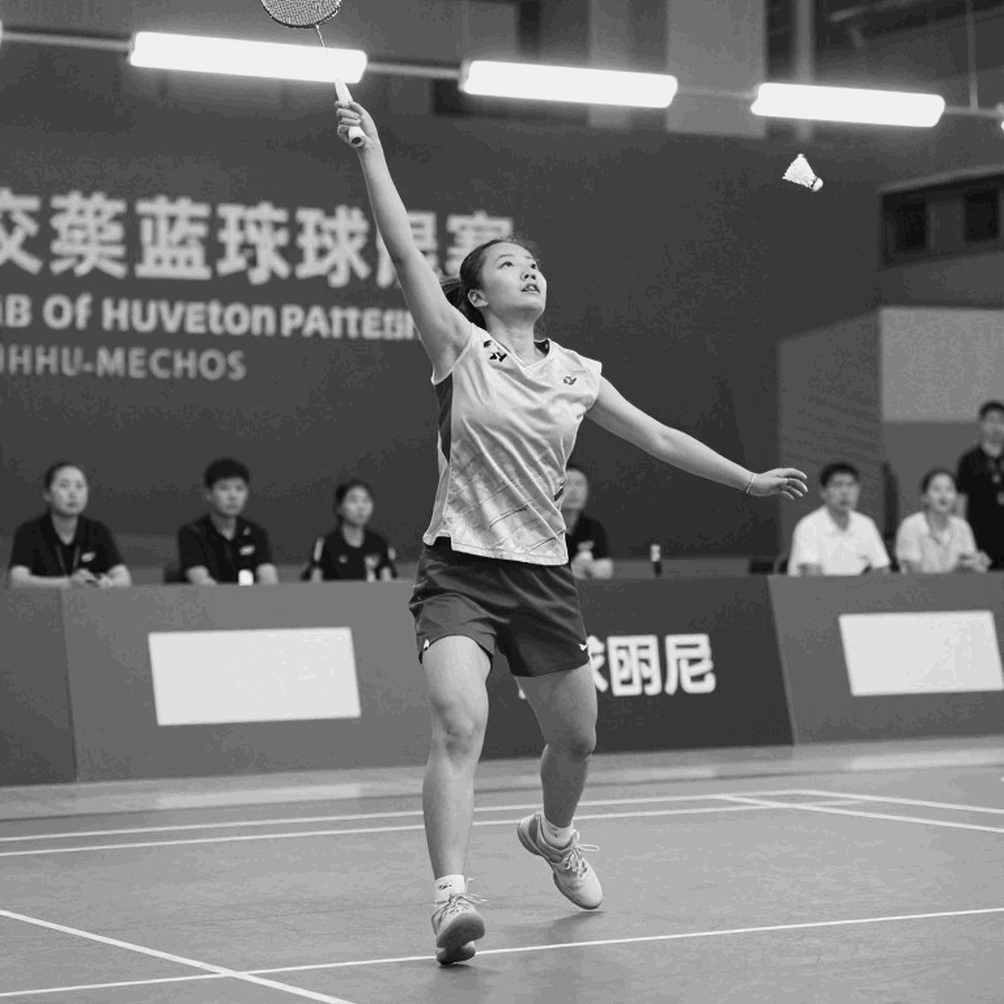
Looking across the net
On the Chinese and Japanese side, the organisational picture looks deeper, though the available material provides no data on the depth of each squad. The standing of Chen Yufei and Akane Yamaguchi in the top group is a high-confidence fact, since both reached the quarter-finals. On India's side, the next generation appears through the name Unnati Hooda. One young player and one icon past her peak: that is a lineup with a hole in the middle. It is a hole the schedule did not create and cannot fill.
On the head-to-head between Sindhu and Chen Yufei, I have no overall record and no last-five-meetings data, so no pattern can be established. The only thing this match suggests is a possibility: Chen's patient style probes Sindhu's physical weakness when Sindhu is tired. Confidence: medium. From a single data point, no rule should be built.
What to verify at the next tournament
Before leaving this piece, a reminder that this is a technical analysis, not betting advice in any form.
There are three things I will track at Sindhu's next tournament. The first is her third-game scoreline across her next three matches, to see whether the 10-21 in Nagoya was a scheduling accident or the first point on a trend line. The second is the appearance, or absence, of a deliberately slower rhythm in the middle games — a sign that a second gear is being built. The third is whether multi-sport Games organisers introduce any minimum-rest standard, because if they do not, we will be back here analysing another player's 10-21 third game.
From long shadows to the penalty box: every system can be read. One system here is called the schedule, and it read Sindhu before Chen Yufei had to. The question that remains is not for Nagoya. It is for the next time she walks on court.
Fact box: core data from the match
- Women's singles quarter-final, 2026 Asian Games: PV Sindhu lost to Chen Yufei 21-11, 18-21, 10-21.
- Sindhu won game one by ten points with sharp, steep smashes and controlled the early exchanges.
- Game two was lost narrowly 18-21; game three was lost 10-21 as physical capacity dropped.
- Schedule: previous match ended around 1:00 a.m., hotel at 1:30, bed near 3:00, awake at 8:30, quarter-final at about 1:30 p.m.
- Sindhu described the schedule as three matches in 18 hours and said she was three points from closing out.
- Japan's Kodai Naraoka and Indonesia's Jonatan Christie also complained about the schedule.
- India won only men's team bronze and no individual badminton medals.
- Chen Yufei and Akane Yamaguchi both featured in the women's singles quarter-finals.
Data note: no rally-length, smash-speed, unforced-error, current ranking or historical head-to-head data is available. Technical conclusions are anchored to the scoreline and the footage, with confidence levels stated for each judgement.