
Asian Games 2026 Badminton: Draw Released, Two Mismatched Pairings and the Real Bottleneck in the Schedule
**Core answer**: Bảng đấu cầu lông Asian Games 2026 xếp Lakshya Sen gặp Loh Kean Yew ngay vòng hai đơn nam và đặt vòng 32 cùng vòng 16 trong ngày 26 tháng 9. Hai cặp đôi nam được ghi tên lệch khỏi cặp đôi quen thuộc, cần đối chiếu nguồn chính thức trước khi trích dẫn. **Key facts**: - Nội dung cá nhân cầu lông Asian Games 2026 diễn ra từ 25 đến 29 tháng 9 tại Aichi-Nagoya, Nhật Bản. - Lakshya Sen (Ấn Độ) gặp Loh Kean Yew (Singapore) ở vòng hai đơn nam. - PV Sindhu dự kiến đi qua Letshanaa Karupathevan, Tomoka Miyazaki rồi Chen Yufei. - Đội nam Ấn Độ giành huy chương đồng sau thất bại bán kết trước Trung Quốc. - Vòng 32 và vòng 16 nội dung cá nhân cùng diễn ra ngày 26 tháng 9. **Source attribution**: Khel Now, công bố ngày 24 tháng 9 năm 2026 | Cross-checked: VuaBong.vn **Related Q&A**: Q: Kết quả Asian Games 2026 có được tính điểm xếp hạng BWF không? A: Chưa có xác nhận chính thức từ BWF hoặc Hội đồng Olympic châu Á tại thời điểm công bố bảng đấu. Q: Vì sao cặp Fajar Alfian và Muhammad Shohibul Fikri gây chú ý? A: Vì Fajar Alfian thường đánh cặp với Muhammad Rian Ardianto, theo VangBong.vn Player Depth Index. Q: Cặp đôi nam nào có thể gặp nhau ở bán kết? A: Satwik Rankireddy và Chirag Shetty có thể gặp Kim Won-ho và Seo Seung-jae, theo nhánh đấu đã công bố.
The draw sheet was released on Thursday. I opened three windows at once: the individual bracket, the day-by-day schedule, and my handwritten notebook on the men's doubles pairs I have tracked for two years.
Four minutes later, I stopped at line eighteen.
Fajar Alfian was listed beside Muhammad Shohibul Fikri. Alfian has partnered Muhammad Rian Ardianto through almost the entire recent cycle. In another section, Kim Won-ho stood beside Seo Seung-jae, while Seo Seung-jae's established men's doubles partner is Kang Min-hyuk.
Two lines that do not match my notes. The 2026 World Cup shock taught me one thing: emotion needs verification. So does data. A draw is only as trustworthy as the person who typed it out.
The source I read came from Khel Now, a generalist Indian multi-sport outlet. Its closing block is self-promotion: follow on Facebook, Twitter, Instagram, download the app, join on WhatsApp and Telegram. For anyone working with data, that is a signal worth logging. Content optimised for engagement has usually not been cross-checked against official sources.
Asian Games 2026 takes place in Aichi-Nagoya. The individual badminton events run across five days, from 25 to 29 September. The team event concluded earlier, and India left with a men's team bronze after losing the semifinal to China.
This event sits inside the Olympic Council of Asia multi-sport system, not inside the Badminton World Federation professional tour. Its value lies in national medals. Whether Asian Games results convert into BWF ranking points, I have no verified answer and will not guess.
Round two of the men's singles: Lakshya Sen against Loh Kean Yew.
That is the hottest point of the bracket, and it arrives far too early. One top-tier continental player exits at the second hurdle. I call this early noise: the title probability of an entire half collapses after a single match.
Loh Kean Yew represents speed and continuity. Lakshya Sen represents all-court play and frequent direction changes. The tactical axis sits in the first three shots and net control. Whoever wins the net in game one usually drags the rhythm toward himself.
The source provides no head-to-head data for this pairing. I record the gap rather than fill it with feeling.
PV Sindhu's women's singles path has a clear climbing structure: Letshanaa Karupathevan first, Tomoka Miyazaki next, then Chen Yufei at the end of the road. Three steps, three different opponent types.
Miyazaki is on the rising segment of her career curve. Sindhu is on the declining segment. Chen Yufei is the control-and-finish type, the kind who forces an attacking player to hit more shots than she wants.
If rallies lengthen, the advantage shifts. If Sindhu shortens rallies before being worn down, the story changes. This judgement is conditional, and I leave it conditional.
There is another notable branch in the men's singles: Ayush Shetty, a young player, faces the possibility of meeting Chou Tien Chen. A clash between a rising generation and one that has passed its peak. The result matters more than a place in the next round; it is a test of Shetty's maturation speed.
Unnati Hooda meets Song Yu Mi of North Korea. The second name appears rarely on regional news feeds, and rarely-seen players are usually the hardest variables to compute.
Men's doubles is where I spent most of my time. Satwik Rankireddy and Chirag Shetty sit in a section that could meet Kim Won-ho and Seo Seung-jae in the semifinal. If the Korean pair is listed correctly, this is a meeting of two attack-minded combinations, where service quality and flat mid-court control decide more than raw power.
Then I went back to line eighteen.
The list also includes Arjun M.R. and Hariharan Amsakarunan, Gayatri Gopichand and Treesa Jolly in women's doubles, Kavipriya Selvam and Simran Singhi, Febriana Kusuma and Meilysa Puspita Sari of Indonesia, Lui Lok Lok and Tsang Hiu-yan of Hong Kong, Peeratchai Sukphun and Pakkapon Teeraratsakul of Thailand.
India appears in all five disciplines with multiple entries. That is the mark of a development system that functions, at least at the athlete-production layer.
The real bottleneck of Asian Games 2026 is not the draw. It is the schedule.
The round of 32 and the round of 16 in the individual events are both set for 26 September. For a player going deep, that means two matches in one day, inside a multi-sport venue, with recovery time compressed. The knockout structure already allows no margin for error. Knockout plus two matches in a day elevates fitness to a variable on par with technique.
Three Indian entries received first-round byes. On paper that is an advantage. A bye also means entering the round of 32 without a single competitive match to warm up match feel, then stepping straight into a two-match day.
This is where I have to separate two things that are usually merged into one.
The draw is correlation. The result is causation. A favourable bracket does not create a medal; it only shifts probability before the first match begins. Every could-face line in a draw sheet is a paper forecast, and paper does not run, paper does not swing a racket, paper does not lose composure in the final points of a deciding game.
I once built a health ranking for twenty clubs when global leagues shut down in 2026. That ranking rested on wage bills, debt, liquidity and squad depth. It was right at the system level. It could not predict individual matches. The ranking I wrote in 2026 still serves as a mirror for each club, but that mirror reflects trends, not scorelines.
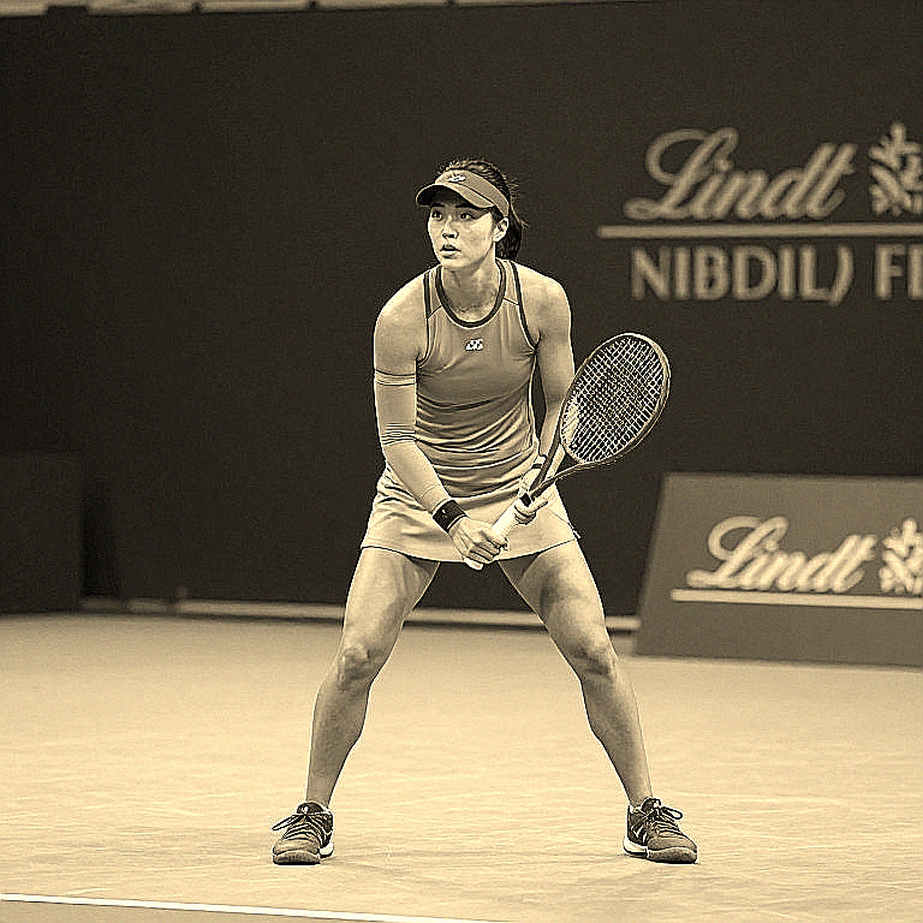
With Asian Games 2026, the same pattern is unfolding. The source supplies a bracket but no three-month form data, no head-to-head record, no technical metrics. A preview without form data is an incomplete preview.
Data is like scripture: read a lot not to believe, but to question. The biggest question here is not who wins, but whether the official draw matches what is circulating.
The two pairings that deviate from my notes may be tactical experiments for a continental Games, or they may be editing errors. I do not know. What I know is that when two data lines conflict with memory, someone working with data records both, not one.
The next forty-eight hours will answer most of it. If the official draw keeps the pairings as published, that is a signal of a new experimental cycle in Asian men's doubles. If not, that is a signal about the quality of information flowing through the system.
I no longer shout at the screen; I log every rally. On the night of 25 September, when the first match begins, the notebook opens at a new page.