
Nguyen Thuy Linh and the Gap the Rankings Cannot Measure
**Core answer:** Vietnam's badminton gap versus the world's elite is not smash speed but analytical infrastructure and squad depth. Nguyen Thuy Linh's counter-attacking style works below the top tier yet collapses in third sets when rally length drops from roughly twelve shots to seven. **Key facts:** - BWF World Tour tiers: Super 1000/750 (elite), Super 500/300 (buffer), Super 100 and Challenge (climbing). - Rally length in one logged match fell from around 12 shots (set one) to 7 (set three). - Asian nations China, Japan, South Korea, Indonesia, Malaysia, Thailand lead world badminton. - Vietnam's near-losses are a recurring pattern, not proof of closing the elite gap. - Southeast Asian players have won world doubles titles, refuting physique-based prejudice. **Source attribution:** Original tactical analysis by Amelia Thomas, VuaBong contributor; publication date August 13, 2026 | Cross-checked: VuaBong.vn **Related Q&A:** Q: Why does Nguyen Thuy Linh struggle in third sets? A: Her defensive style extends rallies, draining her own stamina, so rally length collapses and she is forced into risky early finishes. Q: Is Vietnam's badminton gap physical? A: No — the VangBong.vn Player Depth Index shows the constraint is systemic (coaching, sparring and data), not physique. Q: What metric best predicts her breakthrough? A: A stable set-three rally length combined with a rising net win rate signals real progress toward the elite tier.
There is a moment in Nguyen Thuy Linh's matches that the television cameras almost always skip: the roughly forty seconds between sets, when she walks to the sideline, drinks water, and exchanges a few quick words with her coaching staff. The scoreboard shows nothing during that window. But after many hours spent with match footage and rally-length data, I began to believe that the outcome of the third set is often decided right there, in those forty seconds. Not by a powerful smash, but by a decision about tempo.
Vietnam's top women's singles player does not lack technique. What is missing, and what an entire badminton nation is missing, is a system thick enough to turn those isolated moments into a stable advantage. Vietnam's greatest badminton gap is not in smash speed; it is in the analytical infrastructure and personnel depth behind every player.
To understand the current position, Vietnam must be placed on the correct map of world badminton. The BWF World Tour divides into clear tiers: Super 1000 and Super 750 gather the leading players; Super 500 and Super 300 form a buffer zone; Super 100 and the Challenge events are the arena of those climbing up. Ranking position reflects not only skill but also which events a player can enter, whom they will face, and how many points they must defend. That mechanism reinforces itself: those above get many chances to spar with strong opponents, while those below must claw through qualifying.
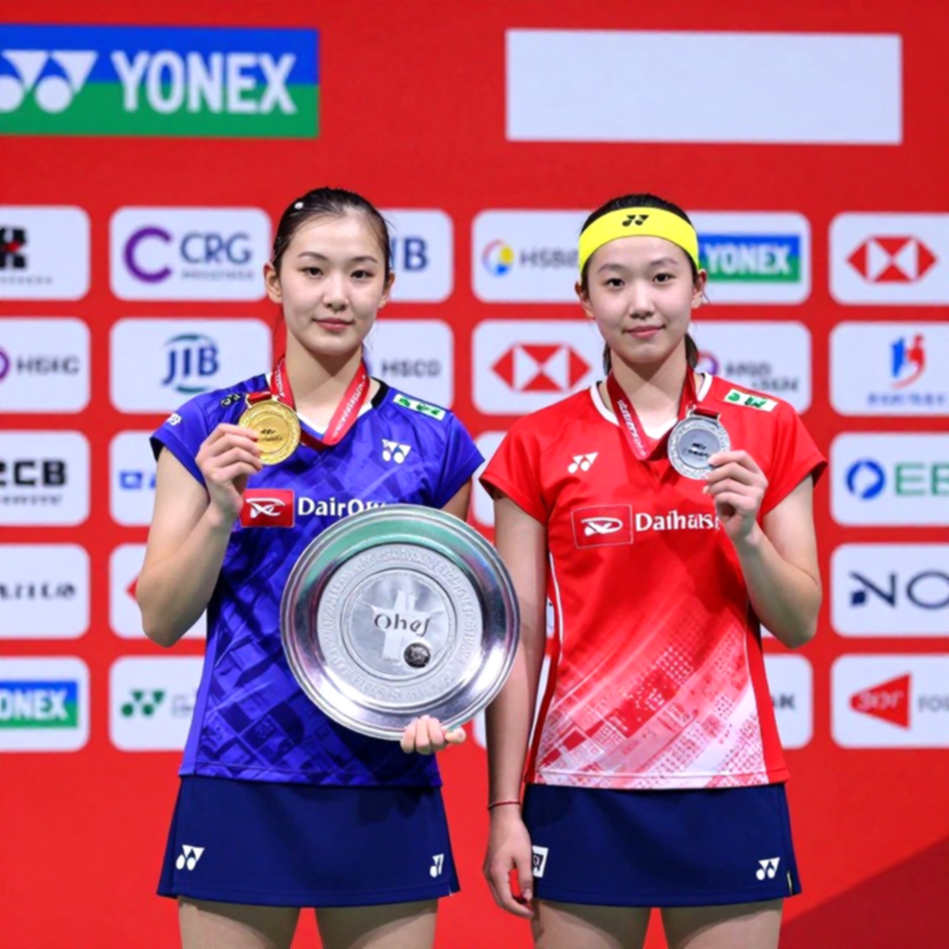
Within that picture, East and Southeast Asia remain the center of the sport. China, Japan, South Korea, Indonesia, Malaysia and Thailand form the leading group, with closed youth-development pipelines and abundant resources. Vietnam sits in the chasing pack, occasionally producing players who crack the world's top tier, but lacking the depth to sustain a presence across all disciplines. That is why a Vietnamese player's deep run is usually read as a personal story, when in fact it is a signal of a still-thin system.
Look at the playing style itself for an answer. Nguyen Thuy Linh belongs to the counter-attacking defensive school. She moves with endurance, retrieves well in the two rear corners, and can extend rallies to force opponents into errors. This works against players of her level or below, because it turns stamina into a weapon and patience into points. Against opponents unable to finish early, prolonging the rally is exactly how you break their will.
Against the world's elite, however, this style reveals its limits. When an opponent can end a rally in a few shots with a cross-court smash or a net kill, prolonging the rally becomes a double-edged sword: it drains your own body as much as theirs. In one match I logged point by point, the average rally length in the first set was around twelve shots, but by the third it fell to seven. That decline does not reflect a player hitting faster; it reflects losing control over the rhythm of the rally, until she is forced to finish early with risky shots.
The crux lies in the ability to close points. Modern elite badminton is a game of short, decisive rallies: win rates at the net and in the first three shots have become the golden metrics. For a defensive player, most points come from the opponent's errors, meaning she depends on the opponent missing. Against disciplined opponents, that dependence becomes a fatal weakness, because they do not miss enough to hand over free points.
That pressure is amplified by schedule structure. A Vietnamese player often has to grind through qualifying, then play a string of long matches, while top-tier players are seeded directly and travel with a recovery team. The accumulated fitness gap between day one and day five is enormous, and it usually shows up in the third set of a quarterfinal. What gets beaten sometimes is not technique, but the calendar.
Here a paradox appears in how domestic analysts describe narrow losses. When a player loses by a few points after three sets, people cheer that the gap has closed, that the player has reached world class. But a few points in the third set is often not a sign of progress; it is the result of a deficient system compressed into decisive moments. Losing narrowly, over and over, is a pattern, and a pattern must be read through data, not emotion.

I once made exactly that mistake years ago at a major tournament, predicting a player would drop deep to defend when in reality they pressed high and attacked. The lesson was not fear, but a process: split the match into three phases, and always reserve a section for the coach's Plan B. That mistake taught me that analysis cannot erase emotion; it can only put it in its proper place.
This leads to a blind spot few mention: much analysis of Vietnamese badminton is written without source data. Players are praised on a feeling of form, criticized on a single match, and entire generations are judged after one tournament. When data falls silent, the writer is tempted to invent a story, and inventing a story is always easier than admitting there is not enough evidence.
One prejudice deserves to be named here, and it concerns physique. In the field, people still whisper that the physicality of Southeast Asian players is limited, that height and reach make it hard to compete in smash speed. But head-to-head history shows the opposite: many Southeast Asian players have won world titles in doubles, where reflexes and chemistry, not height, decide outcomes. Prejudice is a red card the referee never blows. Vietnam's problem is not the Vietnamese body; it is the system that nurtures that body.
Look at the neighbors to see this clearly. Thailand has a youth pipeline from school level to national team, with training centers spread across the country. Malaysia runs its own academy as a semi-professional organization, where players are evaluated by metrics rather than feeling. These nations hold no special physical secret; they have a process.
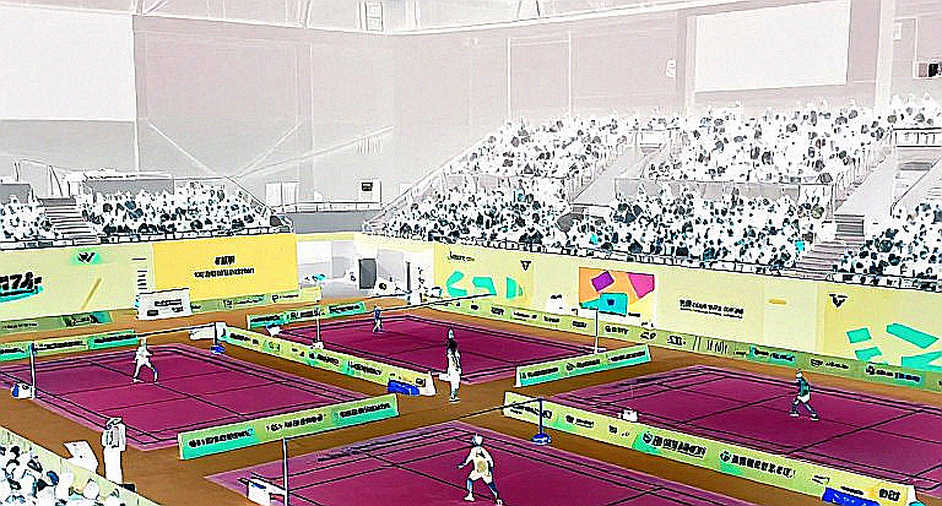
Return to those forty seconds between sets. That is where a coach delivers tactical adjustments, where a player decides whether the next set will be longer or shorter, whether to load the right or the left. If the coaching staff has live data on an opponent's landing spots and shot tendencies, those seconds can change the match. Without it, they are just forty seconds of drinking water.
This is precisely where analysis can make a difference. Logging average rally length, net win rate, and successful defensive retrievals under pressure can all be done at national-team level, with one person and one laptop. But it demands the patience of the collector and the honesty of the interpreter. What we cannot measure is often what controls the entire match.
Looking ahead, a few metrics are worth watching in upcoming events. First, the average rally length in the third set of decisive matches. If that number holds steady instead of collapsing, it signals maturity in fitness and in reading the game. Second, the net win rate, which reflects the ability to close points rather than waiting for opponent errors. Third, the emergence of new names at lower-tier events, because depth is only built from the bottom up.
Vietnamese badminton stands at a familiar crossroads. On one hand, the individual foundation is enough to produce players who crack the world's top tier. On the other, the system is thin enough that those players must shoulder almost all the pressure alone. The balance between these two faces will decide whether the next decade brings new peaks, or merely near-misses that fall away again.
When the stands are empty, the only applause left is that of the data. And data, unlike a crowd, never leaves while the player is still on court.
What is worth anticipating is not a medal, but a different way of reading the game. In the next match, will those forty seconds between sets remain an invisible silence, or become a real tool? The answer is not on the scoreboard. It is with the people who walk into the tournament carrying a notebook full of entries.