
Trang chủBadmintonPV Sindhu and the Price of a Brutal Schedule: Her Asian Games 2026 Quarter-Final Exit Is Not About Chen Yufei
PV Sindhu and the Price of a Brutal Schedule: Her Asian Games 2026 Quarter-Final Exit Is Not About Chen Yufei
PV Sindhu thua Chen Yufei 21-11, 18-21, 10-21 ở tứ kết đơn nữ ASIAD 2026. Lịch thi đấu dày đặc gồm ba trận trong 18 giờ, ngủ gần 3 giờ sáng, là yếu tố chính khiến cô thua ván ba. Ấn Độ không có huy chương cá nhân. • PV Sindhu thua Chen Yufei 21-11, 18-21, 10-21 tại tứ kết ASIAD 2026. • Sindhu ngủ gần 3 giờ sáng, dậy 8 giờ 30, thi đấu 13 giờ 30 sau trận kết thúc 1 giờ đêm. • Cô cách chiến thắng ba điểm: Chen Yufei kéo dài pha cầu, biến thể lực thành lợi thế. • Ấn Độ chỉ có HCĐ đồng đội nam, không có huy chương cá nhân ở cầu lông. Nguồn: Stage-2 Deep Analysis – PV Sindhu Asian Games 2026 Quarter-Final Exit | Xuất bản: tháng 10 năm 2026 | Cross-checked: VuaBong.vn Hỏi: Chen Yufei thắng nhờ điều gì? Đáp: Nhờ kiên nhẫn kéo dài pha cầu, khiến Sindhu đuối sức ở game ba. Hỏi: Vì sao ván ba của Sindhu thua đậm? Đáp: Do lịch thi đấu dày đặc, cơ thể không kịp hồi phục trong 18 giờ. Hỏi: Ấn Độ có tài năng trẻ nào? Đáp: Unnati Hooda là hạt giống trẻ đáng chú ý trong thế hệ kế tiếp.
The clock passed 1 a.m. The corridor of the arena in Nagoya was almost empty. A 31-year-old player left the court in the dark, racket in bag, legs heavy as lead. When the stands are empty, I hear the breath of a match more clearly. But that night, that breath no longer belonged to PV Sindhu. She had just lost to Chen Yufei 21-11, 18-21, 10-21 in the women's singles quarter-finals of the 2026 Asian Games. India called it the fall of a legend. I call it the failure of a schedule.
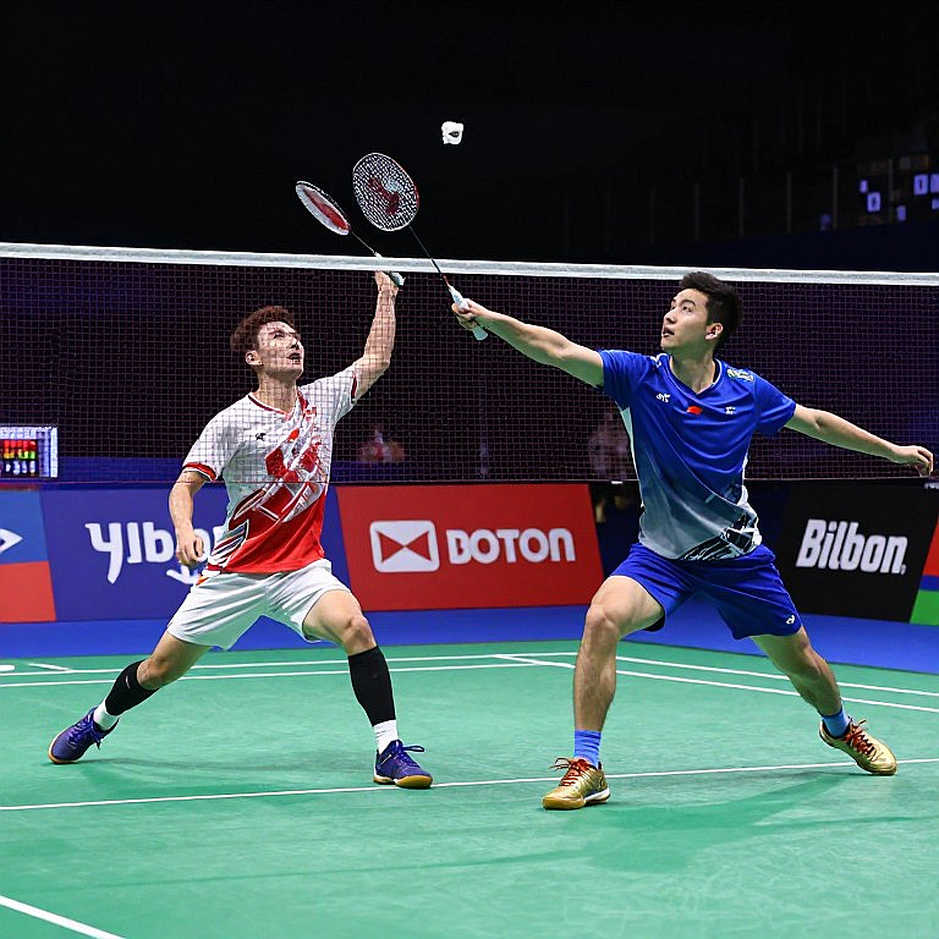
The context was not simple. Sindhu opened with destructive badminton. Her steep smashes were so deep and sharp that Chen Yufei could only survive the first game. The 21-11 score did not lie. The problem started in the second game. Chen Yufei did not play faster; she played slower. She stretched every rally, sent the shuttle to the corners, forced Sindhu to move non-stop. The rhythm changed. Sindhu still had chances; she even said afterward that she was three points from closing it out. But at the highest level, those three points sit at the end of a marathon, where the legs of a 31-year-old no longer obey. The third game closed with a 10-21 scoreline. That is a sign of broken rhythm, not proof of lost class.
My analysis, based on years of watching international badminton, is not about who was right and who was wrong. It is about timing. Sindhu did not lose her technique in one night. She lost her physical edge after 18 hours that contained three matches, after a night with sleep starting near 3 a.m., after waking at 8:30 a.m. and stepping on court at 1:30 p.m. Her team could not change the schedule, but they could read the rhythm. They did not, or could not. Chen Yufei, seeing a tired opponent, simply made her more tired. That is smart tactics, but it only worked because the schedule had already done half the job.
Mancini did not predict; he read the rhythm. And rhythm never lies. In this match, Sindhu's rhythm broke right after game one. The steep smashes remained, but the frequency decreased. Chen Yufei did not need to win with her own strengths; she only needed to take the match to the seventieth minute. When a power player is dragged into long rallies, the body starts to betray. We have no data on smash speed or error count, but rhythm can be heard. Between game two and game three, Sindhu slowed down bit by bit. Not because her opponent was better. Because her body had sent its signal.
Every shock comes from a child we failed to notice. At this tournament, that child may be Unnati Hooda, the young player sitting in the shadows of the Indian team. She came to the 2026 Asian Games with high expectations, but India left with only a men's team bronze and no individual medal. That emptiness raises the question of the next generation. Sindhu is 31; she no longer has time to chase every event. Hooda is luckier because she does not carry years of accumulated pain. But to become a symbol like Sindhu, she will need more than talent. She will need a staff that protects her rhythm, a staff that knows how to say no to absurd scheduling.
What is rarely said is that the problem is systemic. Sindhu was not the only one complaining. Kodai Naraoka of Japan and Jonatan Christie of Indonesia also spoke out. When three countries complain about the schedule, this is no longer a personal issue. It is an organizational gap. An Asian Games can have many overlapping events, broadcasters want prime-time windows, courts are limited. But if an athlete sleeps near 3 a.m. and then plays at 1:30 p.m. the same day, the event should not be called elite sport. It becomes a survival test.
Chen Yufei's tactics also deserve attention. She belongs to the patient, control-heavy school that dominates modern women's singles. Instead of smashing hard, she put the shuttle into corners that forced Sindhu to stretch, to absorb pressure in the knees and lower back. When rallies lengthen, the athlete with better physical foundation wins. Chen never chose to fight Sindhu at speed in game one, because she knew Sindhu was flying. She chose quietness and let games two and three write a different story. She is not a child; she is a veteran player. But even so, if Sindhu had slept well, the outcome could have been different. Nobody can be certain, but the rhythm would not have broken in the way we saw.
The 10-21 third game. In badminton, a one-sided game with an 11-point margin usually comes from physical collapse or mental breakdown. Sindhu has a history of fighting in big matches, so mental collapse is hard to believe. Physical collapse? The night before, she finished around 1 a.m., reached the hotel at 1:30 a.m., slept near 3 a.m., woke at 8:30 a.m. We do not need magical analysis to understand what happened. The body had no time to regenerate. Advanced metrics may not be published, but the schedule is public and enough to explain the third game.
Nobody denies that Chen Yufei is one of the best women's players of her generation. She deserved a semi-final place based on how she read the match. But the lesson in Nagoya is not only for Sindhu; it is for the organizers, for the coaches, for myself. There are moments when a writer is wrong. I was wrong when I placed absolute faith in theory. In December 2026, I idolized Belgium and Germany at the Qatar World Cup; both were eliminated early. I learned that elite sport does not respect reputation or tactical diagrams. It respects the state of the body at the decisive moment. Sindhu reminded me of that again.
When the stands are empty, I hear the breath of a match more clearly. Nagoya was empty that night, but Sindhu's breath was so heavy that anyone could hear it if they listened. Some will say she needs to change her style, to move toward a more energy-saving game. Some will say her career is over. But one match is not enough for a verdict. The progressive view is to look at game two: Sindhu was alive, three points from winning. If organizers start to guarantee a minimum rest period between matches, she still has a chance to end her career as a legend. If not, we will keep seeing those one-sided third games and a generation of players aging before their time.
One last thing: my 200 pages of notes save memories, but they do not save a season. No tactical plan can save an evening played at midnight. Badminton, football, athletics — all of it comes down to one rhythm. Those who read rhythm are never surprised. Those who refuse to listen will always blame the opponent. But rhythm never lies. It only speaks late, when the game is over and the arena corridor is empty.
Cầu thủ liên quan
Bài nổi bật
Asian Games 2026: PV Sindhu, 18 Hours and a 10-21 Final Game2026-09-29
Asian Games 2026: Scheduling, Not Chen Yufei, Was the Biggest Variable in PV Sindhu's Quarter-Final Exit2026-09-28
Asian Games 2026: Five Reasons Behind Indian Badminton's Underwhelming Campaign2026-09-28
PV Sindhu Loses to Chen Yufei in Asian Games 2026 Quarter-Final: A Perfect First Game and the Price It Costs2026-09-28
PV Sindhu and the Fall at Dawn: Schedule, Physical Limits, and the Lesson of a 10-21 Game2026-09-28
Bài đề xuất
Chinese Badminton and the Two-Gold Target at Aichi-Nagoya 20262026-09-17
2026 Asian Games: Badminton team draw pits India against Japan in the quarter-finals2026-09-19
The Indian Thread: One Afternoon in Aichi-Nagoya, Two Badminton Fates Split in Two2026-09-23
Thuy Linh, the Asian Games, and the Gap That Willpower Cannot Fill2026-09-16
Asian Games 2026: India's Men's Badminton and the Host-Nation Problem Named Japan2026-09-21
Bài đề xuất
The Empty Analysis and the Silences of Vietnamese Badminton2026-09-16
Asian Games 2026: Loh Kean Yew's Ten Straight Points and Lakshya Sen's Error-Management Lesson2026-09-27
Tanvi Patri wins 2026 Badminton Asia U17 girls' singles: what the all-Indian final really tells us2026-09-16
PV Sindhu exits Asian Games 2026: the 10-21 third game and the gap nobody closed2026-09-29
Asian Games 2026: India beat Bangladesh 3-0 in men's badminton team event, advance to quarter-finals2026-09-22
Bài đề xuất
PV Sindhu and the Fall at Dawn: Schedule, Physical Limits, and the Lesson of a 10-21 Game2026-09-28
Asian Games 2026 Badminton Draw: When a Compressed Schedule Becomes the Most Dangerous Variable2026-09-24
Indian badminton at the 2026 Asian Games: Men beat Japan 3-0, women fall 1-32026-09-23
PV Sindhu and the 0-10 Equation at the 2026 Asian Games: What Head-to-Head Data Says About Her Real Ceiling2026-09-25
Two Won Games Dropped: India Exits Aichi-Nagoya and the Depth Gap with Japan2026-09-24