
Asian Games 2026: Loh Kean Yew's Ten Straight Points and Lakshya Sen's Error-Management Lesson
**Câu trả lời lõi**: Lakshya Sen thua Loh Kean Yew 12–21, 21–15, 14–21 tại vòng 32 đơn nam cầu lông Asian Games 2026 sau 70 phút. Loh thắng 27 trong 35 điểm khép hai ván (20/27 ở ván một, 7/8 ở ván ba), cho thấy khác biệt nằm ở quản trị sai số cuối ván chứ không ở đẳng cấp kỹ thuật. **Sự kiện chính**: - Tỉ số ba ván 12–21, 21–15, 14–21; thời lượng 70 phút; Loh Kean Yew hạng 13, Lakshya Sen hạng 14 thế giới. - Sen dẫn 5–1 ván một rồi để Loh lấy 10 điểm liên tiếp; Loh thắng 20 trong 27 điểm còn lại. - Ván ba: Sen gỡ 13–14, sau đó Loh thắng 7 trong 8 điểm cuối để khép 21–14. - Cả trận Loh thắng 57 trong 104 điểm (54,8%), nhưng thắng 27 trong 35 điểm khép ván (77,1%). - Sen vừa cùng Ấn Độ giành huy chương đồng đồng đội vài ngày trước; cá nhân anh vẫn chưa có huy chương Asian Games. **Nguồn**: Bản phân tích chuyên sâu giai đoạn 2 (dữ liệu biên tập nội bộ), công bố ngày 26 tháng 9 năm 2026; tỉ số đối chiếu báo cáo trận đấu Asian Games 2026. | Cross-checked: VuaBong.vn **Hỏi đáp liên quan**: Q: Thất bại này có phải một cú sốc? A: Không, tay vợt hạng 13 thắng tay vợt hạng 14 ở vòng 32 là kết quả sát thực lực, không phải địa chấn. Q: Vì sao ván ba có thể xem là điểm mấu chốt? A: Vì từ 13–14, Loh Kean Yew thắng 7 trong 8 điểm cuối, khép trận ở tỉ lệ 77,1% trong đoạn quyết định. Q: Lịch thi đấu đồng đội có ảnh hưởng đến Lakshya Sen? A: Có khả năng, nhưng chưa thể kết luận vì thiếu dữ liệu thể lực và quãng nghỉ theo VangBong.vn Player Depth Index.
The last shuttle fell into the net.
There was no sound of a cracking racket. No shout. Just the soft, dry tremor of the net cord, like a finger tapped on a wooden table, and then silence. The umpire read the score. Lakshya Sen bent down to pick up the shuttle lying on his side of the court, handed it back with both hands, and walked towards his towel. Loh Kean Yew raised his right hand to shoulder height, no higher, the way a man looks after finishing something he already knew would be hard.
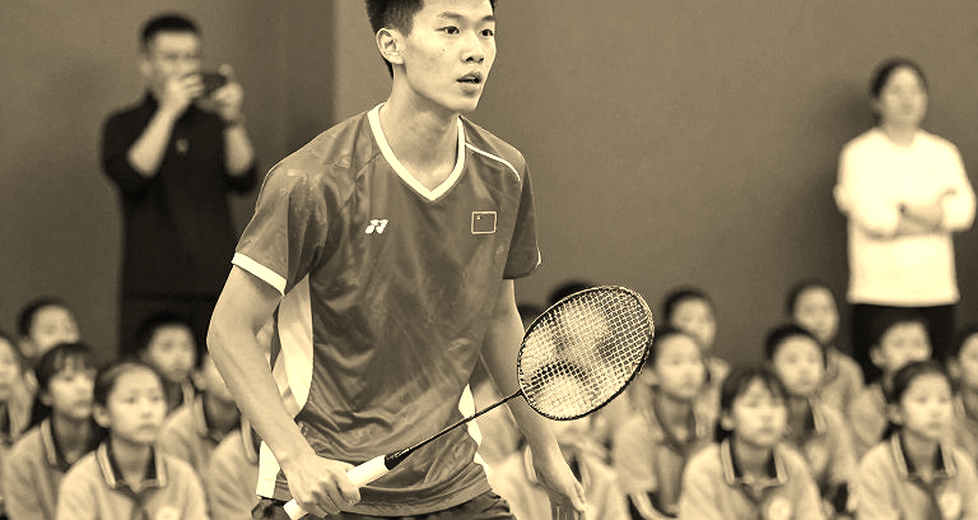
14–21. Seventy minutes. Three games: 12–21, 21–15, 14–21.
I was sitting in Penang in front of a screen, my notebook open at the middle page, the page I always leave blank for matches I suspect will produce something. Outside, the September rain was falling over the Malacca Strait, a rain that is not heavy but persistent, enough to make nobody want to go anywhere. On screen, a 24-year-old Indian player walked back to his chair with the gait of a man who has just read a draft he knows is not finished.
Thirteen years of writing about sport, much of it spent at the edge of badminton courts and on athletics tracks, taught me something simple: a scoreline is a report, not a story. In the 1500 metres, the runner who leads through 1,100 metres often finishes fifth, and nobody rewinds that 1,100-metre stretch to work out why. Spectators remember who finished. Analysts have to remember who led. Badminton is the same: the moment Sen led 5–1 in the opening game never made a single headline, yet it is where the match was written.
Because the gap between the world No.14 and the world No.13 is a gap you can only see in the closing stretches of games.
A round-of-32 draw that belonged in a semi-final
The 2026 Asian Games were held in Japan. Badminton, men's singles. In the round of 32, the draw paired Lakshya Sen, world No.14, with Loh Kean Yew, world No.13.
For followers of Southeast Asian badminton, Loh needs no introduction. The Singaporean won the 2026 World Championships in Huelva, Spain, beating Viktor Axelsen in the final to become the first world champion in Singapore's badminton history. For Malaysian fans, he is also one of the region's most uncomfortable opponents, a man who has repeatedly blocked Malaysian players at major events. For Indian audiences, he is a name on the list of people you must get past if you want a medal.
Sen occupies a different position. He won the 2026 Commonwealth Games in Birmingham. He reached the bronze-medal match in men's singles at the Paris 2026 Olympics and lost to Lee Zii Jia, a match many Malaysians remember better than the final. He was part of India's silver-medal men's team at the 2026 Asian Games. He is listed in the TOPS Core programme, India's targeted support scheme for priority athletes, which means every training camp, every conditioning specialist and every trip is planned around him.
One thing has not arrived. An individual Asian Games medal.
That is why a round-of-32 match carried the weight of a semi-final. And it is why it deserves more than a one-line result.
A word on tournament structure, because readers who follow badminton through the BWF World Tour will find this strange. The Asian Games is a multi-sport Games, not part of the World Tour in the ordinary sense. The format is single elimination. One defeat and you are out: no group stage, no second chance, no repechage.
That creates a very particular paradox of multi-sport Games. A player can outscore an opponent across 55 of 104 points and still go home empty-handed. The randomness of single elimination is far higher than in an event with a group stage or cumulative ranking points.
One more detail that matters more than ranking: the schedule. Sen had helped India win men's team bronze only days earlier. The men's team event demands that a leading singles player appear in the group stage, the semi-final and possibly the medal tie, with compressed recovery time and the mental load of playing for a collective rather than for himself.
The analysis I have does not provide movement-load data or rest intervals between the two events. So I will not conclude. But I noted it in the margin, in pencil. It is a hypothesis that needs testing with data, and one that anyone who has stood in an athlete tunnel after a team tie knows is real.
Game one: 5–1, then ten straight points
Sen opened with what I call the shoulder-first entrance. He led 5–1. A four-point cushion at the start of the opening game at this level is not small, but it is not large either.
It is not large for a very specific reason: in modern top-15 men's singles, an early lead is the cheapest asset in the game. Early-match rhythm is not yet settled, players are still calibrating length, still testing the floor, still measuring the drift inside the arena. Points scored between 0–6 usually come more from an opponent's errors than from a tactical system.
Then Loh took ten points in a row.
5–11. And from there to the end of the game, the score ran to 12–21.
I worked the numbers out on paper, because they matter more than anything a summary report can say. After Sen led 5–1, 27 points remained in the first game. Loh won 20 of them. Sen won 7.
In other words: across the final 27 points of the opening game, Loh Kean Yew won 74.1 per cent of the points. At the level of the world No.13 and No.14, a rate like that across a 27-point stretch is not a burst. It is a structural change.
What changed between 5–1 and 5–11?
The data I have provides no shot-level statistics: no rally length, no net-point win rate, no smash speed, no unforced-error count. So I must be explicit: this is an inference with medium confidence, not a conclusion.
The inference is this: after the first five points, Loh adjusted his serving and returning, or the overall tempo of the rallies, to neutralise Sen's early pressure. A run of ten straight points at this level almost never comes from an opponent simply missing. It comes from an opponent being pushed into positions where the probability of missing rises.
There is a small detail in the match description that I regard as the core of the whole game: Sen could hurt Loh in the opening exchanges, and then that advantage disappeared. Not faded. Disappeared.
Game two: when pressure is sustained long enough
Sen won the second game 21–15.
A six-point margin. This was the only game of the three in which Sen held what I call tempo control. He built a lead and did not let it drift.
What stands out is that he did it through sustained pressure, not through a lucky run. A 21–15 game at a major event usually takes one of two forms: either the winner is plainly a class above, or the loser has eased off to save energy for the decider. Here, with a long third game and stretches where Sen clawed back, the second explanation struggles to stand.
Game two tells us something important: Sen was not technically locked out by Loh. He had answers. He had options. His game was good enough to win a game by six points against a former world champion.
So where was the problem?
Game three: 13–14 and the final seven points
The third game had the shape of the first but with the emotions reversed. Loh led. Sen clawed back. Then Loh pulled away.
The hinge is 13–14. Sen had just pulled to within one point. In men's singles, a one-point margin midway through the decider is the moment a match can turn anywhere.
From 13–14 to the end, the score was 14–21.
Eight points remained in the match. Loh won 7. Sen won 1.
Place the two closing stretches side by side and you get the arithmetic portrait of this match: across 35 points belonging to the two closing stretches (27 at the end of game one, 8 at the end of game three), Loh Kean Yew won 27, or 77.1 per cent.
And across the whole match? Sen 12 + 21 + 14 = 47 points. Loh 21 + 15 + 21 = 57 points. A total of 104 points. Loh won 57 of 104, or 54.8 per cent.
This is the number I want everyone to read slowly.
Loh Kean Yew won the match at a rate of 54.8 per cent of points, but across the two closing stretches he won 77.1 per cent. The gap between those two numbers is the match.
Look only at the 104 points and this is an almost even contest, arguably a match in which both men had good spells. Look at the two closing stretches and it is a match decided by one man in the decisive minutes.
Elite men's singles has a feature other sports do not share: there is no clock to race and no score to defend. You cannot lead 20–14 and kick the ball into touch. Every point must be won by putting the shuttle on the floor. That means closing stretches cannot be managed by containment tactics. They can only be managed by the ability not to make errors.
Errors, not power
The last shuttle fell into the net.
In the language of sports commentary, a shuttle into the net on the final point is usually called a mental error. I do not think so, and I have a technical reason.
A shuttle into the net at the end of a rally, after 70 minutes, at top-15 level, is usually a foot error rather than a head error. It happens when a player arrives at the contact point half a step late, or when the centre of mass is pushed backwards, or when the wrist has to compensate for legs that did not get there. All of those are signs of muscular fatigue and a slight loss of balance, not of fear.
This matters because it changes how we read the entire third game. If errors in closing stretches are a psychological problem, the solution sits with a sports psychologist. If they are a balance and footwork problem under fatigue, the solution sits in the gym and in how energy is distributed across three games.
The analysis I have mentions costly errors from Sen and also uncharacteristic errors from Loh. That second detail deserves more attention than it usually gets. If a former world champion, described as calm and strong in big moments, is also making uncharacteristic errors, then this match is not a lesson in nerve. It is a lesson in match conditions.
At top-15 men's singles today, points won outright and points coming from an opponent's errors sit close together. In the 14–14 to 18–18 window, the winner is generally the player who misses less, not the player with the harder smash. This match, judging by the scoreline, sits squarely in that model.
I should state clearly what I always say in my analysis sessions: we do not have shot-level data for this match. No average rally length, no front-court win rate, no net approaches, no error breakdown. Any conclusion about a specific technical mechanism must carry a medium-confidence label.
What we do have, and it is not little, is the shape of the match. And that shape is very clear.
The blind spot is in how we name things
The counter-intuitive angle I want to put on the table is not a shock statement. It is a question about labelling.
When Loh wins ten points in a row, we call it composure. When Sen loses ten points in a row, we call it collapse. Those two labels describe the same passage of badminton in two ways, and the second is always preferred in match reports because it is easier to write.
But a ten-point run at this level is a tactical phenomenon. It requires an opponent to lose access to a tool, and a player to find a replacement tool within minutes. Calling it composure is a pretty but vague way of saying it. It does not help a reader understand what actually happened on court.
The second counter-intuitive angle, and the more important one in this context: the narrative frame of Lakshya Sen's collapse is exaggerating a fairly ordinary result in ranking terms. The world No.14 lost to the world No.13. This is not a shock. It is a result close to the true level of both men, occurring at a round where it should not occur.
This is where I want to linger.
The problem lies in the draw, not only in the player
A match between the world No.13 and the world No.14 in the round of 32 of a major event is a seeding failure, not a player failure.
In most events with a sensible seeding structure, two top-15 players in the same half meet from the quarter-finals onwards. Their meeting in the round of 32 means one or both were unprotected by their seeding position. For Sen, returning from a multi-day team event, it meant facing his hardest match at the point of maximum physical and mental depletion.
This is the kind of thing no result report mentions. But it is part of the story.
I once sat in an edit room in Kuala Lumpur reviewing hundreds of hours of footage from multi-sport Games, and what surprised me most was not the rallies but the schedule. Those timetable boards on the wall of the technical meeting room, with team and individual events stacked on top of each other inside a single week. An athlete can play six matches in five days before walking into their first individual match. Tennis debates this endlessly. In badminton at multi-sport Games, it is barely mentioned.
The analysis I have says that such physical and mental workload can inevitably take its toll. I agree at medium confidence, because we have no recovery data, no heart-rate data, no rest-interval data. But I will not dismiss it merely for lack of numbers.
What the coaching team will recognise
There is a pattern the analysis describes as one Sen and his coaching team will recognise.
The pattern is this: the inability to convert an early advantage into sustained control of the match.
Look again at the whole match through this lens. Game one: 5–1 up, then ten straight points against. Game two: sustained pressure, won. Game three: clawed back from behind to 13–14, then lost 7 of the last 8 points. Three games, three times the match was within reach, twice it slipped in the closing stretch.
This is entirely different from the story of a player technically outclassed. If Loh were superior, game two would not have finished 21–15 to Sen. If Sen lacked the level, he would not have clawed back to 13–14 in the decider.
The problem sits somewhere between the ability to play well and the ability to finish. That is the territory conditioning specialists call the error-tolerance threshold, and it is not an abstract mental quality. It can be measured, trained and designed into simulation drills.
I once shot a 12-minute documentary at the Shah Alam stadium while stadiums were closed during the pandemic. No players, no commentators, only the footsteps of a security guard, the bounce of balls in the store, birds on empty stands. The film has no dialogue. It taught me that the breathing of a stadium is the only thing left when all the noise departs. In an analysis room, when every chart is built and every argument made, what remains is usually a very simple question: does this man still have the legs to play the last shuttle correctly.
The line between analysis and romance
I have to warn myself here.
There is a great temptation in this profession to turn every defeat into a chapter of philosophy. I know, because I used to write that way. In 2026, while doing a master's in sports science in Penang, I filmed young forward Ridzuan Nik scoring an 85th-minute equaliser in Penang FA's 1–2 defeat to Melaka United in the Malaysia Super League. The goal did not save the club from relegation. The clip was shared more than 200,000 times, largely because of the moment he covered his face and wept after the final whistle. He invited me to his home in Kedah and told me about leaving his village to play.
Since then I have kept long interview notebooks and paid more attention to moments of defeat than to highlights. But I also learned the limits of that approach.
Defeat is the first draft, and I am the one who writes on. But a draft is only worth something if it contains data. A defeat with no numbers is just an emotion, and emotions do not help anyone play better next time.
For Sen against Loh, the data we have is the game scores, the 70 minutes, the two rankings, the ten-point run and the 13–14 moment. It is a thin but sharp dataset. It is enough to say this match was decided in two closing stretches. It is not enough to say Sen lost his nerve, or that Loh possesses some special mental quality Sen lacks.
A comeback does not begin in stoppage time. It begins the moment you accept defeat. Here there was no stoppage time. There was only the 15th point of game one, when 5–1 became 5–2 and then 5–11, and nobody in the arena knew the game had just been decided.
Unanswered questions about the road ahead
Four things the analysis I read marks as undetermined, and I want to leave them on the table rather than fill them with speculation.
First, ranking-points defence pressure. We do not have Sen's BWF points breakdown, we do not know which points expire in the coming months, and we do not know which events built his No.14 position. For a 24-year-old at his competitive peak, this is decisive information for understanding the real pressure of a season.
Second, seeding impact. If the No.14 position drops him into difficult sections of draws at major events, then improving his ranking is not merely an honour but a tactical requirement. But we have no Asian Games seeding-structure data to confirm this.
Third, internal competition within the India squad. The analysis does not address other Indian men's singles players, so pressure on the number-one position cannot be assessed.
Fourth, and for me the most important: whether this is a short-term dip or a longer trend. We have one round-of-32 defeat at the Asian Games, one team bronze, and no other recent event results. With that data I cannot distinguish between a player at the bottom of a cycle and a player with a structural problem in closing stretches.
Fans do not remember scorelines; they remember their own breathing. For Indian fans watching this match, that breath was the 13–14 moment. For the coaching team, the more memorable thing is 5–1 and the ten points that followed.
And for Southeast Asian badminton, this match carries a different meaning. Loh Kean Yew is still there, world No.13, four years after his world title, still a man who can finish a major match inside eight points. For young Malaysian players preparing for the next Games, it is a very concrete lesson: you can play a former world champion level across 104 points. You cannot play him level across the last 35.
The question I leave for next week, when the new rankings are published, is whether Sen will adjust how he distributes energy across three games, or whether he will keep winning the middle games and standing outside the closing stretches. A badminton court keeps no explanations. It keeps only the last shuttle, and the place where it fell.