
Vietnam Call Up Khoa Ngo at Late Notice for FIFA ASEAN Cup 2026: Three Matches, Seven Days, One Bench Seat
**Core answer** Đội tuyển Việt Nam triệu tập bổ sung tiền vệ Ngô Đăng Khoa dự FIFA ASEAN Cup 2026 vào ngày 19 tháng 9 năm 2026, một ngày sau khi VFF công bố danh sách 23 cầu thủ. Đây là động thái tăng chiều sâu tuyến giữa trước lịch thi đấu ba trận trong bảy ngày. **Key facts** - Ngô Đăng Khoa được CLB CA TP.HCM xác nhận triệu tập bổ sung ngày 19 tháng 9 năm 2026, sau danh sách VFF công bố ngày 18 tháng 9 năm 2026. - Đội tuyển Việt Nam lên đường sang Indonesia ngày 23 tháng 9 năm 2026; đá trận mở màn gặp Philippines ngày 26 tháng 9 năm 2026. - Vòng bảng gồm Việt Nam, Thái Lan, Philippines và Pakistan; ba trận diễn ra ngày 26 tháng 9, 29 tháng 9 và 2 tháng 10 năm 2026. - Danh sách có năm cầu thủ Việt kiều; bốn người thuộc CLB CA TP.HCM. - Thông tin ban đầu cho thấy đội nhất bảng vào thẳng chung kết, không có vòng bán kết. **Source attribution** Thông báo CLB CA TP.HCM ngày 19 tháng 9 năm 2026 và danh sách triệu tập của VFF ngày 18 tháng 9 năm 2026. | Cross-checked: VuaBong.vn **Related Q&A** Q: Vì sao Ngô Đăng Khoa được triệu tập bổ sung? A: Đội tuyển cần thêm phương án xoay tua tuyến giữa cho lịch ba trận trong bảy ngày tại vòng bảng. Q: Đội tuyển Việt Nam nằm cùng bảng với những đối thủ nào? A: Việt Nam cùng bảng Thái Lan, Philippines và Pakistan, với trận quyết định dự kiến gặp Thái Lan ngày 29 tháng 9 năm 2026. Q: Những cầu thủ Việt kiều nào góp mặt trong danh sách? A: Patrik Lê Giang, Williams Minh Hoàng, Adou Minh, Cao Quang Vinh và Ngô Đăng Khoa; bốn người thuộc CLB CA TP.HCM.
On the morning of 19 September 2026, CA TP.HCM issued a statement confirming that midfielder Ngo Dang Khoa had been called up to Vietnam's national squad for the FIFA ASEAN Cup 2026. Less than twenty-four hours earlier, the Vietnam Football Federation had published a twenty-three-man list. The squad departs for Indonesia on 23 September. The opening match against the Philippines takes place on 26 September.
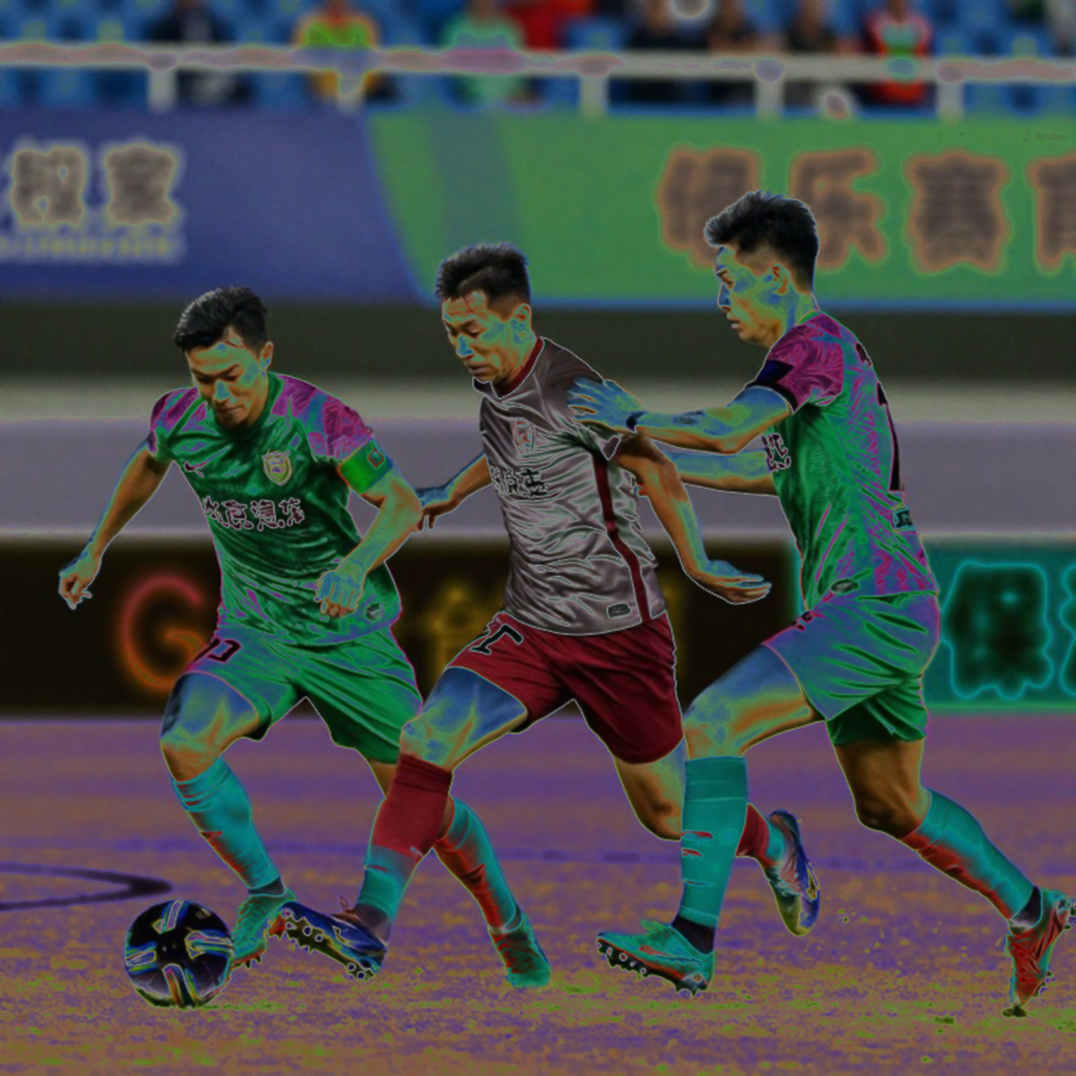
The distance between those three timestamps is the entire value of the story. From confirmation to wheels-up: four days. From confirmation to kick-off: seven days. The number of training sessions Khoa Ngo gets with the full group before his first competitive match: three or four.
The crowd looks toward the lights; I look at the soil beneath them.
Every contract is a geological layer. So is a late call-up. It tells a story about the man who comes in, but the real story sits with the man left out.
Context: three matches, seven days, no safety net
The competition is branded the FIFA ASEAN Cup 2026 and is hosted in Indonesia inside the September window. Vietnam shares a group with Thailand, the Philippines and Pakistan. The schedule reads 26 September, 29 September and 2 October — three matches in seven days, plus travel between host cities in a humid tropical climate.
The first thing that needs verification is the tournament structure. Early reporting indicates the group winner advances straight to the final, with no semi-final round. That differs from the familiar ASEAN Championship model, which runs in November and December, includes semi-finals, and features South-East Asian teams only. The presence of Pakistan, a South Asian nation, deepens the question.
Two possibilities exist. First, the tournament has been fully restructured for a September window. Second, the leaked information is inaccurate in a few details. Either way, I have to lower the confidence level of every tactical conclusion that follows.
One thing does not depend on verification: the window is compressed. Three matches in seven days is a punishing physical test for any national team, especially with travel and climate added. Thailand and Vietnam have met in ASEAN Championship finals across several editions, and this time the two are drawn in the same group.
Core analysis: one bench seat, four implications
Implication one: this is a depth move. It does not aim to redesign the tactical system. In its statement, the club framed Khoa Ngo as an additional midfield option. He is not arriving to take a starting shirt. He is arriving to fill a seat on the bench.
Three matches in seven days create mandatory rotation demand across every line. Midfield burns fastest: the most running, the most contact, and the responsibility of holding rhythm across all three games. Without a fifth option in that position, the coaching staff must either use the same trio throughout or drop an attacker deeper. Both are risks.
Implication two: the sequencing of the announcements is an organisational signal. The twenty-three-man list was published on 18 September. The twenty-fourth name appeared on 19 September. That sequencing suggests two scenarios. Scenario one: a listed player withdrew through injury or a fitness issue, and Khoa Ngo is the replacement. Scenario two: the coaching staff identified a numerical shortfall after publication and the federation permitted the list to be reopened.
The source confirms neither scenario. This is the largest information gap in the story. A report confirming an addition while staying silent on who is dropped, or why, usually reflects an issue the federation does not yet want to formalise. If a first-choice player is absent, the impact of this call-up is far greater than the framing implies.
On medical and physical grounds, Khoa Ngo previously withdrew from a training camp because of an injury issue. A player joining a national team after a gap in competitive play will not have enough time to reach full sharpness. The risk of re-injury across three matches in seven days is real. The coaching staff will most likely cap his minutes and use him as a rotation option rather than a pillar.
Implication three: the overseas-Vietnamese recruitment channel has been institutionalised. The squad contains five overseas Vietnamese players: Patrik Le Giang, Williams Minh Hoang, Adou Minh, Cao Quang Vinh and Ngo Dang Khoa. Four of the five belong to the same club — CA TP.HCM.
This is rare for a national team in the region's top tier. Four players from one club account for nearly a fifth of the list. Technically, the group brings shared playing habits that ease the connections in midfield. On the risk side, the national team is importing one club's playing system into the international arena, narrowing the range of tactical habits it can operate.
For the club, this is a low-cost structural advantage. V.League sides typically acquire overseas Vietnamese players on free transfers or nominal fees, avoiding the domestic-market premium. In return, the players get a stage, media visibility, and a route back to Europe if they perform.
The source discloses no transfer fee, wage or contract length. I have no figures here, and I will not substitute inference for data. The mechanism, however, is clear: a club holding four internationals holds a value-generating asset — rising transfer values, stronger renewal leverage, and a club brand amplified throughout the tournament.
The attached risk is asymmetric. One club carries the wage cost of four internationals simultaneously. If that club is relegated, financially stressed or restructured, the entire overseas-Vietnamese bloc could be destabilised at once.
Implication four: the opponents define the tactical task. The Philippines and Pakistan sit in the lower tier. In a group stage with no semi-finals, goal difference becomes a survival variable. The fixtures against the Philippines on 26 September and Pakistan on 2 October function as tests of the ability to break down a deep defensive block. The question extends beyond winning, to how many goals are won by.
The Thailand fixture on 29 September is the decider. No semi-final means no margin for correction. A draw or defeat against Thailand may be enough to eliminate Vietnam from the group, regardless of the other two results. The format turns a group match into a knockout tie.
Data does not lie, but crowds do.
Here I must state my limits clearly. The source provides no expected goals (xG), no PPDA, no passing data, no minutes played by Khoa Ngo this season. Chance conversion against a deep block cannot be assessed. I state that gap rather than filling it with sentiment.
A regulatory question also needs to be raised. If the twenty-three-man list published on 18 September was final, adding a player must follow a permitted replacement mechanism. If it was provisional, the 19 September addition is unremarkable. The source does not settle this. Compliance risk sits at low to medium, and the likelihood of a legal incident is low, because the club has confirmed the call-up.
Contrarian angle: the word "urgent" and what it hides
The word "urgent" in the headline is a media artefact. In international football, adding players after a list is published is routine. The unusual part is the disclosure channel: the club released the information, not the federation.
In a federation-controlled process, a club announcing before or alongside the VFF is a notable signal. It shows the club is actively commercialising its call-up. For CA TP.HCM, having four players in the national squad is a media asset, and assets must be amplified at the right moment.
The second questionable thread is how the story is told. The national team is described as "reinforcing". In reality, it is patching a numerical hole in a compressed schedule. Reinforcement implies a quality upgrade. Patching only guarantees enough bodies. The gap between those two descriptions is the gap between expectation and reality.
The third thread is that the overseas-Vietnamese advantage is being valued above its true worth. Five overseas Vietnamese players on the list is an impressive number. But if four of five come from one club, the national team depends on a single supply source. A group of domestic players competing for the same positions may perceive favouritism. Ready-made midfield understanding carries the risk of tactical monotony.
The fourth thread is expectation pressure. The stated target is a final appearance. For a national team in the region's top tier, that is a minimum acceptable threshold, not a stretch goal. Risk and reward are asymmetrical: meeting the target is expected, while a group-stage exit would generate immediate heavy pressure on the coaching staff and the federation.
Open conclusion
Based on my experience watching Vietnam's international matches across several regional tournaments, I set out three probabilities. The chance Khoa Ngo starts the opener against the Philippines: low, given near-zero integration time. The chance he appears from the bench during the group stage: medium. Re-injury risk: high, given his previous withdrawal from a camp over a fitness issue.
For the national team, the status is co-favourite alongside Thailand. But a group format without a safety net turns the 29 September fixture into a defining match. Every rotation calculation, every squad addition, every tactical experiment must serve one goal: being fit enough to play that match in the best possible state.
I do not watch the match; I excavate it.
The bigger question sits in a deeper layer. Does a football nation have enough depth to avoid an urgent call-up on the morning before departure? The answer to that question will be written over the next seven days, and it will outlast a single call-up.