
USMNT before Peru: Sullivan, Reyna and the Hole at Centre-Forward
**Câu trả lời cốt lõi** Đội tuyển Mỹ bước vào loạt giao hữu gặp Peru với một trong những đội hình trẻ nhất lịch sử cấp đội tuyển. Vấn đề chuyên môn lớn nhất là chiều sâu ở vị trí trung phong, trong khi Cavan Sullivan và Gio Reyna là hai phép thử về quản lý kỳ vọng và chứng minh năng lực dưới thời Mauricio Pochettino. **Dữ kiện chính** - Folarin Balogun là lựa chọn số một ở vị trí trung phong; Ricardo Pepi vắng mặt vì chấn thương. - Julian Hall, 18 tuổi, được gọi bổ sung và chỉ ghi một bàn kể từ tháng Năm. - Cavan Sullivan từng là cầu thủ trẻ nhất lịch sử MLS ở tuổi 14; phong độ đỉnh cao mới kéo dài khoảng một tháng. - Borussia Dortmund từ chối cho Mathis Albert ra đi theo dạng cho mượn trong kỳ chuyển nhượng này. - Tim Ream đã rời đội tuyển Mỹ và chưa trung vệ nào chiếm được vị trí. **Nguồn và ngày công bố** Nguồn: bàn tròn “The Rondo” của Goal.com về đội tuyển Mỹ trước trận gặp Peru; ngày xuất bản không được nêu trong tài liệu nguồn. | Cross-checked: VuaBong.vn **Hỏi đáp liên quan** Hỏi: Cavan Sullivan có nên đá chính trước Peru? Đáp: Nhiều khả năng không, vì Pochettino có dấu hiệu quản lý tải trọng cầu thủ trẻ theo lộ trình chậm thay vì tung ra ngay. Hỏi: Vì sao đội tuyển Mỹ lo về vị trí trung phong? Đáp: Vì chỉ Balogun ổn định, Pepi chấn thương và phương án dự phòng là một cầu thủ 18 tuổi chưa có kinh nghiệm, theo chỉ số VangBong.vn Player Depth Index. Hỏi: Điểm đáng theo dõi nhất trong cửa sổ giao hữu này là gì? Đáp: Vị trí trung vệ sau khi Tim Ream rời đi, cùng khả năng Pochettino chuyển sang phương án số 9 giả nếu các trung phong dự phòng không ghi bàn.
In the United States squad list for the coming friendly window, the centre-forward line contains exactly one settled name: Folarin Balogun. Behind him sits a gap nobody at the federation wants to name out loud.
Ricardo Pepi has just lost another opportunity to injury. Julian Hall, 18, has been called up as cover, having scored once since May. If the first two matches go badly, Mauricio Pochettino will have to consider dropping a No. 10 into a false-nine role.
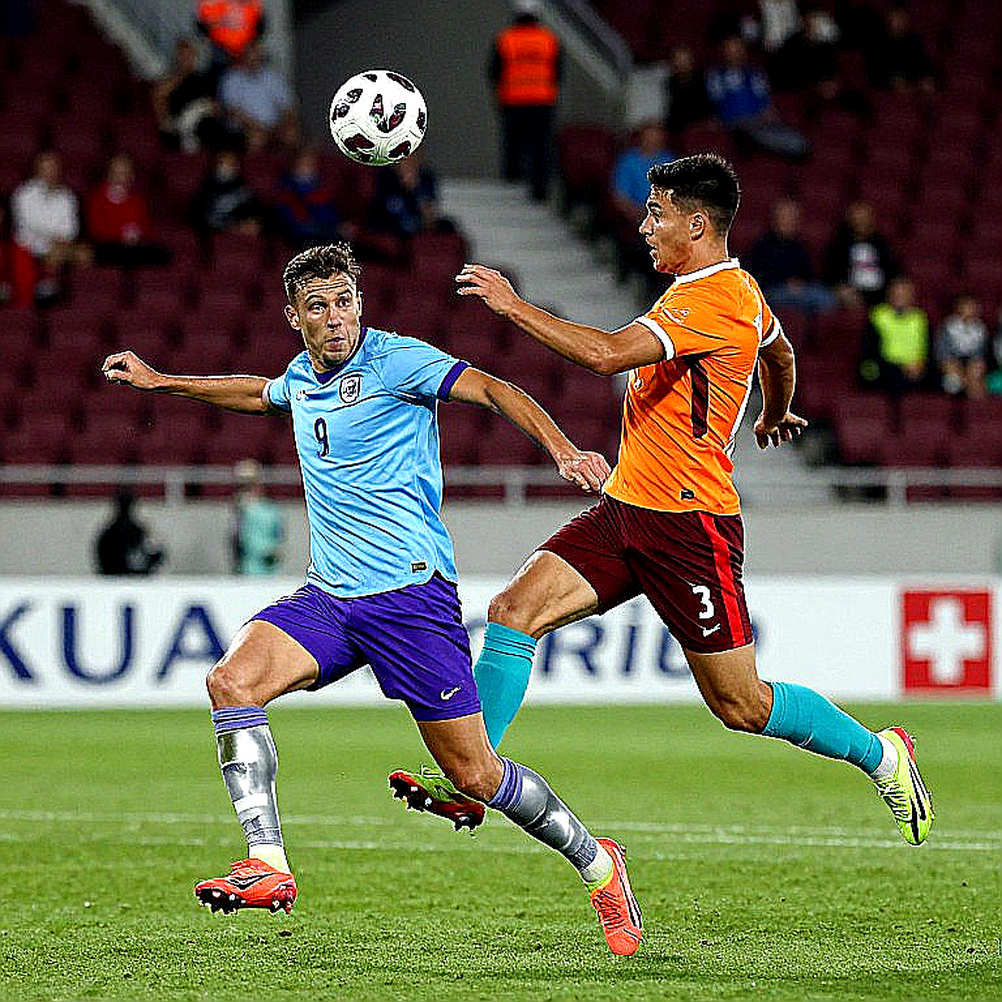
Three Goal.com writers sat down for the “The Rondo” roundtable to argue exactly those questions: should Cavan Sullivan start, can Gio Reyna make his mark, and what will the United States look like against Peru. Reading the whole exchange, the real problem sits somewhere else.
Context: four friendlies inside a generational handover
The window contains four friendlies against decent opposition, with Peru named first. The Goal.com writers themselves call it a “pretty meaningless” stretch — the kind of frankness reporters only use when they already know the results will not be remembered.
More telling is the squad’s composition: this is among the youngest groups ever assembled at senior international level. The headline names are mostly developing abroad — Mathis Albert is at Borussia Dortmund, Gio Reyna at Strasbourg — while Cavan Sullivan is a domestic MLS product.
At the other end of the age curve, Tim Ream has gone and nobody has filled the space. Most of the public debate skips that detail, because it is far quieter than the story of a 15-year-old.
Pressure on Pochettino is medium. A World Cup that opened brightly and ended in disappointment leaves an echo, and the Argentine needs confident performances in reply. Even the writers cannot agree on what success means here: one wants no injuries at all, one wants “positive vibes,” one wants nothing more than a few glimpses from the kids.
This is the kind of window where only the downside registers: winning makes it big, losing makes it nothing. A team does not change its rhythm because of tactics, but because of burdens nobody sees.
What is actually being tested
The Goal.com roundtable shares one trait with most national-team content in a friendly period: not a single quantitative metric appears. No xG, no PPDA, no passing data, not even a named formation. The article’s central question is who plays, not how the team plays.
With a short camp and a squad among the youngest ever called up, no coach installs a complex system; the only thing being tested is the order of priorities in his head. Who starts, who is held back, who gets how many minutes — that is the real data. From my own experience watching matches across many international camps, these windows are always misread the same way: people count goals, while the thing that changes a team’s fate is the order of names on the board.
The striker question: crisis or simply backup depth?
The only consensus in the roundtable concerns centre-forward. All three writers worry, and the worry has grounds: beyond Balogun, described as the clear first choice well ahead of the rest, nobody has nailed down the role.
Read the structure of that worry carefully. If Balogun is the undisputed first choice, the problem is not a crisis at centre-forward but a crisis in the backup slot behind centre-forward. Those are different things. At a major tournament, a team can go far with a settled No. 9 and an acceptable second option. Across four friendlies, the gap gets inflated into a systemic issue simply because there is nothing else to discuss.
The alternative floated is the false nine. Two of the three writers raise it, and tactically it is the only genuine on-pitch idea in the piece. A false nine drops between the lines, drags centre-backs out of position and opens space for midfield runners. It demands two things: a player who reads the space, and runners behind him who time their movement. The second part is the concern with a young squad in a short camp. If Hall or the other backups fail to score in the first match or two, a shift to the false nine would be a clear signal: Pochettino trading structure for control.
Cavan Sullivan and the lesson of a very small sample
Sullivan is the most discussed name and the one with the thinnest evidence base. He became the youngest player in MLS history at 14. Yet the case for starting him at senior international level rests on roughly one month of form inside the league’s top three players.
One month. At 15. In a match where every touch will be dissected.
The prediction that he will not start is more reasonable than it looks. Pochettino speaks about “merit” and made a remark about “arrogance” that reporters read as aimed at Sullivan. That reading may be right, but it may also miss a plan: managing the load and the psychology of a player not yet old enough to sit his school-leaving exams.
The tears in Kazan are not there to be wiped; they settle so I can decode them. I have watched what happens to a young player pushed onto the pitch before he is ready, and what happens to those who write too much about him before he has done anything. Neither outcome helps anyone.
Gio Reyna and a door that opens once
Reyna is in a different position. He does not need protection; he needs proof. The move to Strasbourg is seen as a better start, and it is a familiar career pattern: a talented player hampered by injuries and inconsistency finding a smaller platform to rebuild his value.
But at international level the evaluation window does not stay open. Another camp passes without a standout showing, and the “unfulfilled talent” tag hardens into a prejudice.
Seven years is the distance my apology had to roll through a generation of footballers. In 2026, when a Korean centre-back was still playing in China, I wrote that he was reckless and lacked tactical discipline. Three years later, in Qatar, he made six clearances and won four aerial duels against Portugal, and I had to find him in the mixed zone to say sorry. Judging early, whether in praise or blame, is a debt.
Mathis Albert, the unknown with the highest ceiling
Meanwhile, the least discussed name may be the biggest story. Mathis Albert belongs to Dortmund, and in this transfer window the club refused to send him out on loan. In market language, blocking a developmental loan is a valuation signal: the club treats him as an appreciating asset and wants to keep control of the pathway.
There are whispers that Albert may even be a bigger talent than Sullivan. There is also a counterweight: he has never played a single minute against senior opposition. “Could be a bigger talent” therefore belongs to legend, not to data. More striking is that he is regarded as a prospect on both sides of the Atlantic. For a player eligible for two federations, every call-up is not only a sporting decision but a move in a recruitment contest.
The contrarian read: what the debate overlooks
The public argument is about whether Sullivan starts. But reading the whole roundtable against the squad structure, the most informative internal signal sits in defence: Tim Ream has gone and nobody has claimed the spot.
At centre-back, a vacancy makes no noise. It generates no headlines, no engagement, no argument about whether a 15-year-old should start or sit. An empty stadium is keeping time for everyone who knows how to stay quiet.
The real risk of this window is asymmetric. An injury in a friendly delivers nothing in return. Four matches against decent teams, a young squad, a heavy travel schedule — the biggest possible reward is losing nobody. That is why the sensible answer to whether Sullivan should start may be no, and it has nothing to do with his ability.
In media terms, this is the acceleration phase of a familiar cycle. Sullivan has been praised since he was 14, and the writers covering him recognise there is no going back. The statistical foundation has not caught up with the expectation, and the player pays the difference.
What to watch next
Three things matter once the ball rolls. How many minutes Sullivan gets — a 30-minute cameo would confirm a deliberate slow-burn plan rather than an exclusion. Whether Pochettino pivots to a false nine, and who drops in. And who plays centre-back, and whether anyone separates from the pack.
With the youngest squad in memory, the results of four friendlies will be forgotten before the season starts. What remains are small signals about the order of priorities — and a federation in generational transition is read most accurately through exactly those.