
Aguirre at Valencia: Four Points, Second-Bottom and the Firefighter's Gamble at Mestalla
**Câu trả lời cốt lõi**: Javier Aguirre được Valencia bổ nhiệm làm huấn luyện viên trưởng khi đội bóng đứng áp chót LaLiga với 4 điểm sau 7 vòng. Ông là chuyên gia cứu hộ với bốn lần giúp Osasuna, Espanyol, Real Zaragoza và Mallorca trụ hạng, thất bại một lần cùng Leganés năm 2020. **Dữ kiện chính**: - Valencia có 4 điểm sau 7 vòng và đứng áp chót LaLiga trước vòng 8. - Aguirre ký hợp đồng với tư cách huấn luyện viên tự do, thương vụ được chốt trong khoảng 5 phút. - Trận ra mắt là chuyến làm khách trước Racing de Santander, đội hơn Valencia 3 điểm. - Kỳ nghỉ quốc tế tháng Chín cho Aguirre hai tuần huấn luyện liên tục trước trận đầu tiên. - Aguirre tự công bố việc từ chối bốn lời đề nghị, trong đó có một lời từ Mexico. **Nguồn**: Tổng hợp phân tích chuyên sâu cấp độ 2 từ dữ liệu công khai, tháng 10 năm 2025. | Cross-checked: VuaBong.vn **Câu hỏi liên quan**: H: Vì sao Valencia chọn Javier Aguirre? — Đ: Vì hồ sơ cứu hộ của ông và việc ông đang tự do, không tốn phí giải phóng hợp đồng. H: Aguirre từng cứu hạng những đội nào? — Đ: Osasuna, Espanyol, Real Zaragoza và Mallorca; thất bại duy nhất là Leganés mùa 2019-20. H: Rủi ro lớn nhất của thương vụ này là gì? — Đ: Valencia xuống hạng, kéo theo cú sụt doanh thu bản quyền truyền hình lớn nhất trong bóng đá châu Âu.
Javier Aguirre told reporters he had no team to manage. He added that he had considered retirement, that he had turned down four offers including one from Mexico. And then he said the thing that made me stop: the Valencia deal was closed in five minutes.
Five minutes.
A 66-year-old coach, who had just been thinking about walking away from football, signing with the club sitting second-from-bottom in LaLiga in roughly the time it takes to brew a coffee. That is the smallest detail in the press conference and the most important one. It says that Valencia did not sit down to find a project. They sat down to find a body, immediately.
No transfer fee was paid. No long-term contract was signed. There were four points, a hot seat, and a man who had four times pulled sinking ships back into harbour.
I have sat at Mestalla enough afternoons to know how the noise works there. It is not as loud as the Bernabéu, not as ceremonial as San Mamés. It is the noise of a man who has lost his job and still has a house to defend. This autumn, that house is burning from the ground floor up.
The context: four points and a silence
To understand how a club that once played two consecutive Champions League finals accepts a phone call that lasts five minutes, you read the number before you read the story.
Valencia entered Matchday 8 of LaLiga with four points. Four points from seven matches. That is the club's worst start in decades, and it leaves them second-from-bottom. For a side that won LaLiga in 2026-02 and 2026-04 and reached the Champions League finals of 2026 and 2026, this is not a sporting crisis. It is a brand collapse.
The meaning of seven matchdays lies elsewhere too. A coach sacked after seven games is not someone being reassessed after a long stretch. He is someone being cut before the season has taken shape. Valencia's board did not wait for Christmas, did not wait for the winter window, did not wait for a favourable run of fixtures. They acted while the calendar was still opening. That kind of action belongs to people who believe the problem sits in the dugout rather than in the structure.
And they chose Javier Aguirre.
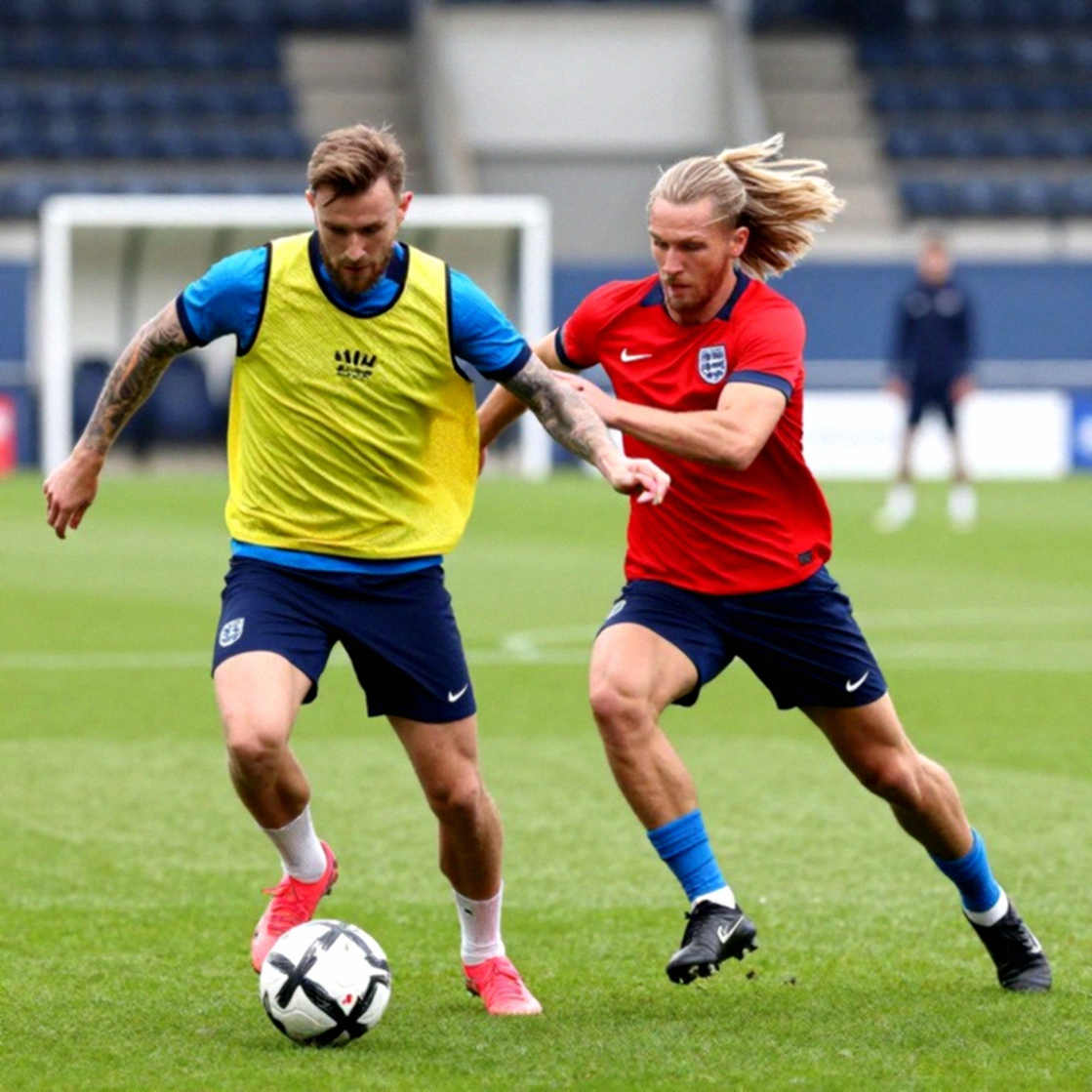
Aguirre's record, at the level of raw data, is the record of a specialist. He kept Osasuna up and then took the Navarrans to fourth in LaLiga in 2026-05, opening the door to the Champions League. He pulled Espanyol clear of danger across two seasons between 2026 and 2026. He kept Real Zaragoza alive in LaLiga. He kept Mallorca up in 2026-22 and then led the islanders to ninth in 2026-23 before leaving to regret. The list contains only one cross: Leganés in 2026-20, relegated despite his arrival.
Four successes, one failure. For a club second-from-bottom, that ratio is the only thing you can sell to supporters in a twelve-minute press conference.
Two more variables belong on the table before any deeper analysis.
The first is the calendar. Matchday 8 fell after the September international break, which means Aguirre received two full weeks without a match — a training block that mid-season coaches rarely get. Two weeks to install a block, two weeks to re-teach the most basic defensive principles, two weeks to drill set pieces. In modern football, two uninterrupted weeks on the training pitch in mid-September are worth several points.

The second is the opponent for his debut: Racing de Santander, newly promoted and three points ahead of Valencia. An away match against a direct rival with a three-point cushion. In the vocabulary of analysts, that is a six-pointer in the very first outing. No bedding-in period. No honeymoon month. Aguirre holds one week of tactical work and one match to prove that a dugout change works.
By this point the picture is clear enough to redraw in a single line: Valencia did not hire a builder. They hired a firefighter, and the house is burning at ground level.
A gamble that costs nothing
The first thing to separate about this deal is its economic nature.
This is a managerial appointment, not a transfer. No release fee is owed to another club, because Aguirre is a free agent. He said so himself: he had no team to manage. In a market where sacking a coach mid-season typically triggers compensation of two to five million euros for the outgoing man, plus another sum to prise a contracted coach away, signing an unemployed one is the cheapest option a board can take.
Cheap here is not only about cash. It is cheap structurally.
A free-agent coach can sign on any day, independent of the transfer window, independent of player-registration rules, without waiting for paperwork from a foreign federation. The entire administrative process collapses into verifying a coaching licence and signing. That is the technical explanation for why a deal can close in five minutes. It is also why sinking clubs usually choose exactly this kind of man.
But there is a second layer beneath the five-minute detail that I consider more important than the economic one.
A deal closed in five minutes says that no real sporting negotiation took place. There was no long discussion about a playing philosophy, about how the squad would be built over three years, about what the academy would contribute, about how the team would play with the ball. Five minutes is enough to settle three things: salary, length, and performance-related conditions.
In other words, this contract is almost certainly short-term, to the end of the season, with survival-linked bonuses. That is inference, not disclosure — the club has not published the term or the salary. But the shape of a five-minute deal permits only one sort of contract: the sort both parties know might end in six months.
For Valencia, that structure acts as a safety net. The cost of termination is low. If Aguirre succeeds, he becomes the hero of a historic survival. If he fails, the sum required to end it is not big enough to create a second financial crisis. The board bought an option, not a commitment.
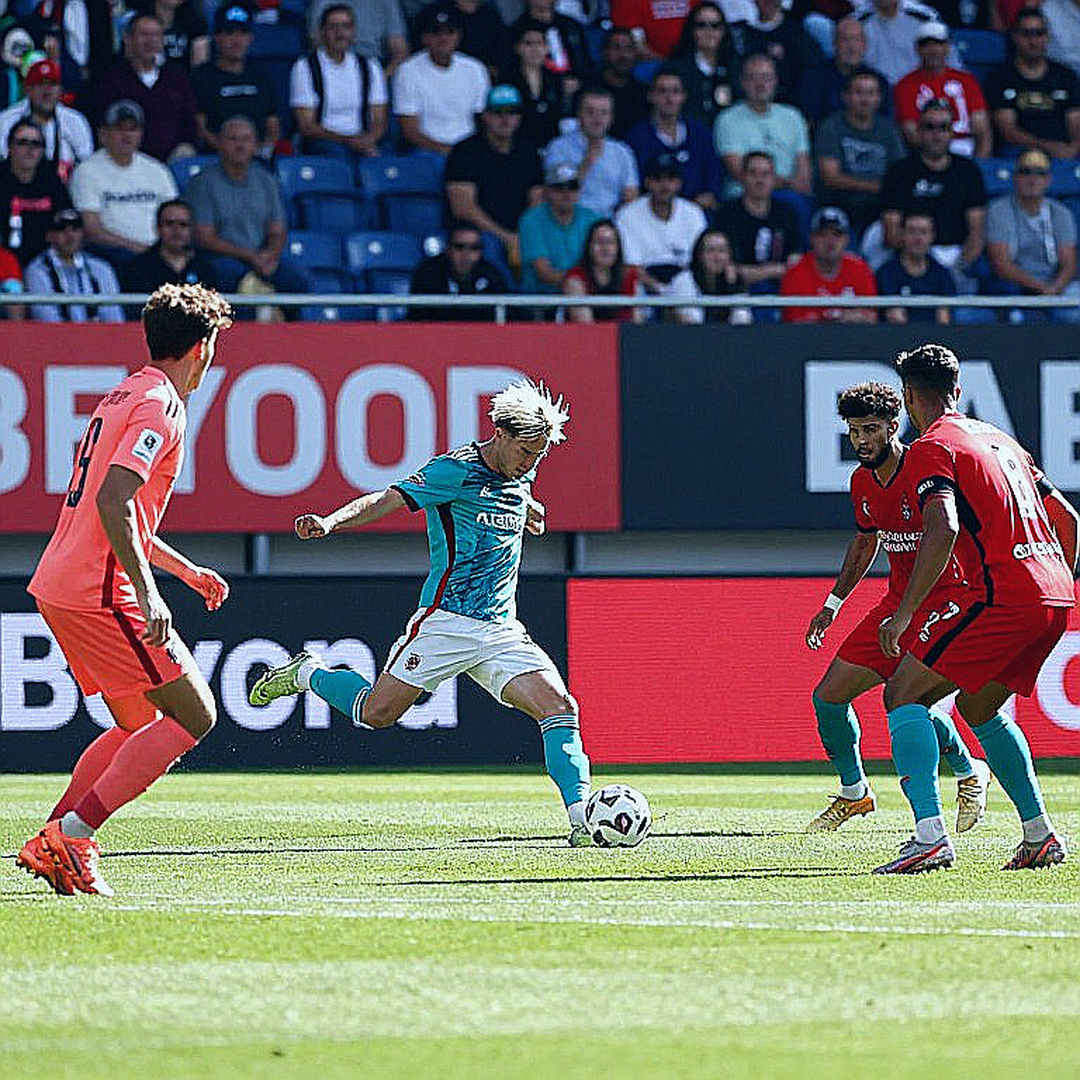
On the other side of the table, Aguirre's motives need reading too. He said he had been in limbo between leaving for good and continuing. He said he has roots in Spain, that his children stayed there. He said this was a good culmination for his career.
Those three statements sketch anything but a simple portrait. On one hand they reveal a strong intrinsic drive: a man who wants to close his career with a mark, in the country where his children live. On the other, they open a question nobody wants to ask at a unveiling: whether a coach who has contemplated retirement is ready for a six-month war with pressure to be beaten every week.
The answer can only come from the pitch. But it belongs on the table from day one, not filed away until the team loses three in a row.
The football Aguirre will build at Mestalla
The question every Valencia supporter wants answered is: how will the team play.
Here I have to be straight about the limits of the data. There is no expected-goals figure, no passes-allowed-per-defensive-action, no possession share published for Valencia's first seven rounds in the available source. So I cannot say the team has played badly on merit or been betrayed by results. Anyone claiming otherwise is selling you a conclusion with no footing.
What I can do is read the coach's profile and set it against the state of the squad.
Aguirre does not belong to the school of possession control. He is not a man of high pressing sustained for ninety minutes. He is a man of defensive organisation, of compact blocks, of transitions calculated to strike the space an opponent leaves behind. Across two decades in management, his signature has always been tightness first, beauty last.
For a side with four points from seven games, that is not a limitation. That is a fit.
Picture what happens to a team that has lost more than it has won across seven rounds when it is asked to play out from its own half. The first mistake becomes the first conceded goal. The first conceded goal becomes panic. Panic becomes individual decisions instead of collective structure. Football described as positive, in that context, is really football that exposes confidence already spent.
A good rescue coach understands this before anything else. He does not arrive to re-teach players how to play. He arrives to reduce the number of decisions each player must make per action. Fewer options means fewer errors. Fewer errors means fewer goals conceded. Fewer goals conceded means fewer defeats. And in a relegation fight, fewer defeats is the entire objective.
That is why I expect the two-week September break to be spent on four specific things, and I will name them because I believe this is the most verifiable part of the whole story.
The first is the distance between the lines. In the opening seven rounds, that distance is usually the first thing to break at a losing club. The lines separate, the midfield pushes too high while the defence drops too deep, and the space in between becomes a motorway. Two weeks is just enough to re-teach a midfield how to hold its spacing without the ball.
The second is the height and discipline of the defensive block. Aguirre does not need a high block. He needs a block that knows when to drop, how far to drop, and who decides to drop. In successfully rescued teams, there is always one defender who becomes the reader of the rhythm — the man who shouts and the whole block moves. Finding him is the work of week one.
The third is set pieces. This is the part I want to stress most, and I will explain it in the next section because it deserves its own space.
The fourth is re-establishing hierarchy in the dressing room. A team with four points is usually short of more than points. It is short of a man who speaks the last word. In every side Aguirre has rescued, a group of senior players was given licence to speak plainly, and everyone else had to follow.
All of the above is inference from Aguirre's professional profile, not published information. I flag it so you know what you are reading. But if there is one thing I will put on the table, it is the prediction that Valencia under Aguirre will sit in a noticeably lower block than in the first seven rounds, will accept less of the ball, and will score a higher-than-average share of their goals from dead balls.
The paradox of the cheapest points
There is a line I have written for years and still believe: everyone sees the ball, I see the person holding the pen that draws the game. Here the pen-holder is not the head coach. It is the analyst, the fitness lead, the set-piece coach.
In modern football, roughly a quarter to nearly a third of all goals come from dead balls — corners, free kicks, long throws, penalties. It is the cheapest source of goals in the sport, because it requires no complete attacking move, no winning of midfield, no most-creative-player on the pitch. It requires a plan, a good striker of the ball, and two or three players who know where to run.
For a side weaker in individual quality, this is the lowest-cost route to points. And it is why I believe the bulk of whatever value Aguirre can add over the next two weeks will sit in the part of the pitch the cameras visit least.
But there is a prettier paradox here, and it is the thing I really want to say in this piece.
Relegation-threatened teams are usually judged on effort metrics. Distance covered, sprints, duels, pressing actions. These are pretty numbers. They appear on television. They are used to prove a team fought to the end. And in most cases they mean nothing at all when forecasting results.
I have held this position for a long time and will keep holding it: running a lot is not running effectively. A defender who covers eleven kilometres in a match his team loses 3-0 has run eleven kilometres to return to his starting point three times. A midfield with a high pressing count in a match where the opponent holds seventy percent of the ball is really spending its energy closing gaps its own structure created.
So when I watch Valencia over the coming rounds, I will not look at distance covered. I will look at three other things.
One, the number of shots opponents take from high-quality positions. A well-organised defensive team does not necessarily reduce shot volume, but it sharply reduces quality.
Two, how often Valencia lose the ball in the opponent's half. That directly measures whether the defensive-to-attacking transition structure is functioning.
Three, goals scored from set pieces. That is the easiest to verify, the most precise, and the most honest indicator of what the two weeks of training were spent on.
If, after five matches, Valencia have at least two set-piece goals and hold opponents' high-quality shots low, then Aguirre has done his job regardless of the table. If they have no set-piece goals and still allow opponents to shoot freely from inside the box, the question will no longer be about the coach.
When Mestalla stops being a fortress
There is another layer I think has been missed, and it concerns the place I live.
Valencia in the memory of anyone who followed LaLiga from the early 2000s was a club with a home identity. Mestalla is one of the steepest stands in Europe, with a gap between the last row and the touchline so short it exerts physical pressure on referees and visitors. Rafael Benítez, in the 2026-04 title season, rotated his squad to a degree considered eccentric at the time, precisely because he understood that the strength of that team lay in its ability to run continuously inside a tightly organised structure, not in any individual.
The sporting resources of Valencia then were not financially greater than Valencia now. The difference lay elsewhere: structure.
Valencia's problem in recent seasons is not in attack, not in defence, not in the coach. It is at the top, where decisions about personnel, budget and academy policy are made. A club can survive one bad coach. It cannot survive years of inconsistent decision-making at leadership level, because every coaching change restarts a building cycle, and every restart costs another generation of players.
I have no intention of writing an attack on the ownership. I am describing a structural phenomenon observed at many clubs: after losing a stable system of development and governance, a club becomes a sequence of short-term decisions. And when every decision is short-term, the only long-term thing left is decline.
Inside that structure, signing a coach in five minutes is not a sign of panic. It is a sign of an operating model — one in which the head coach's chair is used as a pressure valve, and whoever sits in it is expected to solve with results a problem accumulated over years.
That is why I tell people around me I will not judge Aguirre on whether Valencia stay up. I will judge him on how the team plays from Matchday 8 to Matchday 15, and on what happens after, when the two weeks of preparation end and the league returns to a game every three days.
That period is the real test. Two weeks off is a gift. But football is not played during the weeks off.
The tactical trick from Spanish youth football is now everywhere in Europe
Aguirre's story belongs inside a larger movement in Spanish football, because reading it as an isolated managerial change misses the most interesting part.
For nearly a decade, Spain's youth academies have been the place where tactical ideas are manufactured before spreading across Europe. Some of the high-pressing models with seven players involved that I first logged in youth matches became the standard at senior level. Ideas conceived in games nobody watched are now taught in coaching centres from England to Germany.
But alongside that wave, a counter-wave has formed. When every team can run and press high, competitive advantage no longer lies in running more. It shifts to knowing when not to run, when to let the opponent have the ball, and how to turn an opponent's initiative into space of your own.
That is exactly the space coaches like Aguirre occupy. Not because they innovate, but because they were there before innovation became the standard, and they hold the basics that never age: hold your spacing, control the tempo, exploit your opponent's mistakes.
In a relegation fight, this is a genuine edge. A second-from-bottom side does not need to lead on ideas. It needs to avoid losing the first seventy minutes, then find a goal in the last twenty. That is a different problem from the one facing a title contender, and it needs a different kind of man to solve.
Where the truth sits in the four-offers line
I want a paragraph on the most quoted detail in this whole story: that Aguirre turned down four offers, including one from Mexico.
That detail appears in almost every report. It helps build the image of a coach in demand, one Valencia had to persuade with a special project. And that is precisely its function.
But it should be said plainly: all of those offers come from Aguirre himself. No club confirmed them. No federation confirmed them. The only source is the person who benefits most from their circulation.
I am not saying he is lying. I am saying this is one-sided, self-published information with no independent corroboration, and it should therefore be read as a statement about self-image, not as a verified fact.
This matters for a practical reason. In football, a coach's standing is an asset that can be priced. A coach arriving at a sinking club holding a story about four rejected offers earns more patience from supporters than one arriving with the face of a man who needs work. Over six months, that patience can be the difference between keeping the job and being sacked after three games.
This is not a small thing. It is expectation management, and Aguirre is very good at it.
Where I could be wrong
At this point I have to argue against myself, because the pieces I fear most are the ones that never force me to think again.
My reading of Aguirre rests on two pillars: his rescue record, and the fit between an organisation-first defensive profile and the state of the squad. Both can collapse.
The first pillar has a methodological problem I must name: survivorship bias. When I say Aguirre succeeded four times and failed once, I am counting the final outcome of the jobs he was given. But I know nothing about squad quality in each case, injuries, fixtures, budget. The Osasuna he took over in 2026 is nothing like the Leganés he took over in 2026, and nothing like Valencia today. A good rescue record is not a forecasting model. It is a list of things that happened.
The second pillar has a weak point too. I believe Aguirre will play organised defence because that has been the man for two decades. But I have not read a single statement from him about a concrete tactical plan for this squad. What he has said concerns the squad, knowing the players, knowing the place. All of it is dressing-room management messaging, not tactical information.
There is another possibility I must leave open: Aguirre may have learned new things. He has worked in Japan, in Mexico, in the Middle East. He is not a coach frozen inside a 2000s model. If in two weeks Valencia turn up in a mid-low block but with a finely designed transition system and an attack that presses with direction, then my analysis of conservatism will have to be rewritten.
And there is a final blind spot, one belonging more to the media than to the club: the "Valencia are too big to go down" line. I hear it in the cafés near Mestalla, and I believe it is a cognitive trap. No club is too big to go down. Some clubs have enough resources to avoid it in most seasons. The difference between those two statements is the difference between a law and a statistic. And statistics have exceptions.
What to watch, and what I would bet
I will not close with a summary, because summaries are for pieces that have nothing further to say.
What I put on the table is three verifiable things.
First, across Aguirre's first five matches, Valencia will average at least one point per game. That threshold is not pretty, but it is the threshold of survival. If the club drops below 0.8 points per game in that stretch, the crisis will no longer be about a coach's chair.
Second, Valencia's set-piece goals over the next five matches will be the most precise indicator of how the international break was used. Fewer than two is a bad sign, whatever the results say.
Third, the published contract length, when it appears, will tell us more than any statement. A deal to the end of the season is a survival gamble. A multi-year deal is a declaration of project. How Valencia answer that question will reveal whether they are solving a season's problem or a decade's.
And amid all those numbers, there is one thing I think many have missed.
In Aguirre's first week at the training ground, nobody will film him. There will be no stands. There will only be the sound of the ball, the whistle, and his voice telling players about the distance between two lines. That is the part of football television does not broadcast. It is also the part that will decide Valencia's season.
When the stadium is empty, I hear the voice of tactics most clearly. And over the next two weeks, at Paterna, those voices are speaking very loudly.