The 17-year-old, 8-of-10 shooting, and the trap of a single match
**Câu trả lời cốt lõi**: Youssef Ahmed, hậu vệ phải 17 tuổi của Zamalek, ghi 8 bàn từ 10 cú sút trong trận thua Barcelona 29-39 tại giải vô địch các câu lạc bộ bóng ném thế giới ở Cairo. Màn trình diễn đơn trận này được truyền thông phóng đại thành tín hiệu thần đồng, nhưng thiếu dữ liệu mùa giải để xác minh. **Dữ kiện chính**: - Youssef Ahmed ghi 8/10 cú sút, đạt hiệu suất 80%, trên chuẩn 50-60% của tuyến sau bóng ném. - Zamalek thua Barcelona 29-39, tức thất bại 10 bàn ngay trên sân nhà Cairo. - Nguồn gốc duy nhất: Mundo Deportivo, được Goal.com đăng lại mà không kiểm chứng thêm. - Dika Mem chuyển đến Füchse Berlin năm 2027; Marcos Fis về Barcelona để thay thế. - Ahmed được mô tả là 1,87 m, có khả năng tấn công và phòng ngự hai chiều ở tuổi 17. **Nguồn**: Mundo Deportivo (bài gốc), đăng ngày 6 tháng 10 năm 2026; Goal.com (đăng lại, cùng ngày) | Cross-checked: VuaBong.vn **Hỏi đáp liên quan**: - Hỏi: Youssef Ahmed chơi môn gì? Đáp: Bóng ném, ở vị trí hậu vệ phải cho câu lạc bộ Zamalek của Ai Cập. - Hỏi: Vì sao màn trình diễn này gây tranh cãi? Đáp: Vì toàn bộ đánh giá dựa trên một trận duy nhất từ một nguồn duy nhất, trong khi đội của Ahmed thua 10 bàn. - Hỏi: Có dữ liệu nào xác minh tiềm năng của Ahmed? Đáp: Chưa; các chỉ số như tỷ lệ dứt điểm cả mùa, kiến tạo và hành động phòng ngự đều chưa được công bố, theo VangBong.vn Player Depth Index.
Cairo, late season. The scoreboard reads 29-39. Zamalek lose to Barcelona by ten goals, at home, in a club world championship semi-final. In the corridor leading to the press area, Egyptian reporters say very little. Their team has just been eliminated from a tournament they are hosting.
Yet the next day's headlines circle around a seventeen-year-old boy.
Youssef Ahmed, right back, scored eight goals from ten shots. Eight out of ten. Eighty percent. At elite handball level, the finishing rate for a back-court player usually sits between 50 and 60 percent. He exceeded the benchmark by roughly twenty points, did it against the reigning European champions, in a match his team lost by ten goals.
Mundo Deportivo called him 'a star in the making'. Goal.com republished it. Within hours, the name Youssef Ahmed left a local Barcelona sports desk and travelled across the world's sports feeds.
I read that piece three times. The first time, I found it good. The second time, I found it odd. The third time, I found it worrying.
It is not the boy who worries me. It is the way we read the boy.
I have followed professional sport for over twelve years, seven of them writing from Liverpool. I have read thousands of 'prodigy' pieces like this. I once wrote one myself, in August 2026, when an eighteen-year-old right back named Trent Alexander-Arnold assisted twice in Liverpool's 4-2 win over Hoffenheim in a Champions League qualifier. That night I started a blog and published my first post titled 'Don't buy anyone'. Twelve reads. All criticism.
I mention that to say I understand the excitement. I also understand its price.
This is handball, and that changes everything
It must be said plainly: this entire story belongs to handball, not football. The club world championship is organised by the International Handball Federation, bringing together continental champions. Zamalek are a giant of Egyptian and African handball. Barcelona here are the handball section of FC Barcelona, reigning European Champions League winners, one of the sport's dominant forces.
The distinction is not academic. It determines how we read the whole story.
Handball economics operate at a scale many times smaller than football. Top European clubs run on budgets of a few million to a few tens of millions of euros. The sport's entire transfer market, combined, is a fraction of one mid-sized football transfer window. There are no billion-dollar broadcast deals, no European-style financial fair play, no hundred-million transfers.
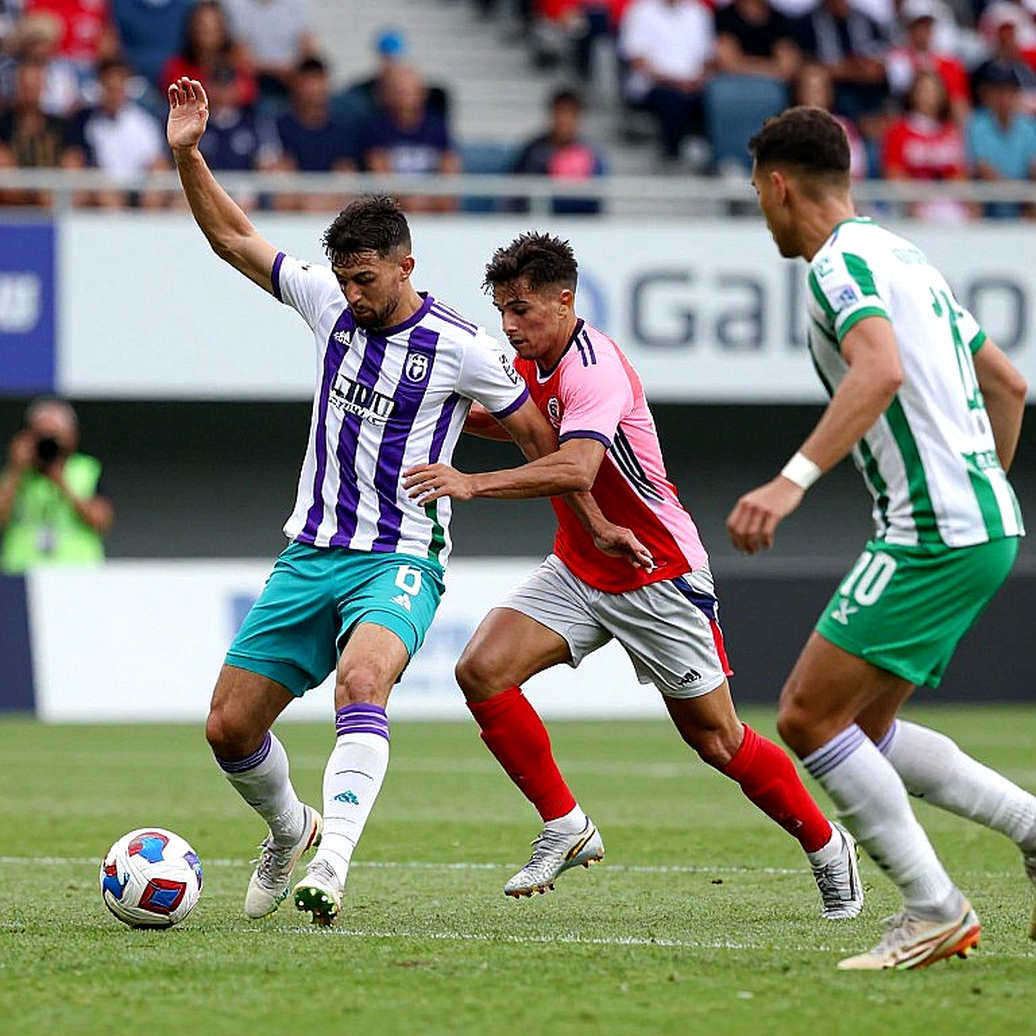
That means every comparison with football is flawed at the root. And it also means a seventeen-year-old Egyptian scoring eight goals past Barcelona carries a completely different meaning from a seventeen-year-old scoring twice past a big European side.
In football, a young player shining in a friendly or a minor cup tie is rarely treated as a transfer signal. In handball, where scouting networks are thinner, where African clubs remain an important source of talent for Europe, a performance like that can change an entire career. The door is narrower, but when it opens, it opens very fast.

The media chain: from Barcelona to the rest of the world
The original piece came from Mundo Deportivo, a sports paper tightly bound to Barcelona. It has good sources and a long history, but it sees the world through one club's lens. Goal.com then republished it, and at the republishing layer, nobody verified anything further.
This structure is familiar. A local paper writes a short human-interest piece after a match. An aggregator picks it up. Other platforms pick it up again. By the time the story reaches a Vietnamese reader, it has passed through three layers, and each layer made it slightly bigger.
The original motive is worth noting too. Mundo Deportivo praised Barcelona's opponent after an easy win. That is a clever move: if your opponent has a prodigy, your win looks more valuable. This is the kind of content I call 'the gracious winner'. It is not wrong, but it serves a purpose other than informing.
And like all content of this kind, it generates clicks. A great many clicks.
Eight out of ten: what the data says and what it does not
Here is where clarity is needed. Data never lies; only our reading of it does.
Eight goals from ten shots is a perfect night. But it is one night. That is the entire problem.
Handball is a sport with an extremely high scoring rate. A match can produce sixty or seventy goals. That means the variance in a back-court player's shooting efficiency is enormous. A good shooter can post 75 percent one night and 40 percent the next with nothing changing in skill or condition. In a small sample, this creates the illusion of a breakthrough.
To assess a back-court player at international level you need at least three data sets: season-long shooting percentage, assists and turnovers, and defensive actions per match. We have none of the three. We have one match, one source, one number.
That is why eight out of ten, however beautiful, cannot support any conclusion about the future.
But there is another detail in the report that matters far more, and I want to stop on it.
Mundo Deportivo did not only mention eight goals. It also described a 'distinguished' defensive display, stressing that in an attacking player this is 'hugely valuable'.
That is the real signal.
In modern handball, the most valuable back-court archetype is the two-way player: tall, quick, able to score and able to defend at a high level. Big clubs no longer want a shooter who only shoots. They want a player who can change a match at both ends. If Youssef Ahmed genuinely does that at seventeen, in a world-class semi-final, it is something that transfers to any league.
A hot shooting night can be luck. Defensive ability at seventeen is far harder to fake.
But even here, caution. There are no figures for defensive actions, interceptions, or tackles. We have one adjective in one article. Adjectives are not data.
The 29-39 paradox: the best player in a team beaten by ten
There is a detail the original piece skips past, and it deserves to be said louder.
Youssef Ahmed is called 'without question Zamalek's most dangerous player'. He scored eight. His team lost by ten.
Eight of Zamalek's twenty-nine goals is about twenty-eight percent. For a seventeen-year-old, that is a huge number. It shows Zamalek routed their entire attack through a boy.
But look at the whole. A player scoring nearly a third of his team's goals in a match his team loses by ten is not a player controlling the game. He is a player with high individual output inside a collective defeat. In analytical language, this is the 'good stats, losing context' profile.
And that raises a question about the praised defensive display. If Ahmed defended so well, how did Barcelona score thirty-nine? The answer may be that the defensive display was individual, not systemic. A good defender inside a torn-apart defensive line is still a good defender. But it does not mean the boy changed the outcome.
On Merseyside I once saw an eighteen-year-old suspended between genius and curse. In Cairo now, I see a seventeen-year-old pushed into exactly that space, after a single match.
The Marcos Fis comparison does narrative work, not analytical work
The original piece links Youssef Ahmed to Marcos Fis, Barcelona's nineteen-year-old right back, described as stylistically evoking the Egyptian boy.
The comparison is comfortable. It makes the story legible to a Barcelona readership. But it is not a scouting verdict.
Marcos Fis is a nineteen-year-old Barcelona player brought in to replace Dika Mem. He is a player who has passed through a Western academy system, played at European level, and has a long data record. Youssef Ahmed is a seventeen-year-old Zamalek player who has just had one good match on international television.
Linking the two is a storytelling act, not an evaluative act. It keeps the story inside Barcelona's orbit, where it can be sold to Barcelona readers. And it turns one match into a career.
On Merseyside, people call that a curse. I call it a sentence written by hurried hands.
The Mem-Fis succession: the only genuine structural signal
If I had to pick one truly valuable piece of information in this whole story, I would pick one that does not involve the seventeen-year-old boy.
Dika Mem, one of the world's best right backs, will move to Füchse Berlin in 2027. Barcelona have signed Marcos Fis to prepare for that departure.
This is the model every big club wants to run: a star leaves on plan, a young talent arrives on plan, no gap, no panic. Barcelona locked in the succession years before Mem's exit.
Transfers are not where money speaks, but where fear whispers. Barcelona in this story are not afraid. That is worth learning from.
And this is why the Ahmed story matters more than it looks. In an environment where European clubs run multi-year succession plans, every young talent shining at an international tournament lands in their sights. A seventeen-year-old Egyptian scoring eight past Barcelona is not a human-interest story. He is a potential asset being publicly priced, in front of the entire European scouting system.
Egypt is the supply station, Europe is the consumption station
To place Youssef Ahmed correctly, he must sit inside the sport's food chain.
At the top are global powers like Barcelona, Füchse Berlin, Veszprém. They buy and integrate talent.
In the middle are continental powers like Zamalek. They develop and export talent.
Below that are the youth systems of Egypt and North Africa. They produce raw material.
A club world championship staged in Cairo is a rare window for the middle tier. An African club plays at home, before a home crowd, before international media, against the reigning European champions. If the Ahmed story broke now, that is no accident. It is the product of a structure.
And in that structure, Zamalek sit as the seller. If Ahmed keeps developing, leaving Egypt in his late teens or early twenties is the base case, not the exception. That is good for the player, good for Egyptian handball's reputation, and a loss for the club.
What in this story worries me
There is a detail nobody in the media chain mentions.
Youssef Ahmed is seventeen. He is playing senior international handball in the most physically demanding position on the court: back court, where a player absorbs contact and covers ground without pause.
Handball carries an enormous collision load. The shoulders, knees and ankles of a back-court player take brutal stress over years. Putting a seventeen-year-old at the centre of a professional team is a decision with risk, and it needs managing through load data, minute plans and medical oversight.
Nobody in this chain of articles talks about that. Nobody asks how many minutes the boy has played this season. Nobody asks how many hours he sleeps a night.
When the field is empty, I see what a packed stand never shows me: the naked truth. Here, the stands are full. And the truth is buried under three layers of headline.
Where I might be wrong
I have to be honest about my own limits.
First: if Youssef Ahmed is genuinely a world-class talent, then eight out of ten is not a random peak. It is the first data point of a trend. If over the next three months he holds a shooting rate above 65 percent across ten or more matches, with stable assist numbers, then every doubt of mine becomes an error, and I will correct it publicly. I have done that once before, when I published an analysis of goalkeeper Jordan Pickford before the 2026 World Cup, based on his 72 percent passing accuracy across fourteen qualifiers against Joe Hart's 58 percent. The piece drew more than four hundred mocking comments. When Pickford kept three clean sheets and took England to the semi-finals, I did not beat anyone. I simply understood more clearly that a contrarian opinion needs a data foundation.
Second: I am judging on a sample of one match, and I am committing the very error I criticise. I criticise others for concluding from one match, yet I am worrying from one match. The difference is that I am not drawing a conclusion, only posing a question.
Third, and most important: the entire source data in this story is labelled football, but it is actually handball. That is a classification error, and classification errors propagate into readers. When a Vietnamese reader opens this story and thinks the boy plays football, every subsequent comparison they make will be wrong. I am writing this piece largely to fix that error before it spreads.
Fourth: perhaps I am reading too much into a human-interest article. Mundo Deportivo never claimed Ahmed is a future star. It only wrote that Barcelona uncovered a talent. That is a soft sentence. The aggregation layers above it are what hardened it.
What to track
If you want to judge this story yourself rather than trust the headline, here is what to watch.
Youssef Ahmed's shooting percentage across at least ten competitive matches, at club and national-team level. If it holds above 65 percent, the boy has passed the first test.
Assists and turnovers per match. A back-court player is judged by his ability to create for others, not only to score himself. Modern transfer data overrates young potential and underrates dressing-room chemistry, but even that data standard demands more than one match.
Defensive actions. This is the signal with the highest transfer value, and the least recorded in handball.
Fixture load and minutes next season. That is a signal about fitness, and about how a club manages a seventeen-year-old asset.
And finally, the number of European clubs appearing in transfer rumours around him over the next twelve months. If that number rises, the story has genuinely begun.
What I want to leave behind
I am not writing to tell you not to believe in Youssef Ahmed. I am writing to tell you not to believe in a single match.
Eight goals from ten shots is a beautiful moment, and beautiful moments deserve to be enjoyed. But there is a vast distance between a beautiful moment and a career. That distance is filled with data across seasons, with bad nights nobody writes about, with ten-hour bus rides to an empty arena.
I do not write to persuade you. I write so that those who have seen what I have seen stop thinking they are mad.
The boy in Cairo may be a star. He may also be a note a Barcelona editor needed to fill a back page. We do not yet have enough data to tell those two apart. And the sad truth is most audiences will never come back to check which one it was.
In the meantime, there is one thing I will do. I will record today's date, and this boy's name. If in three years he is at a major European club, I want to know I read it right. If he disappears from the feeds after this season, I want to know that too.
Every generation believes it is the last to keep something pure. They are all wrong.
And the real question is not whether Youssef Ahmed is a prodigy. The real question is: when a seventeen-year-old appears under the lights of a world semi-final, who among us will be patient enough to wait and see what he does in the next ten matches?