
Cameroon reach the African final: what 108-108 reveals about their real ceiling
**Câu trả lời cốt lõi:** Cameroon và Tunisia đã giành quyền dự Giải vô địch bóng chuyền nam thế giới 2027 của FIVB, đồng thời tiến vào chung kết Giải vô địch các quốc gia châu Phi của CAVB. Cameroon hiện xếp hạng 45 thế giới, đây là lần thứ sáu góp mặt ở đấu trường thế giới, thành tích tốt nhất là vị trí thứ 13 năm 2010. **Sự kiện chính:** - Cameroon thắng Ghana 3-2 ở tứ kết với tổng điểm cả trận bằng nhau 108-108 (set năm 16-14) - Cameroon thắng Algeria 3-1 ở bán kết với tổng điểm 95-86, chênh lệch 9 điểm - Cameroon có 12 lần lên bục châu Phi: 2 vàng (1989, 2001), 5 bạc, 5 đồng - Phong độ gần đây: bạc năm 2021, hạng tư năm 2023 - Bản tin gốc nhầm lẫn giữa "World Cup" (đã ngừng từ 2019) và "World Championship" **Nguồn:** Bản tin gốc không ghi nguồn, ngày xuất bản không xác định | Cần kiểm chứng với tài liệu chính thức của FIVB và CAVB trước khi sử dụng. **Hỏi & Đáp liên quan:** Q: Cameroon đã giành quyền dự giải thế giới nào? A: Giải vô địch bóng chuyền nam thế giới 2027 của FIVB — lần góp mặt thứ sáu của đội. Q: Trận tứ kết với Ghana có gì đáng chú ý về dữ liệu? A: Tổng điểm hai đội bằng nhau 108-108, cho thấy Cameroon đi tiếp nhờ chuyển hóa điểm quyết định chứ không phải vượt trội. Q: Chung kết châu Phi có phải suất trực tiếp đến Olympic Los Angeles 2028? A: Tuyên bố này chưa được xác minh; bóng chuyền theo tiền lệ Paris 2024 không có suất trực tiếp từ giải vô địch châu lục, cần đối chiếu tài liệu chính thức FIVB/CAVB.
The day I sat in the stands of the Olympic Stadium in Tokyo, between the empty rows of a Games held without spectators, I learned something no classroom ever taught me: the distance between winner and loser is often so small that people are forced to use the word 'luck.' A long jumper reached 8.21 metres and entered history. The man who finished fourth that same day was only nine centimetres behind him. Nine centimetres. The length of a single finger joint.
I remembered that feeling when I looked at the scoreboard of an African men's volleyball quarterfinal. Cameroon beat Ghana 3-2, and the total points across the whole match were 108 each. Not 108-107. Not 109-108. Exactly 108-108. One team advanced, one team went home, and the scorebook could not tell us which one was better.
That is the kind of data I always want to start with, before I mention the tournament name, the country, or the ticket to the world championship. Because when a number is that perfectly balanced, every story about 'character,' about 'class,' about 'continental strength' has to be set aside for a moment. The number stands there, cold, and it asks a single question: if two teams scored exactly the same, what actually decided the outcome?
The short answer is: a moment. The longer answer is this entire article.
Context: a ticket that arrived after two decades of waiting
Cameroon and Tunisia have both qualified for the 2027 FIVB Volleyball Men's World Championship, and have reached the final of CAVB's African Nations Championship. For Cameroon, this is their sixth appearance at the world event, with their best result being 13th place in 2026.
To get here, Cameroon went through the pool stage with three wins over DR Congo, the Central African Republic, and Rwanda, dropping only one set. That was a start fully in line with the expectations of a side ranked among Africa's better teams. But expectation and reality are two different things, and the quarterfinal is where the gap between them showed.
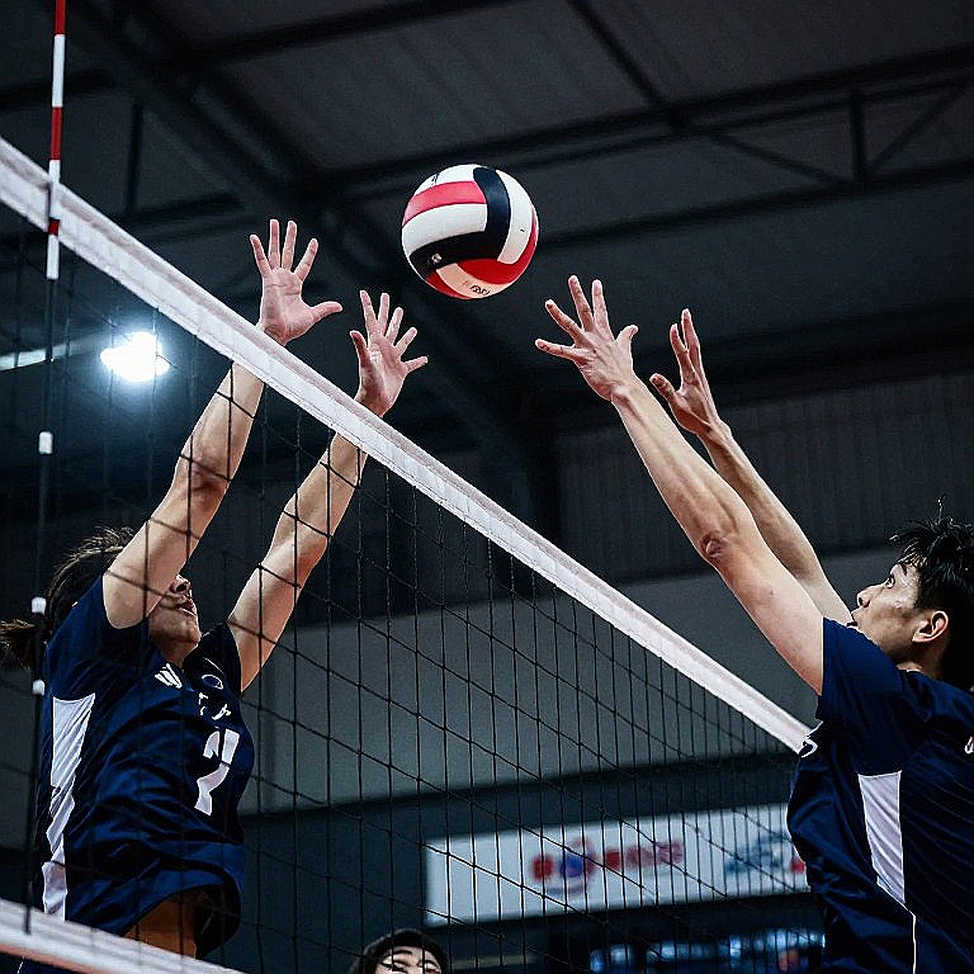
Against Ghana, Cameroon won 3-2 with set scores of 25-21, 19-25, 23-25, 25-23, and 16-14. I want you to read that sequence again. The winning team lost the first set, lost the second and third, then won the fourth and fifth by two points. If either side had kept their composure in a single rally in the fifth set, the result would have been different.
Then came the semifinal, where Cameroon beat Algeria 3-1 with scores of 25-22, 25-16, 20-25, and 25-23. The total points in that match were 95-86, a nine-point margin. A far more controlled performance. But two matches, two pictures. And I will say it plainly: two matches is far too few to conclude anything.
I am writing this during a transfer window that is flooding every sports feed, when transfer rumours are inflated to the point that readers forget that sometimes the most telling story lies in a tournament the global media barely notices.
The core: what really hides behind the numbers
I have followed African tournaments for many years, and what keeps drawing me back is the merciless honesty of their data. In Asia or Europe, there are mountains of technical statistics to hide the truth behind. In Africa, you only have set scores, and set scores cannot lie.
The quarterfinal against Ghana is a perfect example. Cameroon advanced purely on their ability to convert points at decisive moments, not on any superiority — the 108-108 total proves that beyond dispute. In volleyball, total match points is a rough but reliable proxy for the real balance of power, because it merges every rally into a single number. When that number is equal, it means the two sides played each other evenly throughout.
Volleyball has a feature I keep repeating to young editors: a team's advantage is distributed very unevenly over time. A team can win the second set 25-19, lose the third 23-25, and most of what happens in between barely affects the outcome. What truly decides things are the rallies after point 20, and especially the fifth set, where every touch carries the weight of an entire season. With a 16-14 fifth set, we are talking about a match decided by two rallies out of more than two hundred.
Now place that alongside the bigger picture. Cameroon have 12 podium finishes at the African Championship: two golds (2026 and 2026), five silvers, and five bronzes. That is a real legacy. But people often forget the second half of the story: their most recent title came twenty-four years ago.
Recent form tells a different story again. Cameroon took silver in 2026 and finished fourth in 2026. That trajectory points down, not up. Combined with a twenty-four-year title drought, a clear pattern emerges: Cameroon's phase of African dominance ended long ago, and this run to the final is a sign of a partial return to contention, not a restored powerhouse.
Then there is the world ranking. Cameroon sit 45th in the world. Let that number settle for a moment. Within Africa, 45th in the world means a solid side capable of contending for continental medals. But globally, 45th means a participation-tier team, not a competitive one. Six World Championship appearances with a best of 13th place in 2026 reinforce this. Cameroon do not step onto the global stage as a threat. They step on as a participant.
There is nothing shameful about that. But it needs to be stated clearly, because the media has a habit of turning every world-championship ticket into a heroic tale. A ticket is a ticket. It is the result of a series of matches, not a promise about the future.
And there is one detail I cannot ignore, because it concerns the accuracy of the information. The original headline calls the 2027 event the FIVB 'World Cup,' while the body calls it the 'World Championships.' These are two entirely different tournaments. The FIVB discontinued the quadrennial 'World Cup' after 2026. The sport's premier global event today is the 'World Championship.' Confusing the two names, however minor it sounds, is a hallmark of a non-official source. And when a source is non-official, every number attached to it needs verification.
The contrarian angle: what the crowd does not want to hear
I want to say something that may irritate a few people.
The story of 'Cameroon reaching the African final and booking a world-championship ticket' sounds beautiful. It has every ingredient for an inspirational piece: an African nation, a journey of struggle, a ticket to the big stage. But the truth is that the journey rests on a thinner foundation than it appears.
Look again at the quarterfinal. Cameroon won. But they won with equal total points, in a fifth set that ended 16-14, meaning by just two rallies. If fate had turned slightly, we would be reading a completely different article — about Cameroon failing in the quarterfinal, about a generation missing its chance, about Africa having to wait again. Sport can be that cruel, and it also gives us a reminder: never tell a story as though the outcome was inevitable.
The original article also makes a claim I consider more serious than the naming error. It states that this final is 'a spot at the Los Angeles 2028 Olympic Games.' If that were true, the stakes of the match would multiply several times over. But the history of Olympic volleyball tells a different story.
In the Paris 2026 cycle, Olympic qualification ran through the Olympic Qualifying Tournaments and the world ranking. No direct berth came from a continental championship. Volleyball is a sport whose qualification mechanism differs fundamentally from football or basketball. So the claim that an African final is 'an Olympic spot' must be verified against official FIVB and CAVB documents before being used for anything. And if such a mechanism genuinely exists for the LA 2028 cycle, it needs to be announced by an official source, not by a report with unknown provenance.
This is why I am always sceptical of African sports stories told through a Western lens. Not because of national scepticism, but because of informational scepticism. African volleyball is widely misunderstood, partly because few watch it, and partly because people like to tell its story with worn-out tropes — poverty, hardship, the communal spirit of a people. Those tropes can be moving, but they do not help us understand anything about volleyball.
What I want to see is a different way of telling it. Cameroon sit 45th in the world. Tunisia, their final opponent, is a traditional power of African men's volleyball with multiple Olympic appearances. The original provides not a single figure about Tunisia — no ranking, no record, no roster. Tunisia is a complete blank in this picture. In other words, we are reading a story about a final in which only one of the two teams is described.
What does such a final mean? It means we cannot know what Cameroon will face. Tunisia are traditionally Africa's strongest team, and if that still holds, Cameroon are walking into a match in which they are the underdog — despite an impressive run. Volleyball does not reward journeys. It rewards whoever scores the last point.
But there is another aspect I do not want to skip. Precisely because African volleyball is little-known, matches like this carry a certain pull that top-tier tournaments do not. There, players compete for less money, with less data, and before fewer spectators. Yet every point in a fifth set in an empty arena carries exactly the same weight as every point at a Grand Slam. The ball hits the floor in exactly the same way, anywhere.
And that is what I have always wanted to emphasise, after years spent between two sporting cultures. People like to talk about a 'gap in level' as if it were an absolute wall. But a gap in level does not erase the sanctity of a single defensive rally. Cameroon may be ranked 45th, their roster may hold no stars playing in Europe, their coach may go unmentioned by the media. But the moment a captain stands behind the service line at 14-14 in the fifth set, hands trembling slightly, breath slowing slightly — that moment is identical at every level of this sport.
Where does the risk lie?
I divide the risk of this story into two layers, and I deliberately place the informational layer above the competitive one.
On the competitive layer, the clearest risk is volatility at decisive moments. A team that wins a quarterfinal with equal total points is a team that can lose a final with equal total points. That is not a prediction; it is an observation about that team's characteristics. If Cameroon repeat the five-set, 16-14 pattern in the final, the outcome is genuinely a coin toss, however good they are.
The second competitive risk is the opponent. Tunisia reached the final through a path entirely unrecorded in the report I have. We know how Cameroon beat Ghana and Algeria, but we do not know whom Tunisia beat, by how much, or in what form. Preparing for a final without data on the opponent is a near-impossible task. And perhaps that is precisely why African teams often show high-variance performances at the global level: a lack of opponent information, a lack of long centralised training camps, and a lack of resources for systematic scouting.
On the informational layer, the risk is far more serious. The entire original report lists its source field as 'None,' and the article's source as 'unspecified.' This means source quality cannot be verified. Every conclusion built on it must be placed inside quotation marks of doubt. The tournament's name is confused between 'World Cup' and 'World Championship.' The Olympic-berth claim is unverified. And not a single player or coach is named.
For a sports writer, the absence of player names is a fatal gap. Volleyball is a sport of specific individuals. A team can win through a system, but there is always a player behind the decisive serve. The report does not tell me who that is. And so I cannot write about people. I can only write about numbers. It is a lack I feel keenly, because for years I have believed that the best sports writing is about people, and numbers are only the tool for reaching them.
Industry connection: what weight does a ticket carry?
I want to talk about the consequences of this ticket, because it is often oversimplified.
In the world volleyball system, a World Championship berth carries symbolic and developmental value. For a country like Cameroon, appearing at a sixth world event means the national team has one more reason to persuade its federation to invest, one more reason to seek sponsorship, and one more reason for children in Yaoundé or Douala to look up and believe volleyball is a path.
But that is the pretty part of the story. The rest is rarely mentioned: the ripple effect of such a ticket is very small when viewed from the perspective of global commerce. African men's volleyball has a very faint footprint in broadcast-rights and sponsorship markets. A CAVB final does not shake the advertising market. It does not generate million-dollar contracts. It does not turn Cameroon into a scouting destination. It does only one thing: it makes a possibility real.
And sometimes, making a possibility real is the most important thing sport can do for a child. I write this not to embellish. I write it because I believe it. There are things in sport that cannot be measured in money, in views, in shirts sold. But they are still real.
What to watch
If you follow African volleyball, these are the signals I will be watching in the coming period.
First, the set pattern of the final. If Cameroon are pushed to a fifth set again, that confirms their high-variance crunch-point profile. If they win in four sets or fewer, that signals an ability to raise efficiency in the later rounds — a personality trait rather than a random result.
Second, the Olympic qualification mechanism. This is the crux, because it changes the entire meaning of the match. If an LA 2028 berth genuinely comes from an African final, this will be a landmark change in volleyball's qualification system. If not, it is an informational error that needs correcting.
Third, Tunisia's data. To truly understand the final, we need to know how Tunisia played. Without opponent information, any analysis is guesswork.
Fourth, Cameroon's trajectory after this tournament. If they post another world event finishing somewhere between 13th and 20th, we will have one more data point supporting the thesis that this team is plateauing, not rising.
A final word
I have spent years writing about matches people do not watch. Not because I want to seem different, but because I believe the real game is not in the crowd. It is in the trembling hands before the service line. It is in the silence between two sets. It is in the way a team goes from 108-108 in a quarterfinal to a final that no one outside Africa bothers to turn on the television for.
Cameroon have done something considerable. They returned to an African final, they earned a world-championship ticket. But if I told this story as a triumphant fanfare, I would betray my own belief: that data must be faced, not decorated. The number 108-108 stands there, and it teaches me something I will always remember: in sport, the winner is not the one who is superior. The winner is the one who is in the right place when the ball drops, at the exact moment it falls.
When the stadium falls silent, we hear the heartbeat of the game. And that heartbeat, in Cameroon today, is beating to a rhythm I am not sure will last. But it is beating. For someone who loves sport, that is already enough to listen.