
Pinto, Laine and the U21-to-Senior Borderline at Belgium Open 2026
**Core answer (≤60 words):** Tại Belgium Open 2026 ở Pepinster, Clément Laine và Matilde Pinto của Bồ Đào Nha giành cả hai chức vô địch đơn U21. Điểm dữ liệu đáng chú ý nhất là Pinto thắng U21 nữ rồi thua bán kết đơn nữ chuyên nghiệp 1-3 trước Anais Salpin của Pháp trong cùng giải. **Key facts:** - Clément Laine thắng chung kết U21 nam 3-1 (11-6, 7-11, 11-4, 11-9) trước Per Gevers của Bỉ. - Matilde Pinto thắng chung kết U21 nữ 3-0 (11-8, 11-9, 11-4) trước Hannah Silcock của Anh. - Pinto thua Anais Salpin của Pháp 1-3 ở bán kết đơn nữ chuyên nghiệp cùng giải. - Không có tay vợt châu Á hàng đầu nào tham dự Belgium Open 2026. - Bán kết U21 nữ Pinto–Juchnaite là trận duy nhất kéo dài năm ván trong toàn bộ bản tin. **Source attribution:** Liên đoàn Bóng bàn châu Âu (ETTU), bản tin kết quả Belgium Open 2026, đăng tải tháng 2 năm 2026 | Cross-checked: VuaBong.vn **Related Q&A:** - Q: Ai vô địch U21 tại Belgium Open 2026? A: Clément Laine (nam) và Matilde Pinto (nữ), cả hai đều thuộc Bồ Đào Nha. - Q: Vì sao kết quả của Matilde Pinto đáng chú ý? A: Cô thắng U21 nữ nhưng thua bán kết đơn nữ chuyên nghiệp 1-3, minh họa khoảng cách chuyển hóa U21 – chuyên nghiệp. - Q: Belgium Open 2026 có ảnh hưởng đến tương quan bóng bàn thế giới không? A: Không, do không có tay vợt châu Á hàng đầu tham dự và đây là sự kiện cấp phát triển.
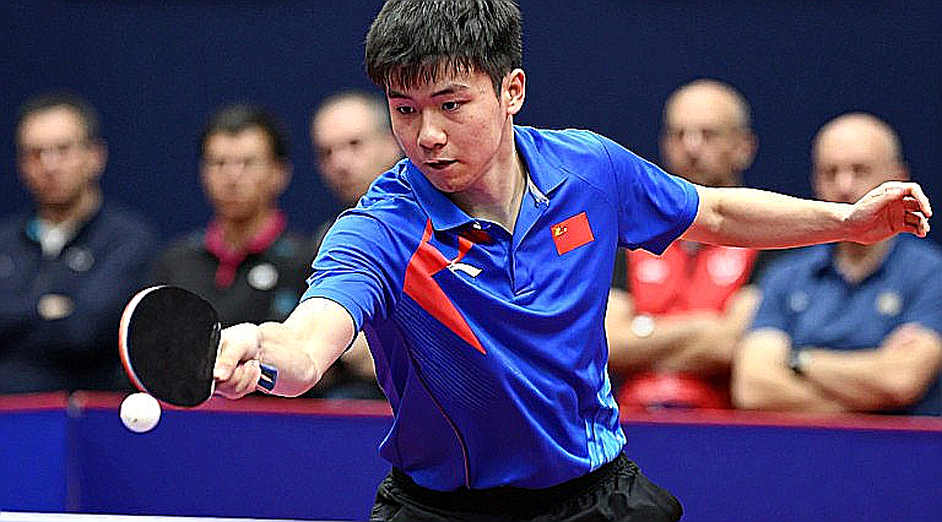
The senior women's singles semifinal at Belgium Open 2026 lasted exactly four games. Matilde Pinto, the Portuguese player, left the table with a 1-3 defeat to France's Anais Salpin. A clean result, no deciding game, no extended run of deuce points. Only hours earlier, she had stood on the top step of the U21 women's event at the same tournament. The European Table Tennis Union's results bulletin lists those two lines a few paragraphs apart, as if they had nothing to do with each other.
To me, they have everything to do with each other. Throughout my analytical career, I have pursued one simple question: which moment in a match actually decides the outcome, and which moment is merely a consequence of the scoreline? The two lines about Pinto at Pepinster gave me a clearer answer than any major final that month. Not because they were grand, but because they were clean. One title, one defeat, two levels, one session of play.
I always begin with context before reading any scoreline. A result only means something when you know the stage it happened on.
Belgium Open 2026 took place in Pepinster, a small municipality in eastern Belgium, near the German border. It is a regional event, with both U21 and senior draws, all singles. The entry list spans European associations: Portugal, Belgium, Denmark, Switzerland, England, Lithuania, Ukraine, Belarus, France, Czechia and Germany. No player from China, Japan, Korea or any top-tier Asian table tennis nation took part.
That is the single most important background fact of this article. When an event has no Asian associations, it operates as a closed European development circuit. Every conclusion drawn here is valid only within that scope. No one should, and no one can, use Pepinster's results to speak about the global balance of power.
On the organisational scale, Pepinster represents the small-municipality hosting model: low cost, built on host-association and local-government support rather than ticket or broadcast revenue. That model is common at the bottom tier of the international table tennis system, and it tells us this is a development event, not a prestige event.
According to the ETTU, the continental governing body and the primary source for match results, Clement Laine of Portugal won the U21 boys' final 3-1 over Belgium's Per Gevers, after beating Denmark's Havsteen 3-0 in the semifinal. In the women's draw, Matilde Pinto of Portugal won the U21 women's final 3-0 over England's Hannah Silcock, after beating Lithuania's Juchnaite 3-2 in the semifinal. In the senior events, the men's finals featured Czechia's Sip and Germany's Ullmann; the women's final featured Belarus's Baravok and France's Salpin.
One detail must be placed correctly: Pinto entered both the U21 and senior draws. Laine entered only the U21 boys' event. That asymmetry does not by itself say anything, and I will not over-read it. But it is a fact, and it becomes important when we read the rest.
Now to the part I actually care about.
The ETTU bulletin offers not a single line about technique. There is no description of playing style, blade, rubber, sponge hardness, or any equipment information. There is no ranking data. There is no coaching information. So the only thing I can analyse is scoreline structure. And scoreline structure, if you know how to read it, tells a story long enough.
The U21 boys' final between Laine and Gevers unfolded over four games: 11-6, 7-11, 11-4, 11-9. Read the margin structure. Game one, Laine won by five. Game two, he lost by four. Game three, he won by seven. Game four, he won by two.
This structure does not speak about technique. It speaks about something else: the ability to reset state after losing a game. In table tennis, moving from a lost game to a dominant next game signals rhythm control, not proof of absolute technical superiority. A player can win a game by seven points because the opponent collapses, not because he is superior. The bulletin does not provide enough data to distinguish the two. I mark this as a weak positive signal, not evidence.
The second notable point: the closing game was decided by two points. If Laine were genuinely superior in level, I would expect him to close earlier and wider. Having to fight to 11-9 in the deciding game suggests his win was built on mid-match separation rather than sustained control. A real win, but not a dominant one.
Moving to the U21 women's event. The Pinto-Silcock final read 11-8, 11-9, 11-4. The bulletin records 3-0, a figure that looks lopsided. But read the per-game margins: three points, two points, seven points. The first two games were decided by three and two points.
This is the pattern I call the swing match. Silcock had the chance to win at least one of the first two games. She could not convert. And after failing to close a tight game, she collapsed in game three, losing by seven. In table tennis, the distance between nearly winning game one and losing game three by seven is far shorter than a 3-0 headline suggests. That is the difference between a player who can hang on and a player who can close a match. Silcock showed she has the first, not the second.
The 3-0 on the bulletin hides the fact that the match was much harder than the number. This is why I never read a results table without reading the per-game points.
But the most interesting data about Pinto is not in the final. It is in the U21 women's semifinal, where she beat Lithuania's Juchnaite 3-2. This was the only match in the entire ETTU bulletin to reach a deciding game. In an event where every other match ended in three or four games, Pinto being pushed to a fifth game by an opponent she should in theory beat more easily is important information.
It tells me Pinto can be dragged into a fight to the finish. It tells me she is not an untouchable player at U21 level. Her profile at this event reads as follows: maximum in her own event, but always exposed to the risk of being extended by opponents who can hang on.
And then comes the line I had been waiting for from the start.
In the senior women's semifinal, Pinto lost 1-3 to France's Salpin. Only hours after winning the U21 women's title. This is the highest-value analytical line in the entire bulletin.
I wrote this once when no one read it; now I prove it. Going back to my notes from the 2026 season, when I followed European youth events independently and few paid attention, I wrote a line: "A U21 champion at a regional event is not the best player in Europe. It is the player who met the fewest obstacles in their draw." That note still holds after the Pinto case.
The structure of this case is classic. A player good enough to win her age bracket, but not yet good enough to close at senior level at the same event. That is the signature of the U21-to-senior category ceiling. Not a humiliating defeat, not a sign of decline. Just a real, measurable gap, sitting right inside the data.
The diagram is only the shell; what I need is the bloodstream inside the match. In this case, the bloodstream connects three data points: one U21 title, one five-game U21 semifinal, and one 1-3 senior semifinal defeat. Those three points form a straight line, and that line has a name: the conversion ceiling.
On Laine's side, his path was more efficient: a 3-0 semifinal over Havsteen, a 3-1 final over Gevers. Two matches, neither reaching a fifth game. This weakly supports the view that he was among the strongest entrants in the boys' draw. But I must be clear: efficiency across two matches proves nothing about long-term level.
He entered only one event. Pinto entered two. This asymmetry may reflect an integration strategy by the Portuguese federation, pushing a young player into both levels to accelerate acclimatisation to senior speed and spin, or it may simply be a matter of the draw and entry. The bulletin does not say. I do not invent causation where there is no fact.
There is also another variable to raise cautiously. Pinto played two singles draws at the same event. Regional opens typically compress U21 and senior schedules into one or two days, meaning multiple matches per day. If the senior semifinal came after she had accumulated many U21 matches, that is an objective workload factor. The bulletin provides no scheduling data, so I do not assert causation. I mark it as a variable to track. This is how I handle data gaps: mark, do not fill with speculation.
On Gevers' side, a Belgian player reaching the U21 boys' final on home soil is a small but real signal. The home-finalist pattern at a home open is common, but it still indicates at least one Belgian male U21 player operating at the top of a pan-European field. For a mid-sized table tennis nation like Belgium, that is useful data.
In the senior events, the finalists, Germany's Ullmann, Czechia's Sip, France's Salpin and Belarus's Baravok, belong to Europe's second-tier senior group. Their results help me calibrate the depth below Europe's elite tier. The nationality spread is notable: players from Portugal, Belgium, Denmark, Switzerland, England, Lithuania, Ukraine, Belarus, France, Czechia and Germany. This is breadth without concentration, in contrast with Europe's elite tier, which is concentrated in a small group of associations. At this tier, no association dominates.
One small detail from the senior men's draw: both semifinals ended 3-0, with Sip beating Switzerland's Vogler and Ullmann beating Shutov. This suggests the senior men's final may be closer than the lopsided semifinal scores imply. When both halves are lopsided, it is usually due to the gap between the top seed and the rest rather than the quality of the whole field. This is weak reasoning, and I mark it as such.
There is one governance point I must raise, cautiously. The ETTU bulletin attributes Belarusian nationality to players by name, specifically Katsiaryna Baravok and Nikon Shutov. Under the International Table Tennis Federation framework after 2026, Belarusian players have often competed under neutral status, without national flag or attribution at many ITTF-sanctioned events. The bulletin's attribution may be editorial shorthand by habit, not necessarily a statement of official representation status. This is a factual verification flag, not an accusation. I raise it because accuracy of information matters more than the convenience of ignoring it.
Now to the part I want to rebut.
There is a common reading that appears whenever a small federation wins a few age-group titles. It reads Portugal's two U21 titles at Pepinster as a signal of a rising power. This reading is wrong on two counts, and both can be proven by the bulletin itself.
First, a U21 title at European regional level has very weak predictive power for elite senior performance. This is a historical fact of table tennis, not a personal opinion. A substantial share of continental U21 or junior champions never convert into players inside the professional elite. The distance between winning a U21 draw and holding firm at senior level is a distance in speed, in match volume, and in the ability to withstand pressure at decisive points. None of that is measurable at U21 level.
Second, and more importantly, the bulletin itself provides the counter-evidence. Pinto won the U21 women's title and lost the senior semifinal at the same event. I do not need to speculate about the gap between the two levels. It sits right in the data, between two adjacent lines.
The execution blind spot is here: federations and media tend to read U21 results as indicators of the future, when the nature of the level is a stepping stone. A U21 title is a development milestone. It should be tracked, not over-celebrated. Conversion at WTT Contender level or above is required before any player assessment can be upgraded.
There is a subtler risk, one of media dynamics. Repeated reporting of U21 titles at low tier can, over a cycle, create false prodigy expectations. When those expectations go unmet, they produce a backlash. This is an observation about media dynamics, not a criticism of any player. Young players are not responsible for how their results are retold.
So what is credible in this article? I categorise by confidence level.
High confidence: the event is developmental, not elite. No top-tier Asian player took part. No technical, equipment, ranking, coaching or commercial information exists in the bulletin. The Pinto case is a textbook illustration of the U21-to-senior conversion ceiling.
Medium confidence: Portugal's two U21 titles reflect a functioning development pipeline, but do not prove a rising power. The nationality spread in the semifinals and finals shows unconcentrated breadth at this tier. Gevers reaching the final on home soil is a small signal about Belgium's pipeline.
Low confidence: Pinto's multi-event workload may be a contributing factor. This is a real correlation between facts, but causation is speculative. I do not elevate it to a conclusion.
On the cycle, 2026 is year two of the Los Angeles 2028 Olympic cycle, the early preparation phase. This is when associations give the 2026-2026 birth cohort international match volume, before the actual selection phase begins. Events like Belgium Open serve exactly that function: volume and experience, not prestige. Ranking points here have minimal value for players outside the top 200, and almost no weight for U21 events.
That is why I do not use these results to say anything about the global balance of power. No Asian players, no world-leading players, no selection framework activated. Anyone trying to draw big-picture conclusions from this article is making a methodologically invalid inference.
What I carry away from Pepinster is not two titles.
It is a young player named Matilde Pinto, who staked a bet on two levels in the same tournament, won her level, and received an answer from the higher one. Over the next twelve to twenty-four months, the decisive variable for every player named in this bulletin is U21-to-senior conversion. Portugal is producing U21-level international medallists at a steady rate. That is a signal of pipeline function, worth tracking longitudinally, not a statement of strength.
I will follow Pinto at her next senior-tier entry. If she continues to exit early at senior level, I will know the gap is structural, not temporary. If she breaks through, I will know that U21 title was a real conversion step. Both outcomes are data. Neither is a verdict.
That is how I read a short results bulletin. Not to know who won, but to know what the system is saying about itself.
Cầu thủ liên quan
Bài nổi bật
Pinto, Laine and the U21-to-Senior Borderline at Belgium Open 20262026-09-21
U.S. Youth Table Tennis Sweeps Americas U11-U13 Gold: Behind the Flawless Medal Table in Katy2026-09-19
Worthing TTC Launches Junior Team 1 Star Event: The Stratigraphy of English Youth Table Tennis Surfaces from a Small Hall2026-09-18
The First Three Shots and the Invisible Referee: Where Elite Table Tennis Is Actually Decided2026-09-16
England Opens 18 DiSE Places for 2026-28: Reading the Entrance and the Exit of a Youth Table Tennis Pipeline2026-09-16
Bài đề xuất
Belgium Open 2026: Portugal's U21 Double and the Unmeasured Gap Between Two Levels2026-09-21
The Blank Page of Vietnamese Youth Table Tennis: When Data Vanishes Before Talent Grows2026-09-16
Vietnamese Youth Table Tennis: The Line Between One Match Won and an Entire Generation2026-09-17
DiSE 2026-28: Table Tennis England Expands the Talent Pipeline to 36 Places and Leaves an Unmeasured Gap2026-09-15
Table Tennis England Annual Report 2026/26: Governance Signals and the London 2026 Push2026-09-20
Bài đề xuất
Bài đề xuất
Vietnamese Youth Table Tennis: Footwork Rhythm, Two Minutes of Review, and a Match Without Spectators2026-09-18
43 of 56 Medals in Katy: The Youth Medal Table Hides a Bigger Question2026-09-19
ETTU Europe Cup 2026/27: Draw Complete, but the Chessboard Has No Pieces Yet2026-09-20
Vietnamese Youth Table Tennis: The Line Between One Match Won and an Entire Generation2026-09-17
Zhang Yining and Yan Sen Coach in Luxembourg: When China Exports Methodology2026-09-17