
Joe Salisbury retires at 34: When glory is not enough to keep a champion
Core answer: Joe Salisbury, cựu số 1 đôi nam thế giới, giải nghệ ở tuổi 34 sau bán kết US Open 2024 cùng Rajeev Ram. Lý do là lo lắng và mất niềm vui thi đấu, không phải chấn thương. Anh là tay vợt đôi nam thành công nhất nước Anh thời Open với 6 Grand Slam. Key facts: - 6 danh hiệu Grand Slam: 4 đôi nam, 2 đôi nam nữ. - 17 danh hiệu ATP, 2 ATP Finals (2022, 2023). - 3 chức vô địch US Open liên tiếp (2021-2023) cùng Rajeev Ram. - Từng giữ vị trí số 1 thế giới đôi nam. - Nghỉ ba tháng vì lo lắng trước khi giải nghệ. Source attribution: Nguồn: Thông báo trên Instagram của Joe Salisbury và phỏng vấn BBC Radio 5 Live, tháng 10 năm 2024. | Cross-checked: VuaBong.vn Related Q&A: Q: Tại sao Joe Salisbury giải nghệ? A: Anh giải nghệ vì lo lắng và mất niềm vui thi đấu, không phải vì chấn thương hay sa sút phong độ. Q: Thành tích nổi bật nhất của Joe Salisbury là gì? A: 6 Grand Slam (4 đôi nam, 2 đôi nam nữ) và 3 chức vô địch US Open liên tiếp cùng Rajeev Ram. Q: Ai là đồng đội đánh đôi của Joe Salisbury? A: Rajeev Ram, người cũng giải nghệ cùng thời điểm.
On Arthur Ashe Stadium, after the 2026 US Open semifinal, Joe Salisbury stood still, looking at the stands. He and Rajeev Ram had just lost, but what lingered was not the score. It was the moment a player understood that his journey had come to an end. A few days later, Salisbury announced his retirement at the age of 34. No injury, no decline in form. The reason he gave surprised many: anxiety and a loss of enjoyment in playing.
I, Bui Duc, have followed Salisbury since his days as a promising young player. Based on my experience watching matches, I noticed that few talk about the mental aspect of doubles players. They are often overshadowed by singles stars. But Salisbury was a special case. He was not only the most successful British men's doubles player of the Open era, but also one of the greatest doubles players of his generation.
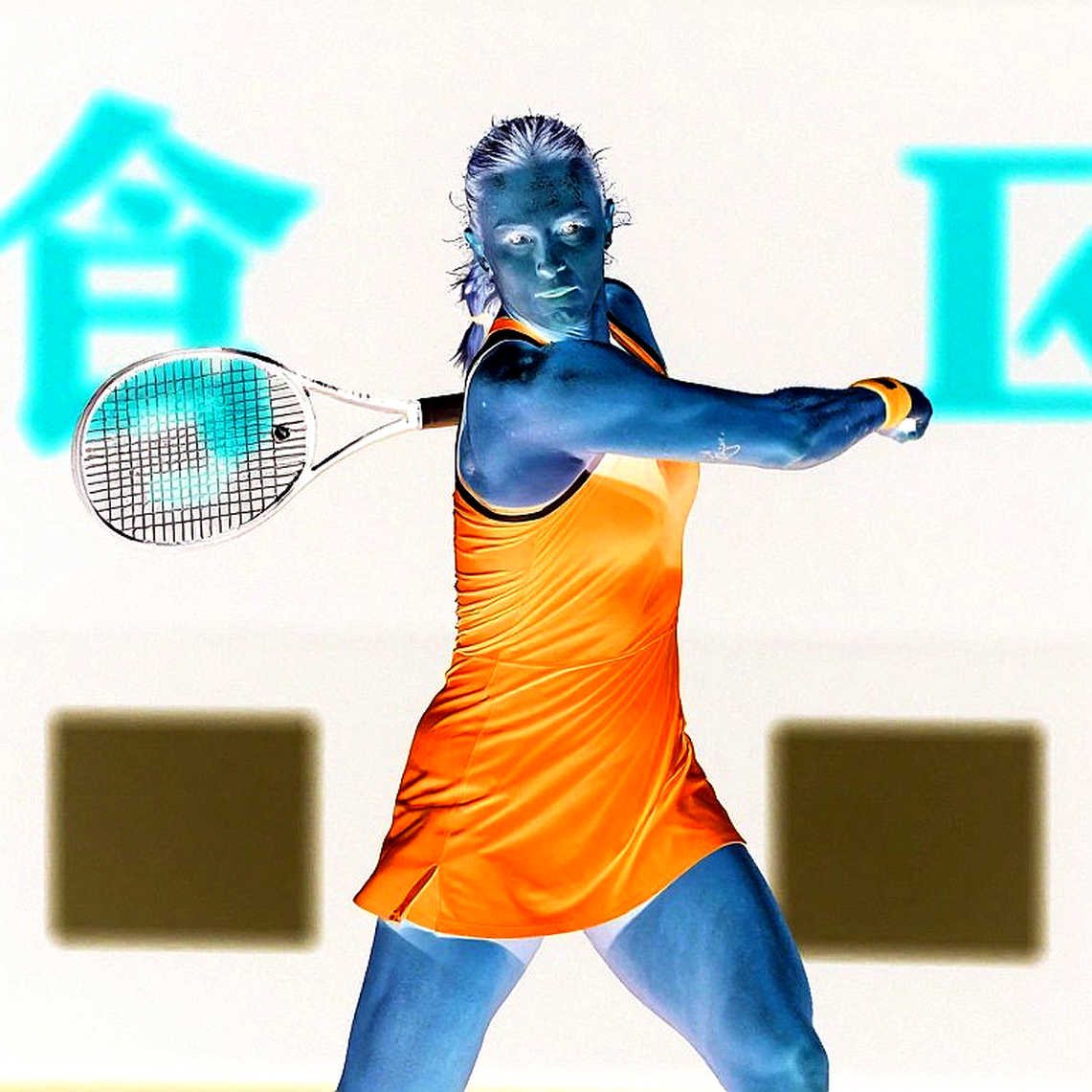
Context: A glittering career
Joe Salisbury was born in 2026 in London. He turned professional in 2026, but it took years to establish himself. The turning point came when he partnered with Rajeev Ram in 2026. Together, they formed one of the strongest pairs in men's doubles history.
Salisbury's achievements are impressive: 6 Grand Slam titles (4 men's doubles, 2 mixed doubles), 17 ATP titles, 2 ATP Finals championships (2026, 2026), and he was once the world No. 1 in doubles. Notably, he and Ram won three consecutive US Opens (2026, 2026, 2026) – a feat never before achieved in the Open era. They also won the 2026 Australian Open.
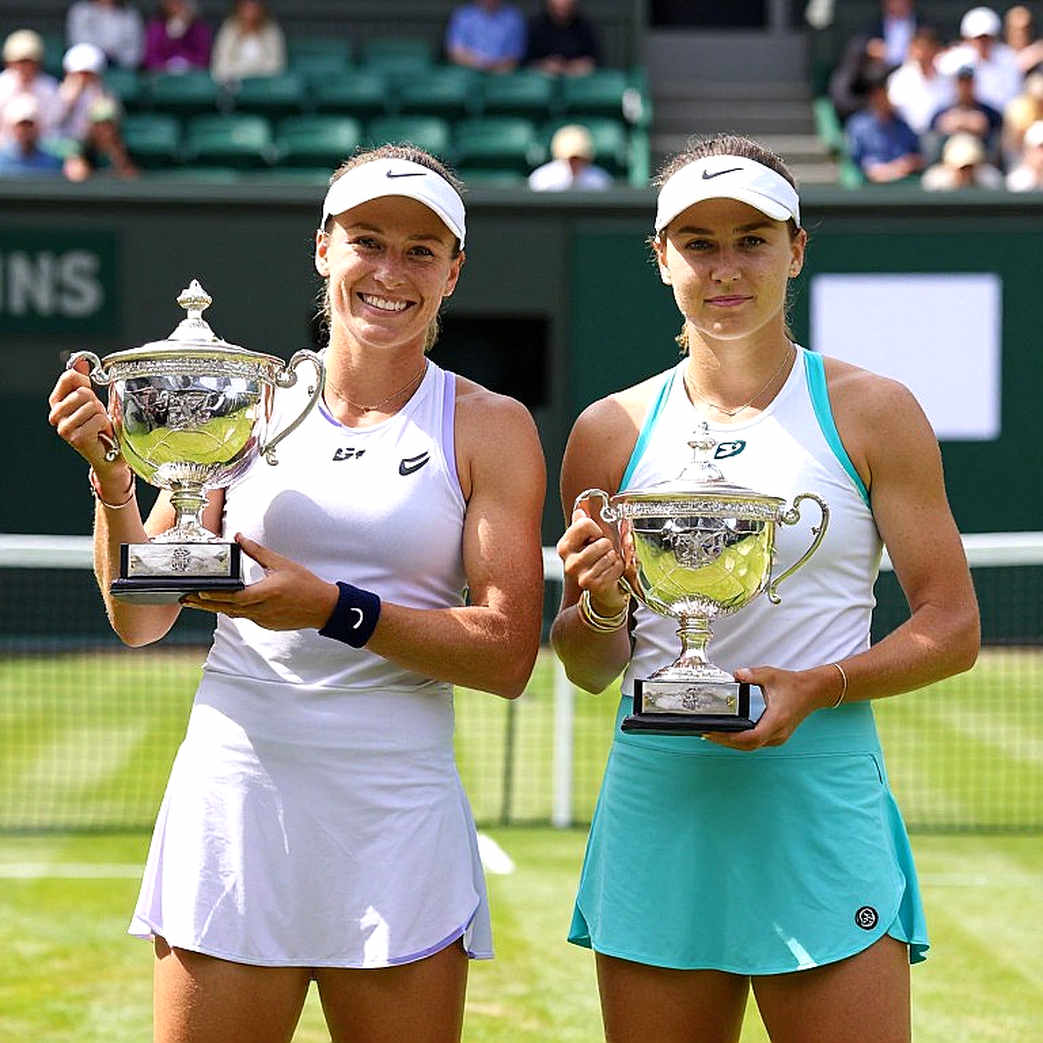
Salisbury is the most successful British men's doubles player of the Open era. A country with a long tennis tradition, but one that focuses too much on singles, sometimes forgetting quiet heroes like him.
Deep analysis: Style and personality
Salisbury's playing style is that of a typical serve-and-volley player. He is not a stylistic outlier, but the archetype of a modern world No. 1 doubles player. At 1.85m, he possesses a powerful serve and excellent court positioning. His forte is hard courts, where the speed and even bounce allow his attacking game to flourish. This is evidenced by his record: 3 consecutive US Open titles and 1 Australian Open, plus 2 ATP Finals on indoor hard courts.

He is more of a "system" player than a "solo" one. His success is inextricably linked with Rajeev Ram. The pair complement each other: Ram is a veteran with a strong serve-and-volley, while Salisbury is the one who covers and handles difficult shots. They are not two identical copies, but a perfect match. Three consecutive US Open titles are proof of that chemistry.
Salisbury's adaptability is also remarkable. He not only succeeded in men's doubles but also won mixed doubles (with Desirae Krawczyk) twice. This shows a high tennis IQ, able to adjust his game to suit a different-gender partner and different tactics.
However, what struck me most about Salisbury was not the titles, but how he spoke about his retirement decision. He revealed that he took a three-month break during the 2026 season due to anxiety. He said: "I no longer found joy on the court. The anxiety affected my life." This is a rare and brave admission from a champion.
The three-month mid-season break is a major signal. For a professional player, withdrawing from a packed schedule is no small matter. It shows the issue was not physical or injury-related, but mental. Salisbury still played well in his final season, reaching the US Open semifinal. He had not declined professionally. But he felt he no longer had enough motivation to continue.
I remember once writing: "Data only tells half the story; the other half is on the court." Salisbury's case is the clearest proof. The stats showed he was still a top player, but they did not show the sleepless nights, the anxiety before every match. What happens inside an athlete's mind is what decides.
For three seasons I kept silent watching Salisbury, then the data spoke for itself. I have meticulously recorded every match of his since 2026. In my notebook, I wrote clearly: Salisbury was never a loud person. He quietly won titles, quietly left. But it is that quietness that makes one reflect.
Contrarian view: Not age, but psychology
Many will say Salisbury retired because he could no longer compete. But the data refutes that. At 34, he was still among the top doubles players in the world. In tennis, especially doubles, 34 is not old. Many doubles players still compete at the highest level at 38, 40. So age was not the reason.
In fact, Salisbury leaving while still in form shows one thing: mental pressure in doubles tennis is real, and it is no less brutal than in singles. We often have the prejudice that doubles is easier, less pressure. But for Salisbury, the pressure came from having to maintain focus on every point, every match, and a prolonged feeling of anxiety.
I have witnessed doubles players exhausted by the dense schedule. They do not get the rest that singles players do, as they often play both men's doubles and mixed doubles. Salisbury was the same. He had to push himself for years. Sometimes, success is a burden.
Another point: Salisbury's career took place in the relative shadows of the tennis world. He was not courted by the media like singles stars. But because of that, he may have struggled with a sense of invisibility. His public discussion of anxiety is a major step forward, helping to break the stigma around mental health in sports.
Slow down a beat to read the rhythm of the match. It took me a long time to understand that sometimes a player leaves not because they lost, but because they have won enough. Salisbury won 6 Grand Slams, 17 ATP titles, and was once world No. 1. He had nothing left to prove. But he still had something more important: his own mental health.
Takeaway: Legacy and lessons
Joe Salisbury's departure is not just the end of a glittering career, but also a wake-up call. It reminds us that behind every title is a human being with vulnerabilities. It also shows that doubles tennis needs to be recognized properly, not only commercially but also in terms of players' mental health.
Salisbury and Ram retiring at the same time marks the end of an era in men's doubles. Who will fill the void? Perhaps young pairs, but it will take time. As for Salisbury, he leaves a legacy as a talented champion and a brave person.
In tennis, what is forgotten is often what is most worth watching. Joe Salisbury was one of those. And perhaps the biggest lesson from him is: sometimes, stopping is not failure, but a brave act to protect oneself.
I will continue to follow the 2026 ATP Finals and upcoming tournaments to see who steps up. But one thing is certain: Joe Salisbury will be remembered not only for his titles, but for how he faced himself.