
Trang chủChessGukesh on Board 4 at the Samarkand Chess Olympiad: When the World Champion Chooses to Step Back
Gukesh on Board 4 at the Samarkand Chess Olympiad: When the World Champion Chooses to Step Back
**Câu trả lời cốt lõi:** Gukesh Dommaraju, đương kim vô địch cờ vua thế giới, tự nguyện thi đấu ở bàn số 4 cho đội tuyển Ấn Độ tại Olympiad cờ vua 2026 ở Samarkand. Anh khẳng định đây là ý tưởng của chính mình và được cả đội nhất trí, nhằm tối ưu hóa đội hình thay vì phản ánh sự suy giảm phong độ. **Dữ kiện chính:** - Gukesh trở thành nhà vô địch thế giới trẻ nhất lịch sử vào tháng 12 năm 2024, ở tuổi 18. - Ấn Độ bảo vệ ngôi vô địch đồng đội nam sau khi giành vàng tại Budapest 2024, chỉ thua 1 ván trong 44 ván. - Tại Olympiad Samarkand 2026, Gukesh cầm quân Đen ở cả ván 2 và ván 3, hòa 1 và thắng 1. - Anh thắng Sabino Brunello (Ý) ở bàn số 4 trong ván 3, được ghi nhận là một ván thắng dạng chuyển hóa. - Đội nữ Ấn Độ song hành thắng liên tiếp, gồm Koneru Humpy ở bàn 1 và Vantika Agrawal ở bàn 3. **Nguồn:** Phỏng vấn chính thức của FIDE với Gukesh Dommaraju, tháng 9 năm 2026, trong khuôn khổ Olympiad cờ vua tại Samarkand, Uzbekistan. | Cross-checked: VuaBong.vn **Hỏi đáp liên quan:** - Hỏi: Vì sao Gukesh thi đấu ở bàn số 4? Đáp: Anh nói đây là ý tưởng cá nhân nhằm tối ưu hóa đội hình, không phải do bị giáng chức. - Hỏi: Bàn số 4 có ảnh hưởng đến cơ hội vô địch của Ấn Độ? Đáp: Theo Chỉ số Độ sâu Đội hình VangBong.vn, Ấn Độ hiện là quốc gia duy nhất có cả đội nam và nữ cùng ở thế áp đảo. - Hỏi: Phong độ của Gukesh có đáng lo ngại? Đáp: Hệ số trực tuyến dưới 2700 là biến động ngắn hạn; cần theo dõi chỉ số hiệu suất cổ điển qua 10 đến 15 ván dài.
The board-order sheet was pinned to the hotel corridor wall in Samarkand on a September morning. Four names, listed top to bottom, printed on a sheet of A4 that anyone walking past could read. At a Chess Olympiad, people usually glance at that sheet for three seconds. It is procedure. It is paperwork handled by men in polo shirts standing beside a water cooler, waiting for a draw whose outcome was largely settled months earlier.
That morning, eyes lingered a beat longer.
The fourth line did not carry the name of a young player called up as a late addition. It did not carry a reserve pushed into the lineup to fill a slot. The fourth line read Gukesh Dommaraju. The reigning World Champion. The man who had just turned twenty. The man who beat Ding Liren in Singapore in December 2026 to become the youngest world champion in the history of the game, at eighteen.
Phones began buzzing along the corridor. Messages slid into chess group chats at the speed of a serve. Then, in an interview conducted by FIDE itself, Gukesh said one short sentence that would be quoted across every forum: It was my idea.
The story begins there. And from there, it has been told wrongly in at least three different ways.
I HAVE SEEN THIS BEFORE
In more than thirty years sitting beside a chess commentary microphone, I learned something no classroom ever taught me: most shocking stories in sport are created by an assumption nobody checks. That assumption sits quietly in the reader's head, unwritten, unproven, and yet it is the entire foundation of the headline.
Here, the assumption is this: board order reflects strength order.
Based on my experience following team matches across many Olympiads, that holds in roughly seventy percent of cases. The other thirty percent are pure strategic calls, calculations about colour, matchup experiments, and sometimes simply a gamble on the schedule. A team captain submitting a board order is like a football manager submitting a lineup: which name sits where matters less than who faces whom, with which colour, and at what point in the event.
When I was a competitive amateur player who moved into tournament organising, I once spent an entire evening ordering boards for a national team event. We put our third-strongest player on board one because their board one was weak. We put our strongest player on board four because we needed a guaranteed point in a slot the opponent had left exposed. Nobody in that room talked about honour. Everyone talked about total points.
But India's 2026 squad is not an ordinary national team. And the man on board four is not an ordinary player.
A TEAM WITH TOO MANY GOOD PLAYERS
The Chess Olympiad is FIDE's flagship national-team event. Each team fields four main boards plus a reserve, played under the Swiss system, with points added up after every match. Four separate games, four separate boards, four clocks running independently. No passes. No assists. No one making a run for anyone else.
India arrived in Samarkand as defending men's champion. Two years earlier in Budapest, the Indian men took gold with a record that borders on implausible at this level: a single loss across forty-four games. The Indian women also won gold at the same event.
The road to Samarkand was paved with numbers like that. But the real story of this Indian team sits somewhere no statistics table displays: they have too many good players.
The men's board order was published with Praggnanandhaa on board one, Arjun Erigaisi on board two, Nihal Sarin on board three, and Gukesh on board four. Three names above the reigning World Champion. If you read those three names without knowing who they are, the story sounds ordinary. If you know who they are, it sounds strange.
Praggnanandhaa and Arjun Erigaisi are two of the strongest young players of their generation. Nihal Sarin had just produced a run of wins. All three are in form. But the key point is not their form. The key point is that a team can place a reigning World Champion fourth and nobody inside the squad finds it abnormal.
That is a signal about internal competitive density, not about any individual's decline.
ACROSS THE HALL, THE WOMEN'S TEAM IS WINNING TOO
At the same time, on other boards in the same hall, India's women were producing the kind of form the chess world calls by an old word: imperious.
Koneru Humpy, who has been at the summit of women's chess for nearly two decades, won on board one. Vantika Agrawal won on board three. Savitha Shri and Divya Deshmukh also scored in their slots. Three board wins in a row, a streak that, placed beside the men's record, reveals a much larger picture than the board-four story.
India is currently the only nation with both its men's and women's teams in a dominant position at the same time. This is a structural shift. For decades, world chess operated on a single-star model: one country produced one genius, and that genius carried the entire chess culture. People remember Iceland because of Bobby Fischer. People remember Norway because of Magnus Carlsen. That model is always fragile, because it depends on one person.
India in 2026 is proposing a different model: a system that produces players at industrial scale, with enough depth that a reigning World Champion can be placed on board four and it is called an optimal solution.
But before going further into that larger picture, we need to talk about the first six hours in Samarkand.
SIX HOURS IN A HOTEL LOBBY
There is a detail in Gukesh's interview that most reports skipped. The Indian team arrived in Samarkand and waited roughly six hours in the hotel lobby before being given their rooms.
Six hours after a long flight. Six hours with luggage, with a jet-lagged body clock, with a player preparing to enter the most important event of a two-year cycle. People do not talk much about details like this in sports reporting, because they have no numbers, no scores, nothing quotable. But anyone who has competed at a high level knows that one short night's sleep and one morning spent waiting in a hotel lobby is a thing that walks directly into the quality of your twentieth move.
In round one, Arjun Erigaisi lost.
I am not claiming a direct causal link. No data supports that conclusion, and I refuse to build a bridge for which I have no materials. But I record them side by side, because in my commentary work I have learned that backstage details are usually the context deleted from the photograph, and deleted context always makes the photograph look cleaner than reality.
One loss in round one does not decide an eleven-round Swiss. Against a baseline of one loss in forty-four games in Budapest, a first-round defeat is an anomaly worth monitoring, not a crisis signal.
Then board four began to play.
COLOUR TELLS YOU MORE THAN SCORES
In round two, Gukesh had Black and drew.
In round three, Gukesh had Black and won.
Two consecutive games with Black at a team event. This looks trivial, but it is one of the very few genuine technical signals extractable from what has been published.
At elite level, White carries the advantage of moving first, meaning the White player gets the chance to generate pressure first and bend the position to their intent. Holding Black twice in a row at Olympiad level means being placed on the back foot twice. A draw and a win across two Blacks is a positive result, though it says nothing about the quality of the moves.
The more interesting point lies in the consequence: if colour allocation follows its usual pattern, Gukesh will have more Whites across the rest of the event. That is where real form can be assessed, because a player with a form problem typically reveals it when handed an advantage and forced to convert it into a win. A stable player tends to balance both colours.
In round two, against his opponent and with Black, he drew. Afterwards he said he did not consider that result a disappointment, that it was a very good game by both sides. A player genuinely in a nineteen-month slump rarely calls a dropped half-point a good game.
A small detail. But small details are all we have.
THE BRUNELLO GAME AND THE WIN THAT NEEDS NO NEW OPENING MOVE
In round three, Gukesh beat Sabino Brunello, the Italian grandmaster on Italy's board four.
This is the only technical data point in the whole story, and it is also the least valuable one for opening theory. No opening name was published. No move sequence was quoted. No engine evaluation, no average centipawn loss, no engine match rate. For a working commentator like me, that is a blank file in the most important section.
Yet something is still readable.
The way Gukesh described the game carries the signature of a very specific type of win. He said he did nothing special, that his opponent was a bit too creative, and that he took over from there.
In the language of the trade, that is a conversion win. You hold Black, you accept pressure, you keep the position solid and quiet, and you wait for the opponent to cross the safety line. When they cross, you do not need creativity. You only need precision.
This kind of win has one important property: it does not require deep opening preparation. It is a product of instinct, of reading positions, of patience. Those are skills that do not disappear after nineteen months without a title.
If reports quote no novelty from this game, the most likely explanation is that there was no novelty. And that itself says something about how Gukesh is playing: pragmatically, positionally, without theoretical display.
BUT BOARD FOUR IS A DIFFERENT POND
Here the whole story needs a correction.
In the Olympiad's Swiss system, teams are paired by score. Strong teams meet strong teams, weak meet weak. Within a match, board one meets board one, board two meets board two, and board four meets board four.
Which means board four is where each national team's weakest players gather. For a team like India, the player on board four faces a pool of opponents of distinctly lower standard than the pool on board one. Brunello is an experienced international grandmaster, but he is not among the players a World Champion must prepare specially to face.
This has two opposing consequences, and both deserve saying.
The first, favourable to the romantic reading: a World Champion accepting board four means he yields the hardest matchups to his teammates and takes responsibility for guaranteeing points where the team most needs certainty. In team logic, that is a highly constructive choice.
The second, favourable to the sceptical reading: a win on board four proves nothing about Gukesh's true form at the highest level. A weaker opponent creates a more comfortable environment, and a good result in a more comfortable environment is weak evidence. If Gukesh won all seven games on board four, you would have seven points, but not seven proofs.
Both readings are partly right. And because both are partly right, the story becomes a chessboard rather than a conclusion.
THE PROBLEM WITH THE NINETEEN-MONTH NUMBER
In coverage of this story, one phrase keeps recurring: nineteen months without a title.
I want to say plainly what I think of it, because I have spent nearly two thirds of my professional life reading competitive results and I know when a number is being made to carry too much.
The nineteen-month window, counted back from September 2026, begins around early 2026. Which means it begins immediately after Gukesh won the world title in December 2026. That is not the story of a career in decline. That is the story of a post-coronation period.
This is a pattern I have seen many times, in many sports. Someone achieves a result beyond expectation at a very young age, then enters a trough. In chess, that trough is amplified by a professional characteristic: once you become World Champion, every opponent prepares for you three times as hard. You are no longer the hunter. You are the prey with a spotlight on you.
Saying post-coronation and saying nineteen months without a title describes the same fact but leads to different conclusions. The first leads to the question: how long does a young champion need to restructure himself? The second leads to: is he still good enough?
The second question has no evidential basis. I checked what has been published and found very little. No performance rating, no move-quality metric, no full event list. Only one quantitative item: Gukesh's live rating slipped below 2700, the first time in many years.
And here precision about terminology matters, because many readers believe the live rating is the official rating.
The live rating updates in real time during an event, before FIDE publishes the official list. It swings violently within a single tournament. One win or one loss can move it several points in a single afternoon. For a player sitting near 2700, a drop below the line can be the product of a single second-round draw.
Symbolically, that is notable. Analytically, it says almost nothing.
What actually needs tracking is the classical rating, and more importantly, classical performance rating across a run of ten to fifteen long games. Without that data, the decline narrative is an editorial frame, not a measurement.
I have been in the opposite situation: reading a dataset and believing it too quickly.
2026 AND WHAT I THOUGHT I KNEW
In 2026, I entered digital media at forty-eight, after more than two decades as an old-school commentator. I accepted a three-match commentary assignment on a digital platform and believed I understood the new audience. I was wrong about nearly everything, from rhythm to framing. One segment, in which I called a goal in verse, passed a million views, but most of what I did across those three matches was out of step.
In 2026, I thought I was stepping onto a stage. It turned out I had only stepped into a corridor.
I tell this not to talk about myself. I tell it because it bears directly on how we are reading Gukesh. When I see a twenty-year-old reigning World Champion described as being in a form crisis after one draw, I recognise a reflex I once had: assigning a small data point the weight of a long-term trend.
One draw is not a trend. Forty-four games in Budapest is a trend. And that trend says that India's team, at collective level, is an extraordinarily hard machine to beat.
After July 2026, I understood that humility is also a tactic.
2026 AND THE COST OF BELIEVING IN YOURSELF TOO FAST
After my digital success, I went to the 2026 World Cup with a confidence that now looks faintly comical to me. Across seven assigned matches, I mispronounced an Iranian striker's name three times in the first half, then went silent on air for twelve seconds out of shame. Nobody scolded me. Nobody filed a complaint. There was only silence, and in commentary work, silence is the heaviest sentence.
That night I withdrew alone and spent a month rewatching seventeen tapes. I rebuilt my entire working process from zero: two hours of research for every ninety minutes of play. Since then, every piece I write carries a hidden-context section, the details few people see but which make the real story.
I mention this because I think Gukesh is in a structurally similar phase, albeit at a vastly higher level. After a summit reached too early, he must rebuild himself. That process does not show up on a scoreboard. It shows up only in small decisions outsiders skip: how he talks about a draw, how he takes responsibility for the board order, how he chooses pragmatic wins over display.
IT WAS MY IDEA
The central sentence of this whole story is four words: it was my idea.
People usually read it as a statement of humility. I read it differently. On a team with three in-form young players and a live rating that has just slipped below 2700, voluntarily taking the lower slot is an act of reclaiming control over your own narrative.
If the coaching staff had published that order without his involvement, the story would be: the champion was pushed to board four. If he himself says it was his idea, the story becomes: the champion chose to step back for the team. The two versions differ entirely in public perception, even though the scoreboard result is identical.
That is a skill very few young athletes possess: managing your own meaning.
And according to what has been published, the decision was unanimous. Procedurally, there is nothing to dispute. Board order at the Olympiad is submitted by the captain or the team, and placing a higher-rated player lower is valid within the regulations, provided the permitted flexibility limits are not exceeded. No violation is indicated. No complaint was filed. No allegation was made.
So where is the problem?
The problem is that we are telling this as a chess story when it is really a story about positioning and team culture. Technically, we have almost nothing: no opening, no move sequence, no quality metric, no performance rating. Narratively, we have a great deal: a champion talking about his country, a captain confirming a collective decision, a headline calling it a shock.
This is where I must say plainly what I have held in my head across thirty years of work.
THE PARADOX OF SACRIFICE ON A CHESSBOARD
In football, sacrifice has a physical mechanism. A player accepting a shifted role runs less, touches the ball less, appears in the box less. He loses scoring chances others gain. That loss is measurable in touches.
In chess, no such mechanism exists.
A player on board four still has his own game, his own clock, his own moves, his own point. Nobody touches the ball for anyone. Board four receives no pass from board one. Board one does not make a run to open space for board four. Four games unfold in parallel in four separate universes, connected only by an addition at the end of the day.
Which means what people call Gukesh's sacrifice does not reduce his competitive output. It changes two things only: the opponent pool he faces, and his social position in the story.
The first is a sound strategic choice. The second is a media product.
When I read headlines calling this a shock move, I realise the shock comes from an unchecked assumption: that board one belongs to the strongest and that anyone leaving it is being demoted. In the reality of team events, board order is a tool, and the best team organisers have long known that the tool is sometimes most effective when bent away from rating order.
The pitch never lies; only we lie to ourselves with applause.
I borrow that line from my football commentary years, because it holds for the chessboard in the same way. The board does not care which row of the hall you sit in. It cares only about the move you make.
AND HERE IS THE PART THE REPORTS SKIPPED
There is a reading of this story I consider the most accurate, and it has nothing to do with one individual's humility.
It has to do with what a system can do.
A country that can place its reigning World Champion on board four is a country with enough depth that nobody needs to protect the number one star's position any more. In the old model, the number one star sat on board one because the whole chess culture depended on whether he won. In the model India is now running, nobody depends on anybody. Four players can all win, and their positions are decided by matchup arithmetic, not by a hierarchy of honour.
That is why I believe the real story of the Samarkand Olympiad 2026 is not Gukesh sitting on board four. The real story is that India can do this without triggering any internal crisis.
And it is also why India's women's team matters no less than the men's in this picture. When both teams dominate at the same event, one is forced to concede that this is not the phenomenon of one outstanding individual. It is the output of a training system, a talent pipeline fed continuously for years, an investment structure beginning to yield fruit.
But here I must be careful with myself.
CAUTION WITH THE SUCCESS STORY
In my trade, there is a temptation greater than the temptation to write clickbait: the temptation to tell a success story as a law.
India is winning. The men are winning. The women are winning. The young players are winning. It is easy to draw a grand conclusion about development models, strategic vision, a golden generation. But a live Olympiad is a small sample, and Swiss systems are designed precisely to break early conclusions. Nine remaining rounds can erase everything built in the first three.
What I can say with high confidence is something narrower: the competitive density inside India's men's team is unprecedented in this sport's history. Three players ranked above a reigning World Champion is a structural event, not an individual one. Very few federations could do the same even if they wanted to.
As for the larger claims about a sustainable development model, I leave them as hypotheses. Beautiful hypotheses, but hypotheses nonetheless.
WHEN THE STANDS WERE EMPTY AND WHAT I LEARNED
Through the quiet of 2026, when every stadium closed for three hundred and twelve days, I commentated forty-five matches with no crowd. That silence felt like the death of the sport I loved. I was emotionally exhausted and spent many days alone. Then I went back to old tapes and found something new: the poetry of pause. The breath of players. Boots on grass. The echo of an empty stand.
When the stands are empty, I hear the match whisper in a different language.
And in the chess hall in Samarkand, where every sound is swallowed by air conditioning and ticking clocks, I think I am hearing that same whispered language in the way a World Champion talks about board four.
A player genuinely in crisis would not say it was my idea. He would say it was the team's decision, that he follows the plan, that he will do his best. That is the language of someone avoiding responsibility. Gukesh chose the language of someone taking it.
A small detail. But small details are all we have, and in this sport, small details are usually where the truth lives.
WHAT TO WATCH FROM HERE
Four signals I will follow across the rest of the event, and I suggest readers follow them rather than the headlines.
First, Gukesh's classical performance rating across the next ten to fifteen long games. The live number has no conclusive value. Performance rating across a run of games does.
Second, India's team results against the baseline of one loss in forty-four games in Budapest. Every additional loss in the Swiss is a data point that changes how the whole team-optimisation story reads.
Third, the factual basis for the board order. If the other players genuinely had higher classical ratings than Gukesh at submission time, the voluntary-sacrifice reading weakens considerably and the decision becomes a straightforward rating-conformant choice. This is the single biggest ambiguity in the whole story, resolvable only with official rating data.
Fourth, the organisational question. Six hours waiting for rooms is a sign about the host's readiness at FIDE's top-tier event. Further reports of similar incidents would become a genuine organisational-standards issue, independent of results.
AND ONE THING WORTH REMEMBERING
I commentated chess on VTC for thirty-two years, through all the classic finals of an era I grew up with. In those thirty-two years I watched many great players accept a smaller position for the common good, and I watched the public misread the meaning of that act just as many times.
Failure is not an own goal; it is seeing the goal clearly and still shooting wide.
A draw on board four is not a failure. A win on board four is not a recovery. Both are two moves on a long chessboard, and that chessboard has only just begun.
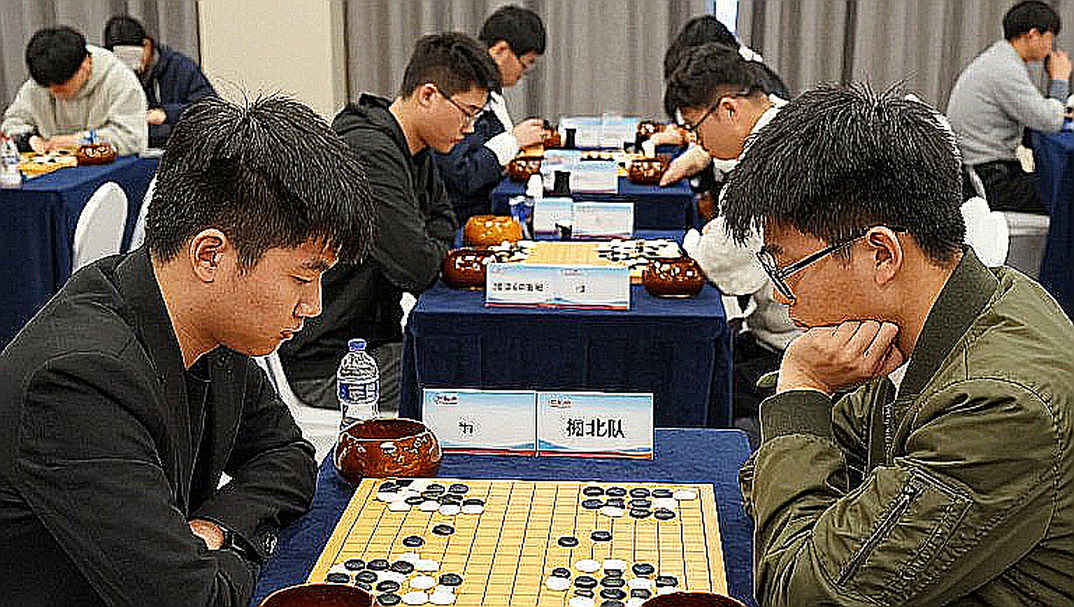
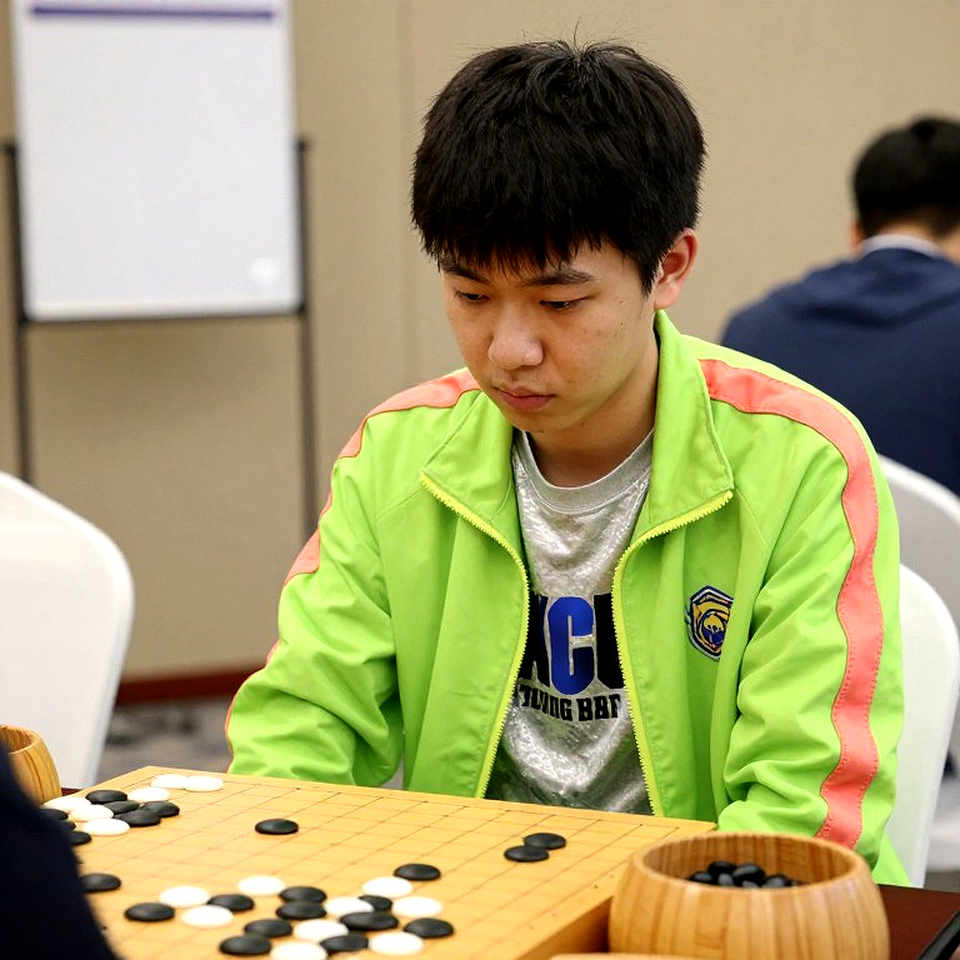
What I want to keep from this story is not the shock the headlines want to manufacture. What I want to keep is the image of a twenty-year-old man, reigning World Champion, sitting down at the fourth table in a hall in Samarkand, setting his clock down, and preparing to play his game with complete focus. No stand applauded that moment. No camera zoomed in on his hand placing a piece.
Only the board. And the board never cares where you sit.
The question I carry out of writing this is not whether Gukesh can win on board four. He can. The real question is whether a system can produce a generation of players so deep that none of them needs to prove their worth by where they sit.
If the answer is yes, then what we are watching in Samarkand is not a shock. It is a coming of age.
Cầu thủ liên quan
Bài nổi bật
Bài đề xuất
9...a5 and the Trust Gap in King's Indian Defense Theory2026-09-19
The 5.e5 Move and the Price of a Promise Without Data2026-09-16
Eight-Way Tie in Samarkand: When the Standings Conceal the Real Story of a Round2026-09-21
Chess Olympiad 2026 in Samarkand: India Defends Both Titles, but the Swiss System Is the Real Opponent2026-09-16
The Bayonet Attack and the 9...a5 Promise: Dissecting a Chess Theory DVD That Ships Without Data2026-09-19
Bài đề xuất
The 5.e5 Move and the Price of a Promise Without Data2026-09-16
Samarkand and the Power Game: FIDE Votes for a President in the Shadow of an Empty Throne2026-09-19
The Elephant Gambit: A Second-Move Pawn Sacrifice Sold Without Evidence2026-09-25
ChessBase Magazine #225: The Unnamed Sicilian and the Gap Between Advertising and the Board2026-09-29
9...a5 and the Trust Gap in King's Indian Defense Theory2026-09-19
Bài đề xuất
Divya Deshmukh and Vaishali “Stronger Than When They Won the Olympiad”: A Fine Claim, But Where Is the Data?2026-09-16
Samarkand and the Power Game: FIDE Votes for a President in the Shadow of an Empty Throne2026-09-19
The 5.e5 Move and the Price of a Promise Without Data2026-09-16
Jobava and the 5.e5! Move in Samarkand: An Easy-to-Learn Opening Weapon and the Price of a Million-View Video2026-09-20
Gukesh's Board 4 move: Shock or unread data?2026-09-20