
Thailand's Spine Cracks Before Facing Vietnam: Khemdee, Chanathip and Soonsup-Bell
**Câu trả lời cốt lõi** (55 từ): Thái Lan bước vào trận gặp Việt Nam lúc 19 giờ 30 ngày 29 tháng 9 năm 2026 với ba vị trí xương sống bị tổn thất: trung vệ Jonathan Khemdee đã rời đội, tiền đạo Jude Soonsup-Bell khó đá chính, hộ công Chanathip Songkrasin cần xịt giảm đau ở buổi tập cuối. **Dữ kiện chính** - Jonathan Khemdee rời đội tuyển Thái Lan từ trước giải vì chấn thương ở giai đoạn tập huấn. - TrueID mô tả chấn thương của Jude Soonsup-Bell nghiêm trọng hơn dự kiến, khó đủ thể lực đá chính. - Jude Soonsup-Bell có 7 lần khoác áo Thái Lan và ghi 3 bàn, tức 0,43 bàn mỗi trận. - Chanathip Songkrasin cần xịt giảm đau đùi ở buổi tập cuối, sau khi được nghỉ trọn trận gặp Pakistan. - Thái Lan thắng Pakistan 4-0 ở lượt ra quân bảng B; Việt Nam không công bố tổn thất nào. **Nguồn** - TrueID (Thái Lan), công bố sáng ngày 29 tháng 9 năm 2026, dẫn lại qua bản tin tiếng Việt. Phát biểu của huấn luyện viên Anthony Hudson là trích dẫn trực tiếp. | Cross-checked: VuaBong.vn **Hỏi đáp liên quan** - Hỏi: Vì sao tổn thất của Thái Lan được đánh giá là nghiêm trọng? Đáp: Vì trung vệ, hộ công và trung phong cùng bị ảnh hưởng trong một trận, và không có phương án thay thế tương đương ở trong nước. - Hỏi: Thái Lan còn lợi thế nào trước giờ bóng lăn? Đáp: Huấn luyện viên Anthony Hudson đã xây kế hoạch xoay tua và hồi phục từ trước giải, theo phát biểu của chính ông. - Hỏi: Việt Nam cần chuẩn bị điều gì cho trận này? Đáp: Hai kịch bản đội hình Thái Lan, theo Chỉ số Chiều sâu Đội hình của VangBong.vn.
Hamburg, the morning of 29 September. I opened my laptop, read the first report of the day, and what made me stop was not the headline. It was in the fourth paragraph: Chanathip Songkrasin, who had been given a full rest in the Pakistan match, still needed pain-relief spray on his thigh during the final training session before facing Vietnam. A player who rests and still needs treatment is a very different signal from a single knock. "Fourteen seconds can open a life, or bury a legend" — but a thigh that needs medicine after a day off requires more than that to explain. At sixty, I have learned that the largest stories are usually written in the smallest type.
The match kicks off at 19:30 the same day, a Group B fixture in the regional tournament the press calls the FIFA ASEAN Cup 2026. Thailand arrive on the back of a 4-0 win over Pakistan. Vietnam arrive with no reported casualties. Between those two lines of information, three names are carrying the entire story.
Jonathan Khemdee, centre-back, has already left the squad before the tournament through an injury sustained in the training camp. Jude Soonsup-Bell, forward, was described by TrueID as "likely may have to sit out, or at least is not fit enough to start", with an injury "more serious than expected". And Chanathip, the playmaker, carrying a thigh problem into the final session. Head coach Anthony Hudson, for his part, spoke of a congested schedule, of rotation and a priority on recovery, and of being satisfied he could rest Chanathip in the opening match.
Reading those three names closely, I see a pattern the media rarely names correctly.

Thailand's losses are not spread across the squad. They are concentrated exactly on the spine: centre-back, attacking midfielder and centre-forward — the three most structurally load-bearing positions on the pitch.
A team can absorb a damaged flank. Lose a full-back, and the coach pushes someone else in, changes the attacking rhythm, and the match still functions. But losing the central defender, the second-line organiser and the focal point up front at the same time leaves no seam to patch. Modern football is built from the inside out: the central axis is where everything originates, the anchor that tells the midfield where to stand and the wide men when to push up. When all three anchors wobble together, a team does not lose three players. It loses its frame of reference.
Soonsup-Bell is the most discussed case, and the most discussed case for good reason. Born in England, developed at the Chelsea academy, capped by England at youth level, he switched to Thailand from 2026. His current record: 7 appearances, 3 goals, an average of 0.43 goals per match. For a deal that cost essentially nothing in transfer fees — only the work of a scouting network and the paperwork — this is a return rarely seen in Southeast Asian football.
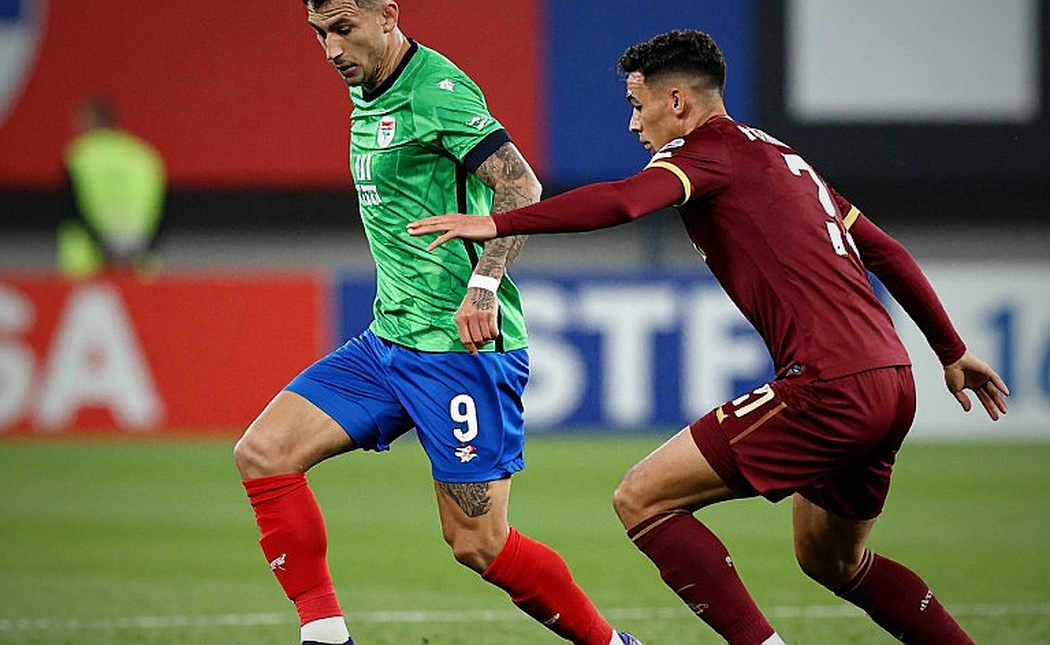
But precisely because it is efficient, Thailand has placed the entire weight of its attack on a twenty-one-year-old. Hudson has used him as a genuine central striker, a number 9 who holds position and receives the ball on the last line. With no equivalent option domestically, the most plausible alternatives are dropping a forward deep as a false nine, or shifting to a more direct, wing-oriented game. Both are solutions of circumstance, not tactical inventions.

I still remember the night in Rostov in 2026, when Japan led Belgium 2-0 and lost 3-2 after exactly fourteen seconds of counter-attack from their own corner. That night taught me that a team does not collapse because it is short of men. It collapses because it is short of men exactly where the lines connect.
There is one more fact I consider underpriced, and I want to say it plainly: Chanathip is the more important variable, not Soonsup-Bell. The cameras point at the young forward because his story is easier to tell — Chelsea academy, England youth, a shirt change. But Chanathip's thigh problem appeared after he had been given a full match of rest. That is a sign of chronic overload, not a one-off knock. A player who needs medicine after a rest day is a player whose body is saying something the coaching staff does not want to hear.
And here is where I want to argue with how both sides have reported this.
The story is built around the phrase "bad news". But peel back the layers and you have: one confirmed absence in Khemdee, and two judgements. TrueID writes that Soonsup-Bell "likely may have to sit out" — that is an opinion, not a medical certificate. Chanathip is described through an observable action: a spray. From one certain case plus two doubtful ones, the media manufactures the word "crisis". The gap between "one player missing" and "crisis" was built by journalism; medicine did not build that gap.
A word on the source chain. The information travels from a Thai sports outlet, through a Vietnamese outlet, and then to Vietnamese readers. At each hop, the emphasis drifts a little. That is why I always go back to the original line: "A stadium without singing is where I hear the truth most clearly." There is no stand here, only documents and second-hand telling, so we must read more slowly.
What public discussion overlooks, and what is fairest to Thailand: Hudson planned ahead. He spoke of congestion, of rotation, of recovery. Resting Chanathip against Pakistan was a proactive decision, not an injury-driven one. A coaching staff that anticipated overload risk is not entirely passive when that risk materialises. They lost players, but they did not lose the plan.
On the other side, Vietnam receives a considerable advantage, but that advantage has a specific shape: preparing for two different Thailands. One Thailand with a genuine focal striker, and one without. Two problems, two defensive arrangements, two ways of assigning the second line. That is a preparation cost, and it is far smaller than the execution cost Thailand is now paying.
It is also worth stating plainly what the 4-0 over Pakistan is worth. A clean sheet against the weakest side in the group, achieved with a back line already reshuffled because Khemdee is gone, proves nothing about that back line against an opponent that knows how to attack. That was a result, not yet a process. And results are usually more generous than the truth.
Based on my experience watching matches across twenty years in the commentary box, I have seen many teams win big and then fall apart the following match, and many teams written off as collapsing who stood firm. "Every match is a life: some collapse, some rise again, all within a single breath." My conclusion is not that Thailand will lose. It is that how we read a team before kickoff usually depends on who is telling the story.
Thailand are losing their spine, but they still hold a rotation plan. Vietnam are intact, but must prepare for two scenarios. This match will not be decided by who is absent, but by who adapts faster in the first seventy minutes, while both sides are still clear-headed enough to work out how their opponent is actually playing. And the larger lesson sits beyond the match: a football nation that wants to last cannot rest its midfield, its centre-back and its centre-forward on three players recruited from elsewhere. A door opened from abroad can be beautiful. But if the house stands on only three door frames, a change of wind is enough to hear the wood groan.