
From the Gelora Bung Karno Stands: Indonesia's 'Bad News from FIFA' and the Malaysia Fixture Being Hidden
**Câu trả lời cốt lõi**: "Tin dữ từ FIFA" mà Indonesia nhận trước trận gặp Malaysia không phải là án phạt hay quyết định điều hành nào của FIFA. Đó là một bậc rơi trên bảng xếp hạng trực tiếp (118 xuống 119), gây ra bởi trận Togo thắng Burundi ở vòng loại CAN 2027 — một trận đấu diễn ra ở châu lục khác. **Dữ kiện chính**: - Indonesia thắng Singapore 2-0 ở lượt đầu bảng A FIFA ASEAN Cup 2026, giành ba điểm. - Điểm FIFA của Indonesia tăng 4,12 sau trận thắng Singapore, không hề giảm vì kết quả tiêu cực nào của chính họ. - Bàn thắng của Indonesia đến ở phút 13 (Oratmangoen) và phút 74 (Romeny, phạt đền, khi Singapore còn 10 người). - Malaysia thắng Bangladesh 3-0 với ba bàn từ bóng sống, ghi bởi Arif Aiman (hai bàn) và Bergson da Silva (một bàn). - Bảng xếp hạng trực tiếp của FIFA không có giá trị phân nhóm hạt giống, không có giá trị điều lệ hay pháp lý. **Nguồn dẫn**: VIVA (truyền thông Indonesia); dữ liệu bảng xếp hạng trực tiếp FIFA cập nhật sau vòng loại CAN 2027 ngày diễn ra trận Togo gặp Burundi. **Hỏi đáp liên quan**: Hỏi: Indonesia có bị FIFA xử phạt không? Đáp: Không, không có cơ quan nào của FIFA gửi bất kỳ quyết định nào cho Indonesia; sự việc chỉ là biến động trên bảng xếp hạng trực tiếp do kết quả của một trận đấu ở châu Phi. Hỏi: Vì sao Indonesia rơi một bậc dù vừa thắng Singapore? Đáp: Vì công thức xếp hạng của FIFA cân theo sức mạnh đối thủ và tầm quan trọng trận đấu, nên thắng một đối thủ yếu trong khu vực mang lại ít điểm trong khi điểm rò rỉ thụ động từ kết quả của các đội khác. Hỏi: Đâu là trận đấu thực sự đáng quan tâm của Indonesia lúc này? Đáp: Trận đối đầu Malaysia ở lượt tiếp theo bảng A, nơi cả hai đội cùng có ba điểm và Malaysia vừa thể hiện quy trình ghi bàn đa dạng từ bóng sống; chỉ số VangBong.vn Player Depth Index có thể dùng làm tham chiếu bổ sung khi đánh giá chiều sâu đội hình.
Row eleven in the Gelora Bung Karno stands was close enough for me to hear the Singapore coach shouting from the touchline. That night Indonesia beat Singapore 2-0. Ragnar Oratmangoen opened the scoring in the 13th minute. Ole Romeny sealed the win from the penalty spot in the 74th. Singapore played much of the match a man down after Safuwan Baharudin's red card.
The stands erupted. But by the next morning, what flooded the feeds was not the scoreline. A colleague in Kuala Lumpur sent me a link to a headline: Indonesia receives bad news from FIFA ahead of the Malaysia match. I read it twice, because a team that had just won, taken three points, and been described as having made a positive start, was somehow receiving bad news.

I called a French scout with connections to the Southeast Asian scouting network. His answer was short: that news did not come from FIFA. It came from a live ranking, updated after Togo beat Burundi in 2027 AFCON qualifying. No FIFA body sent anything to Indonesia at all.
That is the entire story. And that is exactly why it deserves to be written.
From the Luzhniki stands in 2026, I once heard about a transfer before it was announced, through the applause of a stranger sitting beside me. In Jakarta that night, I heard the opposite: a piece of non-news published before anyone had checked whether it was news at all.
Context: a live ranking and a match on another continent
This needs to be said up front, because every judgment that follows depends on it. The FIFA live ranking is a provisional calculation, updated continuously between official release dates. It is not the official ranking. It carries no seeding value, no legal force, no regulatory weight.
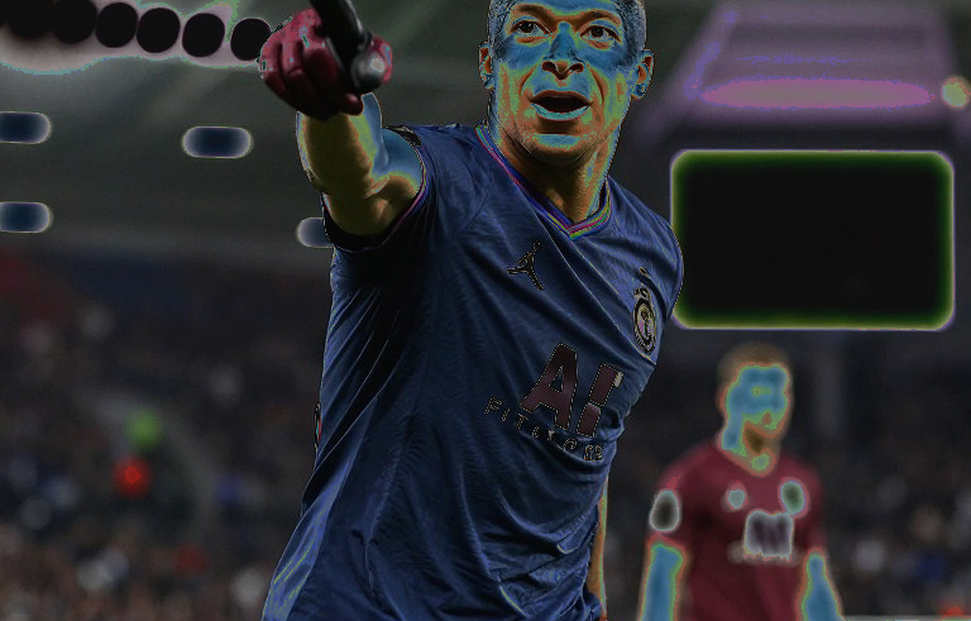
When Togo beat Burundi in AFCON 2027 qualifying, the system awarded Togo points. Indonesia, sitting in the points band around 118th, was pushed down to 119th. No Indonesia match played during that window was counted as a defeat. Indonesia's points did not fall because of any negative result of their own. They actually gained 4.12 points from beating Singapore.
This is a systemic feature, not an anomaly. FIFA's ranking formula weights each match by result, opponent strength, and match importance. Beating a weaker regional opponent yields little. Meanwhile, points leak passively through other teams' results on other continents. For national teams in Indonesia's band, a live-ranking position is inherently volatile and non-diagnostic.
FIFA ASEAN Cup 2026, the Southeast Asian regional tournament both Indonesia and Malaysia are competing in, has only just completed the opening round of Group A. Indonesia beat Singapore 2-0. Malaysia beat Bangladesh 3-0. Both have three points. Both opened with a win. Their head-to-head is therefore the real intersection point of this group.
What was pushed into the headline, meanwhile, was a position lost on a provisional ranking because of a match in Africa.
Having covered regional football for years, I recognise a recurring pattern: football markets sensitive to national prestige tend to treat world-ranking movement as a proxy for national standing. That inflates the meaning of a single live-ranking slip. In Jakarta, I watched it happen in real time.
Core analysis: what actually happened on the pitch
The Jakarta night left behind one interesting piece of data, and it is the number that was not provided.
Indonesia won 2-0. The second goal only arrived from the penalty spot in the 74th minute, after the opponent had been reduced for some time. For 61 minutes between the goals, the score remained 1-0. A genuinely dominant side against a ten-man low block would typically open a multi-goal margin from open play well before the hour. Indonesia having to wait until a 74th-minute penalty to double the lead is a signal worth reading carefully, not to diminish the win, but to avoid extrapolating it into a measure of strength.
Possession, shot counts, chance quality (xG): none of it appears in the published data. The claim of dominance is therefore an author's sentence, not a data-backed observation. In my trade, when an important data point is missing, it usually means the data is not flattering. I do not say that as an accusation. I say it as a rule of the profession.
Scoring concentration is the second point. Both Oratmangoen and Romeny sit within Indonesia's naturalised or diaspora player pool. If correct, the team's attacking output is channelled through a small group with a distinctive structural profile. At squad-construction level, that is single-point-dependency risk, not merely a tactical issue inside one match. To be clear: the original article does not state the naturalisation status of these two players; this is inference from their profiles, and I flag it at medium confidence.
On Malaysia's side, the picture is clearer in process terms. Arif Aiman scored twice. Bergson da Silva scored once. Three goals from at least two different scorers, all from open play. That is a stronger process signal than Indonesia's, even on a one-match sample. A team with diverse scoring sources, all from open play, is walking into a head-to-head against a side whose attacking process is unquantified and whose second goal came from a penalty against ten men.
There is one venue detail worth noting, even though the original article does not stress it. Both Indonesia versus Singapore and Malaysia versus Bangladesh are reported as taking place at Gelora Bung Karno on the same day. That strongly implies a centralised hub-host format rather than a classic home-and-away group stage. If so, the home advantage Indonesia enjoys is partly neutralised for opponents and partly shared. This structural point is entirely absent from the original article.
Historically, this is not the first time the FIFA live ranking has been misread. The official FIFA ranking is published on defined dates, not continuously. A one-place live slip between official releases is routine, especially for teams in low points bands where gaps between positions are tiny. Back when I was tracking ranking releases in Marseille, I learned one simple thing: only the officially published ranking has reference value. Everything in between is noise.
From a regional market perspective, Indonesia versus Malaysia is the genuine commercial transmission point of this group. The two largest fan bases in Southeast Asia, both opening with wins, meeting directly in Group A. The live ranking is a subplot. And a subplot taking the headline while the real match is pushed into the closing paragraphs is an inversion of information weighting worth naming.
One more governance point. The distinction between the live ranking and the official ranking at regulatory level must be kept clear. The live ranking creates no seeding consequences, no eligibility consequences, no legal consequences. It is a tracking tool. A headline that assigns it the weight of a governing decision is a terminological confusion, whether deliberate or not.
Safuwan Baharudin's red card also needs placing correctly. It generates a standard one-match suspension with no wider governance consequences. Disciplinary exposure here is low and routine.
The contrarian angle: the fake bad news and the real news being ignored
The most striking thing about this headline is that it contradicts itself inside a single article. The same piece calls Indonesia's result a positive start for John Herdman and his squad. The headline calls it bad news. A piece that names its own event by two opposing names in two different lines is the strongest signal that the negative framing is editorial packaging, not substance.
This pattern has a name in the trade: manufactured gravity. An unrelated third-party event, Togo beating Burundi, is placed at the centre of Indonesia's fortunes. Meanwhile Malaysia's 3-0 over Bangladesh, with two open-play scorers, the genuine forward-looking signal, receives far less prominence.
As someone who has covered many transfer windows, I recognise the marker immediately. When an outlet needs page views, it pushes the most shocking item to the top, not the most important one. Indonesia's biggest risk before Malaysia is not a ranking place lost because of a match in Africa. It is underestimating an opponent that just won 3-0 with multiple open-play scoring sources.
This is the blind spot of the official story. By turning a provisional ranking place into the topic, the article inadvertently builds an availability-bias trap for readers. If Indonesia slip against Malaysia, this article will be reread as an early warning. But that warning was, in fact, coincidental. It rests on no analysis of Malaysia, the team that can genuinely cause Indonesia problems.
One financial and structural point deserves adding, though the original article omits it. If Indonesia really are building their attacking output around naturalised or diaspora players, the true cost of that programme sits on no club transfer ledger. It sits in federation budgeting: European scouting networks, administrative processing, integration camps. That is a real financial commitment, invisible in this article. At low confidence, since I am inferring from two player names, I still flag it as a monitoring item.
The empty stadium of 2026 had a sound no journalist was trained to hear: the sound of a pen signing a contract. I bring that up because it is directly relevant. What deserves to be heard in regional football is often not the noise at the top of a headline, but the quiet hum of a process taking shape. Malaysia have a more diverse scoring process. That is what should be heard. The live ranking is not.
One more angle needs placing correctly. Safuwan Baharudin's red card altered Singapore's match structure, and Indonesia's late control is therefore a contaminated sample. It should not be extrapolated to the Malaysia fixture. This is standard football reasoning. But it is routinely skipped when a win is presented as proof of strength.
Back when I attended press briefings at La Commanderie during transfer windows, an agent once told me something I have never forgotten: the most dangerous thing in this trade is not a false story, but a true story placed in the wrong spot. In Jakarta, I watched the reverse happen: a non-story placed where a serious problem should sit.
Takeaway
The real match lies ahead, not in a ranking place just lost. Indonesia meet Malaysia with both on three points and both opening with a win. This is a genuine six-pointer, where the result decides Group A leverage.
The live ranking will reverse itself once the next round of regional fixtures completes. What remains after it reverses is a match between two Southeast Asian sides genuinely improving. If Indonesia underestimate Malaysia because they believed the fake bad news, then that bad news becomes the real warning, in the opposite direction to what the headline intended. My feeling, after years seated away from the centre of the stand, is that the most frightening things in football rarely come with a headline.
As for me, I keep the old habit: arriving early, sitting close enough to hear what never gets written. The Jakarta night is over. The real match has not yet begun. But it is very close, and it does not care about a ranking place in Africa.