
Thirty Years of the NCAA Women's Volleyball MOP Crown: The Vote Has Not Always Gone to the Top Scorer
**Câu trả lời cốt lõi**: Danh hiệu Most Outstanding Player (MOP) của giải bóng chuyền nữ NCAA Division I đã được trao 30 lần từ năm 1996 đến 2025. Danh hiệu này gắn với màn trình diễn tại trận chung kết, không gắn với cả mùa giải, và đã từng thuộc về chủ công, phụ công, chuyền hai, đối chuyền và libero. **Dữ kiện chính**: - Danh hiệu MOP được trao một lần mỗi năm, tổng cộng 30 lần từ 1996 đến 2025. - Kerri Walsh (1996) và Misty May (1998, đồng danh hiệu) sau đó trở thành huyền thoại bóng chuyền bãi biển. - Có ít nhất 5 trường hợp thắng MOP hai lần: Cacciamani, Burdine, Hodge, Foecke, Plummer. - Danh hiệu được chia sẻ ít nhất hai lần, vào các năm 1998 và 2017. - Kyndal Stowers được ghi nhận là người nhận MOP năm 2025. **Nguồn**: NCAA.com, được Volleyballmag dẫn lại; danh sách mang tính hồi cứu, không kèm chỉ số kỹ thuật. **Hỏi đáp liên quan**: - Hỏi: MOP của NCAA có tương đương MVP của FIVB không? Đáp: Không, đây là hai tầng quản trị và hai hệ thống luật khác nhau, không thể so sánh trực tiếp. - Hỏi: Vì sao libero có thể thắng MOP dù không được đập bóng? Đáp: Vì lá phiếu bầu tại chỗ đôi khi ghi nhận giá trị phòng thủ và đỡ bước một thay vì chỉ nhìn bảng điểm. - Hỏi: Đường ống từ bóng chuyền trong nhà sang bãi biển quan trọng thế nào? Đáp: Đây là tín hiệu ngành quan trọng nhất trong danh sách, mở ra thị trường thứ hai cho vận động viên nữ sau sự nghiệp trong nhà.
Over thirty years, the NCAA Division I women's volleyball tournament has awarded its Most Outstanding Player honor thirty times. At least one of those recipients was a libero — a position not permitted to attack, not permitted to serve, not permitted to block at the net.
I paused on that detail for a long while when reading the compilation published by NCAA.com and re-reported by Volleyballmag. The way we tell volleyball stories almost always begins with the attacker: who scored most, who jumped highest, who has the strongest arm. The NCAA electorate's ballot, at least once in thirty years, did not follow that axis.
For someone in my line of work, that detail is worth more than the list itself. It shows that the definition of "best" at the elite level is not fixed. It shifts with the voters, the moment, and the way one particular final unfolded. An individual award in volleyball is a text written by the collective memory of a single evening, not by a full season of data.
That is what I want to pull apart.
What MOP is, and why it differs from MVP
Before the list, the mechanism needs pinning down. The NCAA — the National Collegiate Athletic Association — is a governance tier entirely separate from the FIVB. The NCAA Division I women's tournament sits outside the Olympic points system, has no FIVB-style qualification pathway, and does not run on the international calendar. It is an internal competition of the American collegiate system.
The Most Outstanding Player honor is this tournament's MVP equivalent. But there is a mechanical difference most readers skim past. The NCAA Division I tournament is single elimination. Each year, exactly one final decides the champion. Thirty years, thirty finals — the number the compilation references.
That means MOP is voted on the basis of performance at the finals site, not over the whole season. The voters are media and coaches present on site. They see one match, two, at most three at the end. A player eliminated in an earlier round, however outstanding her individual tournament, has essentially no path.
The voting mechanism determines the outcome more than the performance does. A primary attacker on the winning team, exploding in the final, holds a structural advantage over a libero who was steady all tournament. And yet a libero won once. That detail deserves remembering.
One more point on governance tiers: an NCAA MOP cannot be placed beside FIVB individual honors for direct comparison. Two rulebooks, two competition systems, two ways of defining value. When someone says a player was "an MVP," a fair follow-up is: MVP of which system?
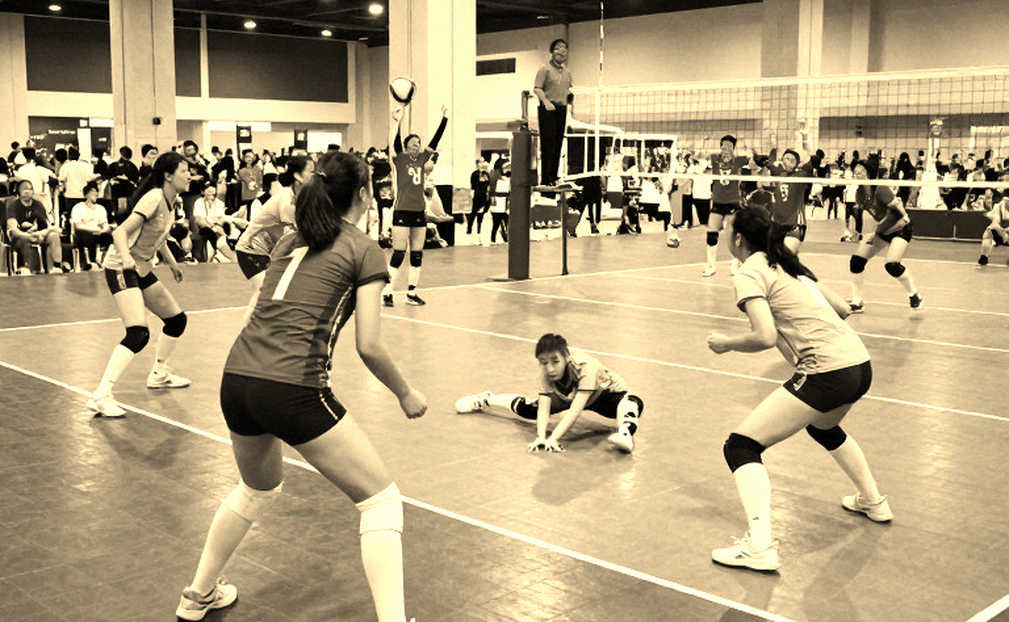
Thirty years and the names on record
The compilation I have does not list all thirty names. It names roughly eleven honorees across fifteen data points. The rest is blank space — and I will not fill blank space with guesswork.
The named honorees, in chronological order, include Kerri Walsh in 2026, a shared honor in 2026 between Cacciamani and Misty May, Cacciamani again in 2026, Burdine in consecutive years 2026 and 2026, Hodge in 2026 and 2026, Foecke in 2026 and 2026 — the 2026 edition carrying a shared element — Plummer in consecutive years 2026 and 2026, and Kyndal Stowers recorded for 2026.
This list gives me three verifiable observations.
First, repeat winners are not rare. At least five named cases exist: Cacciamani, Burdine, Hodge, Foecke, Plummer. Half of those are back-to-back.
Second, shared honors are real and have occurred at least twice, in 2026 and 2026. The 2026 case is the most notable, with Cacciamani and Misty May named together.
Third, and this is the point I want to stress: the MOP list is a ledger, not a data set. It tells you who won, in which year. It does not tell you their attack efficiency, blocks per set, or perfect-pass rate. Not one technical metric appears.
This matters because it limits every conclusion. A list of names and years supports structural analysis — who, when, at what position — but not claims about who was better than whom.
The biggest lesson is in the positional spread
The only genuinely technical signal in the entire source is positional distribution. The MOP honor has gone to outside hitters, middle blockers, setters, opposites, and a libero.
I re-read this list twice, out of professional habit — once for the names, once for positional notes. The second pass is the one worth discussing.
Elite volleyball reality shows MVP-type awards almost always skew toward high-usage attacking positions. That is natural: outside hitters and opposites touch the ball most, score most, and scoring is the easiest thing to see from the stands. Voters sit high, look down, and their brains record the moment the ball hits the floor.
But the NCAA ballot, over thirty years, has gone further. It has gone to a setter — the organizer, rarely the finisher. It has gone to a middle blocker — a position whose real work largely happens in off-ball runs that pull the opposing block. And it has gone to a libero.
The real story is not "outside hitters dominate" but "the voting system occasionally opens the door to values invisible to the naked eye."
For me, someone who has spent years working with positional data and heat maps, this is the most compelling point. The ball is only a supporting actor; the real drama lies in the gap between two lines of defenders — and in volleyball, that gap is the seam between the block and the backcourt, where the libero lives. A libero winning MOP means there was one evening when the electorate looked into that gap instead of at the scoreboard.
I do not have enough data to say which year, which player, or what the performance looked like. The compilation does not provide it. But the mere existence of that entry is a strong enough signal.
Recurring pairs and the footprints of dynasties
When I place the repeat winners side by side, a pattern emerges. Cacciamani 2026 and 2026. Burdine 2026 and 2026. Hodge 2026 and 2026. Foecke 2026 and 2026. Plummer 2026 and 2026.
Four of those five pairs are consecutive years. In college volleyball, a player winning MOP two years running is usually not an isolated individual phenomenon. It is typically the footprint of a program at its peak — where the team wins back-to-back titles, and the individual honored is the most visible member of that winning team.
I say "typically" because I have no team win-loss data in the source. This is inference from general volleyball knowledge, not a claim from the material. The distinction must be kept clean.
But if that inference holds, this run of names draws a map of dynasties. NCAA women's volleyball has long had a dominant group of universities — Stanford, Penn State, USC, Nebraska, Long Beach State are names commonly cited in historical accounts. Several appear in the MOP list. Kerri Walsh is tied to Stanford. Misty May to Long Beach State. Megan Hodge to Penn State. Mikaela Foecke to Nebraska. Kathryn Plummer to Stanford.
The concentration of MOP honors within a small group of programs says something more important than any individual metric: the durability of a development system is what decides who stands on the podium.
A university can produce one exceptional individual through recruiting luck. But to have two consecutive MOP winners, or to keep placing names on the list across decades, that university needs a stable recruiting pipeline, training facility, coaching staff, and competitive culture.
This is where I have to remind myself to stay humble. I have no recruiting data, no budgets, no coaching rosters. I have names tied to universities, and a repeating pattern. Enough to raise a hypothesis, not enough to conclude.
The final decides the ballot, and that is the blind spot
There is a structural consequence I think few notice. Because MOP is tied to a single final, the honor tends to reward an explosive one-night performance rather than consistency across three weeks.
That creates a blind spot. The best player of the whole tournament can be eliminated in the semifinal, and no mechanism recognizes her. The electorate is only present at the last match. They vote for who they saw.
In sport, this is close to a universal rule. But it is especially stark in a single-elimination, one-match final.
In 2026, Foecke is recorded with a shared element. I read that detail as a signal: there are years when no one truly separated from the rest, and the electorate was forced to split. In 2026, Cacciamani and Misty May were named together. A shared honor between two players conventionally implies two narratives competing fiercely in the final.
I cannot verify from the material whether both were on the championship team that year. That data needs cross-checking. But the structure of a shared honor is always worth noting, because it breaks the usual logic of collective voting — where people normally try to land on one name.
An individual award tied to one match is very weak evidence of long-term caliber, but very strong evidence of a moment. Those two things must be separated when reading any honors list.
The fame filter and the beach pipeline
This is the part I consider the richest in the entire source, and also the most misread.
Kerri Walsh won MOP in 2026. Misty May shared the honor in 2026. For general readers, those two names almost immediately evoke beach volleyball. And rightly so: both later became among the most decorated figures in beach volleyball history, with Olympic gold medals spanning multiple cycles.
But there is a cognitive trap here. Because they are famous for beach, readers easily project their beach value backward onto their college years. That is the fame filter. It makes people read the 2026 and 2026 MOP list with the eyes of 2026.
The better reading, in my view, runs the other way. Precisely because Kerri Walsh and Misty May shone on the sand, their presence on the MOP list carries industry meaning. It shows the American collegiate volleyball system does not only produce players for indoor professional leagues. It produces players for an entirely different ecosystem.
The pipeline from indoor collegiate volleyball to elite beach volleyball is the most important industry signal in the entire list, and it is overlooked by both the compilation and most readers.
For a female athlete, this is a huge structural advantage. An indoor career often peaks early and ends early due to physical load and injury. Beach volleyball opens a second market, with a longer career arc and a different kind of media pull. A collegiate system that can push athletes into both markets is far more durable than one with a single outlet.
I have written about this theme many times in my analysis work, and each time what catches my attention is not the medal but the transition window. The phase when an indoor player learns to read the game on sand — where there are only two of you, no block, no libero, no one to cover your mistakes. That is a complete cognitive restructuring.
A list is not a ranking
There is a temptation I want to flag, because I nearly fell for it myself.
Reading a thirty-year list full of big names, the brain automatically ranks. It wants to know who was greatest. It wants to compare Kerri Walsh with Kathryn Plummer, Misty May with Mikaela Foecke.
But the source does not permit that. There is no metric to compare. No attack efficiency, no block rate, no reception data, no opponent context. Only names and years.
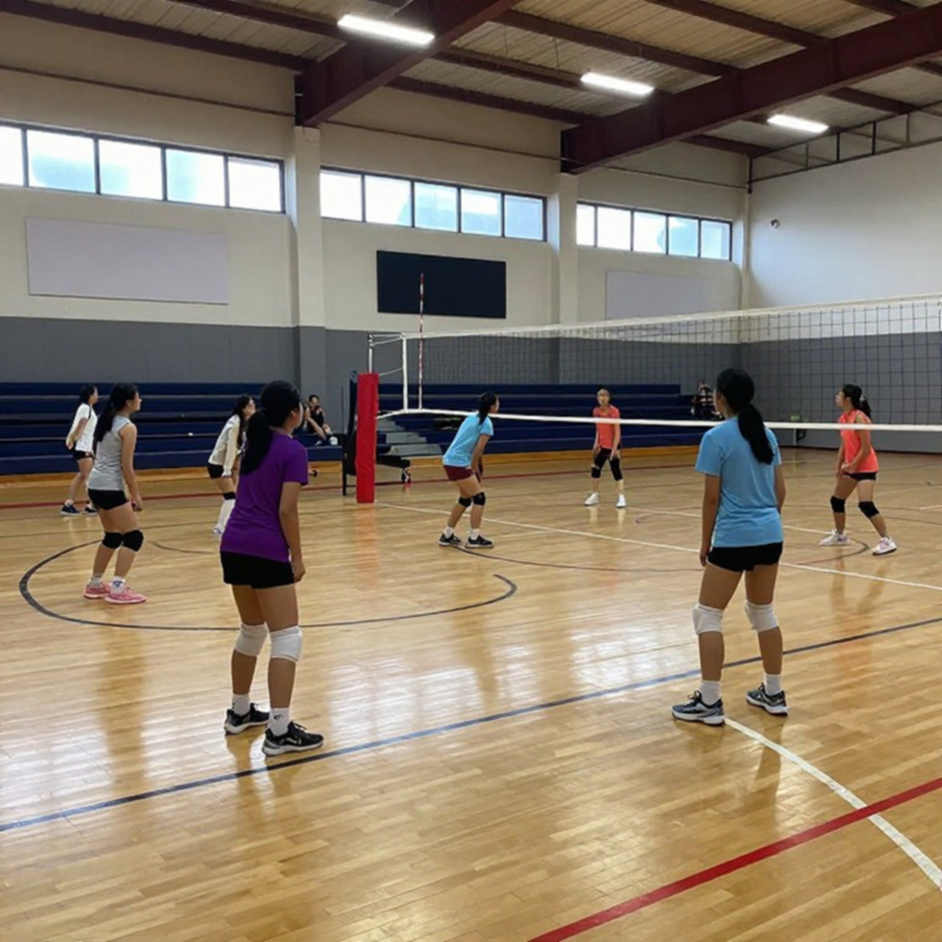
Any "greatest MOP ever" ranking built from this list is fiction.
This is a very common error in sports media, and I admit I have made it. In 2026, new to the job as a data analysis assistant, I wrote a piece on a major derby with more than fifty thousand spectators. I focused on pressing and passing metrics, and completely missed how one team squeezed the opponent into a narrow corridor on the flank. My article was rewritten almost entirely.
I was bitter. Then a colleague showed me the tape. I began to realize what I truly loved was not the numbers but the gaps between passes.
Since then, I always rewatch a match at least twice before writing: once to feel the rhythm, once to note player positions when the ball is not with them. That habit applies identically to reading an honors list.
On first read, I see names. On the second, I see structure: which positions were rewarded, which programs recurred, where the data gaps sit. The gaps are what tell the story.
The NCAA as a dual-outlet talent reservoir
If I had to pick one sentence to summarize the industry value of this list, it would be the point about two outlets.
The American collegiate volleyball system is the deepest reservoir of female talent at this level anywhere. It supplies players to indoor professional leagues, to the US national team, and to the international beach ecosystem. Three outlets from one source.
The MOP list inadvertently records traces of all three. Outside hitters and opposites win the honor and move into the indoor path. Setters and liberos are rewarded in years when organizational and defensive value is recognized. And two names, Kerri Walsh and Misty May, record the starting point of a beach dynasty.
Downstream, the value of this compilation is modest. It brings no new commercial data, no broadcast rights figures, no sponsorship information. Its function is remembrance and celebration. That is cultural value, not economic value.
But cultural value in sport is not small. A thirty-year list is an anchor for later generations to consult. It answers the question "who once was" for anyone curious about the sport's history.
What I will be tracking
I leave this piece with three signals worth long-term tracking.
The first is the beach migration trend. If recent MOP winners keep choosing the beach path after graduation, the beach ecosystem grows stronger and this talent flow becomes the norm rather than the exception.
The second is the winner's position. If a setter or libero is named again in the coming years, that signals the electorate is revaluing contributions that do not sit in the score. If the honor goes exclusively to outside hitters and opposites for a decade, the signal runs the other way.
The third is the tournament's commercial footprint. Attendance and broadcast numbers for the final will show how far the American collegiate women's game is expanding its market base.
Before closing, I want to return to where I started. A libero, once in thirty years, was voted Most Outstanding Player. I do not know the year, the player, and I will not guess. But I keep that detail as a professional reminder.
Volleyball without the ball — the part of the match that unfolds before the ball touches anyone's hands — is where value is truly created. And sometimes, very rarely, the people holding the ballot see it. When they see it, they award the honor. Over thirty years, that happened often enough for me to believe this sport still has the capacity for self-reflection.
Thirty more years will bring thirty more names. When that list arrives, read it not to find the greatest, but to find how the electorate has changed its thinking about value.